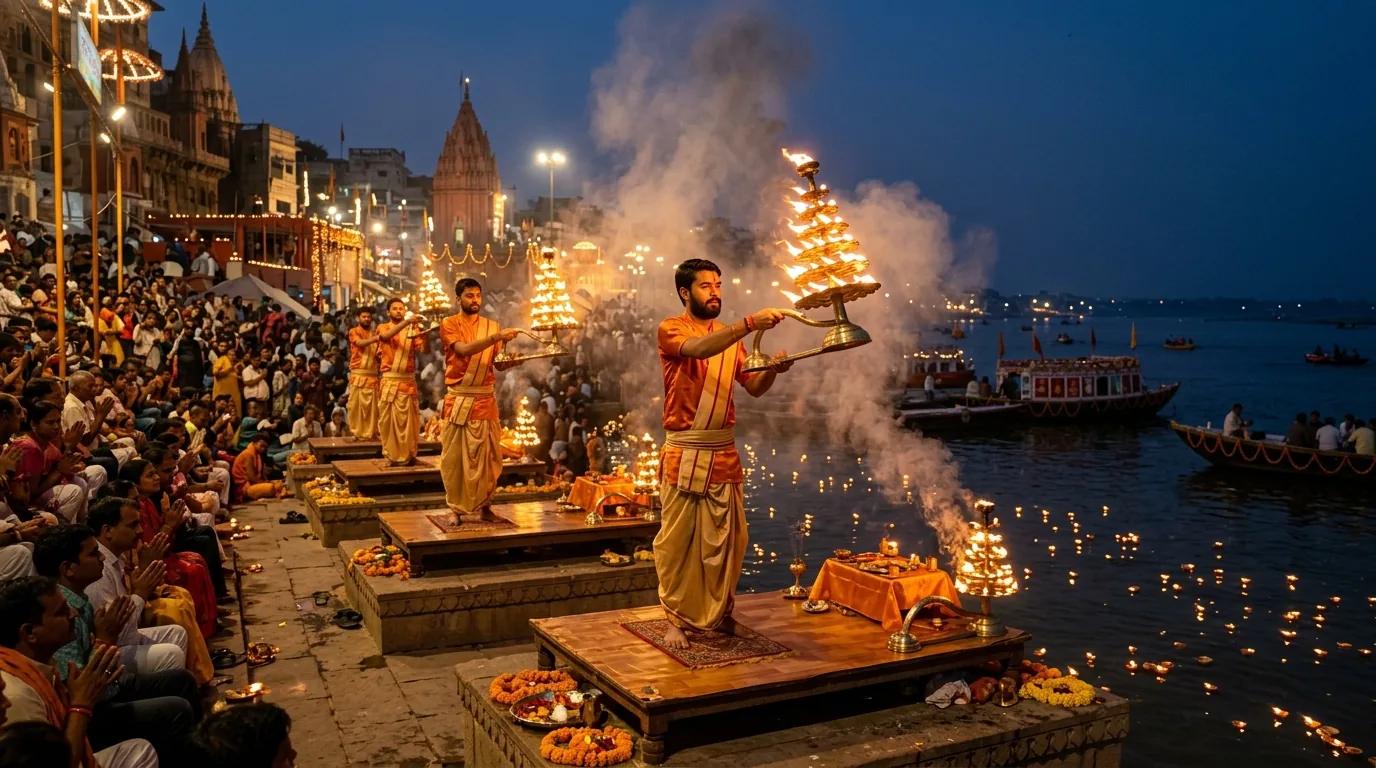
Arrive at Dashashwamedh Ghat shortly before the evening ceremony and the riverfront can feel almost unreachable: crowds gather in the lanes, phones rise over the steps and pedestrian routes tighten around Godowlia.
The Ganga Aarti is one of Varanasi's most powerful shared rituals. It is best experienced with a little preparation: choose a viewing style, arrive early, respect the people around you and treat any street seller promising a “VIP pass” with caution.
QUICK REFERENCE
Ganga Aarti timings and locations
| Location | Seasonal start guide | Arrive by | Duration | Entry |
|---|---|---|---|---|
| Dashashwamedh Ghat Grand evening Aarti | Usually just after sunset; confirm the start for your date | 45–75 minutes early | About 45 minutes | Free |
| Rajendra Prasad Ghat Adjacent evening Aarti | Runs around the Dashashwamedh evening window | About 45 minutes early | About 45 minutes | Free |
| Assi Ghat Evening Aarti | Around the local sunset window | 30–45 minutes early | About 40 minutes | Free |
| Assi Ghat Subah-e-Banaras | Published full programme: summer 4:50–7:00 AM; winter 5:40–7:45 AM | 30 minutes early | Ritual, music and yoga programme | Free |
Read the full Ganga Aarti timing guide for the morning programme, evening planning and arrival buffers.
THE 45-MINUTE RITUAL
What happens during the Ganga Aarti?
It can look theatrical to a first-time visitor, but the ceremony is a devotional offering to the Ganga. The sequence gives the experience its rhythm and meaning.
- Ganga Pujan and sankalp: offerings such as flowers, water and sacred grass are made beside the river with Sanskrit invocations.
- Shankhnaad: conch shells announce the ceremonial beginning across the riverfront.
- Dhoop and incense: smoking brass censers are moved in measured circles towards the river and the sky.
- Brass lamp offering: priests lift and circle multi-tiered lamps in synchronized arcs.
- Chawar, fans and karpur: white whisks, peacock-feather fans and camphor conclude the offering before devotees float leaf bowls with diyas.
CHOOSE YOUR MOOD
Evening spectacle or morning awakening?
Dashashwamedh Ghat
High-energy, communal and visually dramatic. Expect dense crowds, amplified sound and many boats gathered on the water.
Best for: first-time visitors, broad river views and the peak devotional atmosphere.
Assi Ghat
Subah-e-Banaras begins in the cool pre-dawn light, often followed by classical music and community yoga on the open steps.
Best for: quieter travel, senior visitors and anyone who prefers space over spectacle.
Other evening options beyond Dashashwamedh
Rajendra Prasad Ghat
Immediately north of Dashashwamedh, with broader tiers and a parallel evening ceremony.
Assi Ghat
A shorter walk from vehicle drop-off and a less compressed atmosphere than the central ghats.
Namo Ghat
Open plazas and ramps offer a more spacious northern riverfront experience; check the day's programme locally.
CHOOSE YOUR VIEW
Watch from the steps or from a boat?
Feel the ritual up close
Cost: Free. You hear the bells and chants directly, but the priests face the river and the central steps fill early.
See the full riverfront
Cost: Paid. The boats face the platforms for a wider view, although late arrivals can sit several rows back.
Local approach: choose the steps if you want the close sensory experience. Choose a boat if a broad view and river breeze matter more—then agree your details before boarding.
BOAT ADVICE
Book clearly, not hurriedly.
Fares vary—agree before boarding
Season, festival crowding, route, duration, boat type and boarding point all change the fare. Ask for the total price, number of people, route, waiting time and return point before you get in.
A lower-cost option, but confirm where the boat will anchor and how long it waits.
Useful for a small group that wants an unhurried riverfront ride before the Aarti.
Confirm capacity, life-jacket availability and the return plan, especially in busier periods.
For a calmer boarding experience, consider beginning from Assi, Kedar or another ghat south of the central congestion and travelling north before the ceremony. Follow current river and administration restrictions.
There is no street-sold official VIP pass
The public ghat steps are free. Be wary of agents promising special access. A paid boat, balcony chair or donation is not the same thing as an official public-entry ticket.
STEP-BY-STEP
How to plan your evening
- 01
Reach the central area early
For Dashashwamedh, allow time for pedestrian diversions from Godowlia and the walk down to the river.
- 02
Choose your place before crowds build
Settle on the steps, a balcony arrangement you independently trust, or your boat well before the ceremony window.
- 03
Watch the setup without rushing
The preparations—flowers, lamps and volunteers arranging the platforms—are part of the experience too.
- 04
Leave the bottleneck patiently
When the Aarti ends, wait a little or use a quieter side lane rather than pushing into the main stairs with everyone else.
River conditions can reshape the experience.
During high water, lower steps can be submerged, rituals may move up the riverfront and boating can be restricted. Follow on-site instructions and do not assume the usual access is open.
COMMON QUESTIONS
Frequently asked questions
What time is Ganga Aarti in Varanasi today?+
It moves with sunrise and sunset. Use the seasonal table as a guide, then confirm the same-day start time at the ghat or through a current local source.
Which ghat is best for Ganga Aarti?+
Dashashwamedh is the grandest central evening setting. Assi is a better choice for a more relaxed approach, particularly at dawn.
How early should I reach Dashashwamedh Ghat?+
For popular evenings, allow 45 to 75 minutes before the expected start. Arrive even earlier for festivals or choose a less crowded ghat.
Is there a dress code?+
There is no public-steps dress code, but modest clothing and calm, respectful conduct are appreciated in this religious setting.
Can seniors or wheelchair users attend?+
Assi and Namo Ghats generally offer easier approaches than the narrow, crowded route to Dashashwamedh. Check current access and assistance needs before leaving.
KEEP EXPLORING
Continue your Varanasi planning.
Prepare for arrival and the people travelling with you
Work backwards from the confirmed start with our Ganga Aarti arrival guide. Families can compare viewing choices, toilets and return arrangements in Ganga Aarti with kids. First-time international visitors can read Ganga Aarti for foreign tourists for the ceremony's meaning, etiquette and booking questions.
Plan the aarti experience that suits you
Compare the boat viewing and booking guide with a morning visit to Subah-e-Banaras at Assi. Each needs its own arrival and return plan.
Follow the evening and clarify your viewing plan
Begin with Ganga Aarti step by step. Before paying, read what VIP seating, chairs, terraces and boats actually describe. For camera use, the aarti photography guide covers positions, low light and respectful practice.