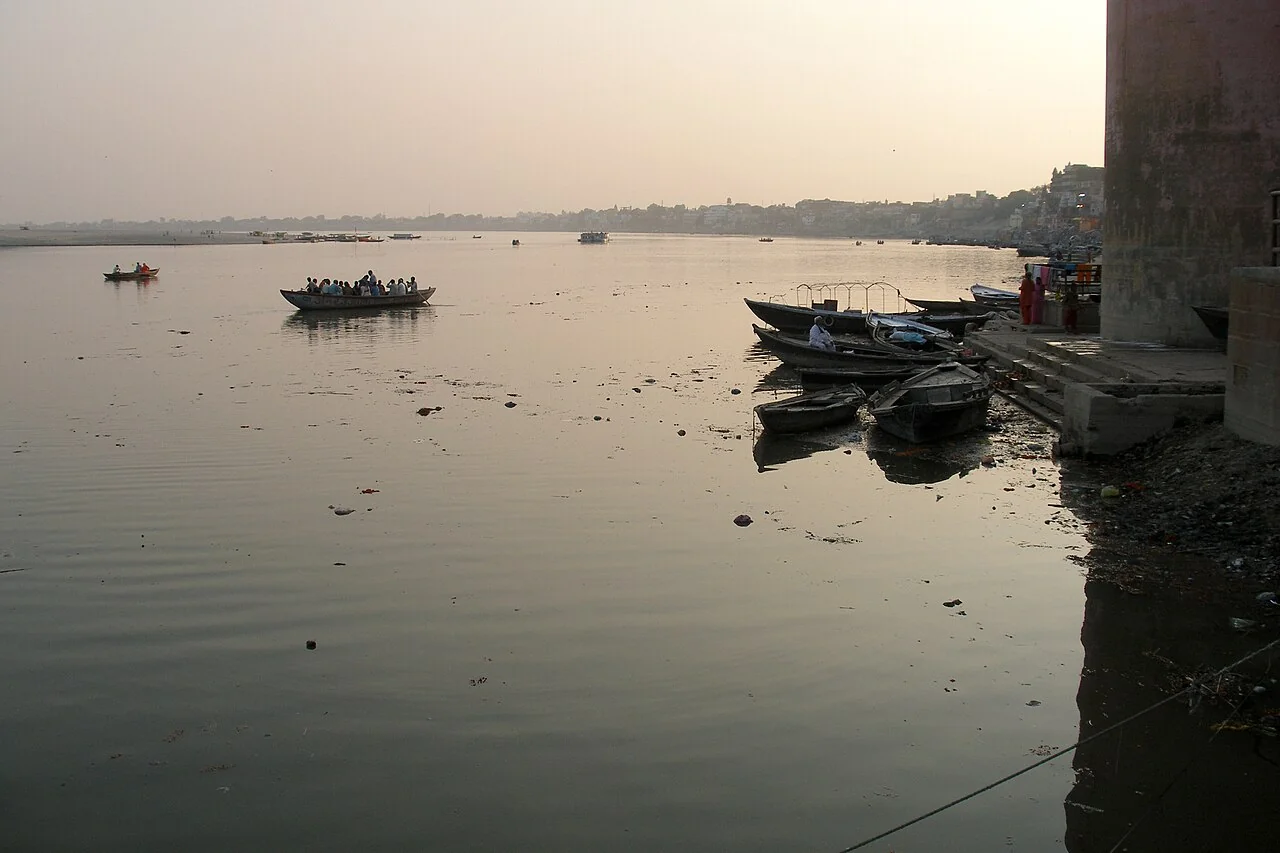
“VIP seating” is one of the least precise phrases a visitor can hear before Ganga Aarti. It may describe a private terrace, a chair arranged through a local provider, a boat seat or a package containing a separate puja. Without a named location and clear inclusions, it tells you very little about what you are buying.
The first distinction is between attending the public ceremony and purchasing an additional service. Gangotri Seva Samiti's own FAQ describes its Dashashwamedh aarti as public, with free seating, and says it has no VIP aarti seating. It separately offers registration for Ganga Pujan. That statement should guide questions about that organiser's arrangement, rather than become a blanket claim about every private venue or operator along the river.
What has actually been verified?
The organiser's published distinction is clear: public ceremony viewing and a registered pujan are different. A paid ritual is not automatically a reserved viewing chair, and a person offering a chair is not necessarily selling an official organiser-issued ticket.
At the same time, private businesses may sell transport, guided visits, terrace access or boat services. Those can be legitimate services when accurately described, but their value depends on the actual arrangement. Ask the provider to identify what they control and what they cannot promise.
A photograph of a visitor sitting close to the platforms does not establish that the position is bookable for your date. Nor does a screenshot headed “VIP” establish an official connection. Confirm the venue, service provider, date and reporting instructions together.
This guide does not list a supposedly permanent official VIP counter or a universal chair price. Those would need current evidence. Instead, it explains the choices you can verify before paying, including the practical details that matter more than the label.
Compare the five different arrangements
Start with the service category. Two offers using the same headline may have entirely different boarding points, stairs, seating and cancellation conditions.
| Arrangement | What it may provide | What it does not establish by itself |
|---|---|---|
| Public ghat viewing | A place in an open permitted public viewing area | A reserved chair, front position or admission after the area fills |
| Privately arranged chair | A chair at a specified venue or authorised location | An organiser-issued VIP entitlement or an unobstructed view |
| Terrace or rooftop | Access to a named property's viewing area | Step-free access, toilets, shelter or close proximity to the lamps |
| Boat service | Transport and a river-facing viewing position subject to permissions | A private vessel, front mooring, toilet or unrestricted river movement |
| Registered pujan | Participation in a specified ritual under its terms | A seat for the whole family throughout the main public aarti |
A combined package may contain more than one row. Ask for the inclusions separately so that you can assess them instead of comparing only the total headline price.
Public steps: free viewing still needs a plan
If public viewing suits you, choose a permitted position that leaves the walking routes clear. Being free does not mean space is unlimited or that arrival at the ceremony's start will provide your preferred view. Crowd directions and access restrictions still apply.
For an ordinary Dashashwamedh evening, about 60–90 minutes settled at your chosen viewing area is a useful editorial target. Add the road journey, final walk and toilet stop before that. The arrival guide explains how to calculate your departure time.
Think about comfort as well as position. Stone steps may be awkward for someone who cannot sit low or stand for long. A busy front section may also be difficult to leave with a child. Consider whether a more distant open view suits the group better than the closest available space.
If someone tells you payment is compulsory merely to remain in a public area, ask identified event staff or police to clarify the current arrangement. Avoid an argument in the crowd. The appropriate response is to establish who is responsible for that space and what, if anything, is being sold there.
Chairs and terraces: ask about the whole visit
For a chair, ask for the exact location and whether the seat is assigned, shared within a venue or simply subject to availability. Request a current description of the sightline. A chair behind standing spectators can be less useful than a clear position further away.
For a terrace, confirm the property name and the entrance from the street. Some riverfront views are reached through narrow lanes and several flights of stairs. “River-facing” describes an outlook; it does not describe the route to reach it.
Ask whether you are buying an individual seat, a table, entry to a standing area or a food-and-view package. Confirm the number of people covered, children's arrangements, admission time and how long you may remain. Establish whether the quoted price includes taxes or other compulsory charges, without assuming they are identical across providers.
Toilets, shelter and an early exit deserve direct questions. If a companion needs a toilet during the ceremony, can they reach it and return to the seat? If it rains, where do guests wait? If the person cannot manage stairs, is there an actual alternative entrance? A vague assurance that everything is “comfortable” cannot answer those practical needs.
Boats and pujan: separate viewing from participation
A boat can offer a distinctive view, but compare it as a boat service. Ask whether the vessel is shared or private, how many passengers will be aboard, which ghat you board from and where you disembark afterwards. The service's name does not tell you those details.
Check suitable life jackets before boarding and ask how passengers will be helped across the steps or gap. Do not accept overcrowding or equipment promised only after departure. Current permissions and river conditions determine whether the service can operate and where it can position itself.
Read the boat-viewing guide before comparing a boat with a shore chair. The water view may be appealing, while the lack of a toilet or freedom to leave early may make it unsuitable for a particular family.
For pujan, ask the responsible organiser about the ritual, reporting point, participants included and any separate viewing arrangement. A service for one person or a couple should not be assumed to include every companion's seat. Temple services at Kashi Vishwanath are another category again; a package combining darshan and Ganga Aarti must identify each component clearly.
A booking checklist that makes the offer reviewable
Before paying, obtain the provider's name and contact, the named venue or vessel, the date, reporting time and precise meeting point. Ask for the complete price for your group and what happens if a child or an additional adult joins. Keep the written confirmation rather than relying on a spoken promise in a busy lane.
The view needs description too. Is it from shore or water? Is the chair elevated or at ground level? Will other viewers stand in front? Does the booking guarantee that specific arrangement, or only entry to a venue? No honest provider can control every passing person or ritual movement, but they should be able to describe their own service accurately.
Check cancellation and disruption terms. What happens if boats are suspended, a venue becomes inaccessible, the ceremony changes location or you arrive late? Is there a refund, another arrangement or a credit? Read the actual policy instead of assuming all religious-event payments follow the same rule.
Avoid paying twice when a confirmation is unclear. Check booking status and contact the provider before repeating a transaction. Retain the receipt and a readable copy of the meeting instructions. If phones must be stored for an earlier temple visit, collect them before relying on them to find an evening operator.
Festivals, misleading promises and choosing sensibly
Dev Deepawali and other major dates can change public access, vehicle approaches and boating. Reconfirm the whole service against current event instructions. A normal-day photograph or an old review cannot prove that the same location will remain available during a festival.
Be cautious when an offer guarantees a front position without naming the venue, claims all public viewing requires a ticket, or refuses to explain whether the payment covers a chair, boat or puja. These are reasons to ask for clarification or choose a clearer arrangement, not evidence about every seller in the area.
The most expensive offer is not automatically the most suitable. A family may value a usable toilet and easy exit more than proximity. A photographer may need an unobstructed side view. A visitor comfortable on the public steps may prefer to spend nothing on a private viewing service.
Choose a plan you can explain in one sentence: who is providing it, where you will be, what is included and how you will return. If that remains unclear after several questions, the “VIP” label has not solved your planning problem.
For a first visit, the Ganga Aarti experience guide provides the evening's broader sequence. Use this page for the payment decision. Clear service terms, realistic expectations and a suitable route back matter more than the prestige implied by a booking title.
Photograph sources and licences
Hero photograph: Vyacheslav Argenberg / Wikimedia Commons; CC BY 4.0. Source: https://commons.wikimedia.org/?curid=106203658. Licence: https://creativecommons.org/licenses/by/4.0. Resized and converted to WebP; no generative editing.
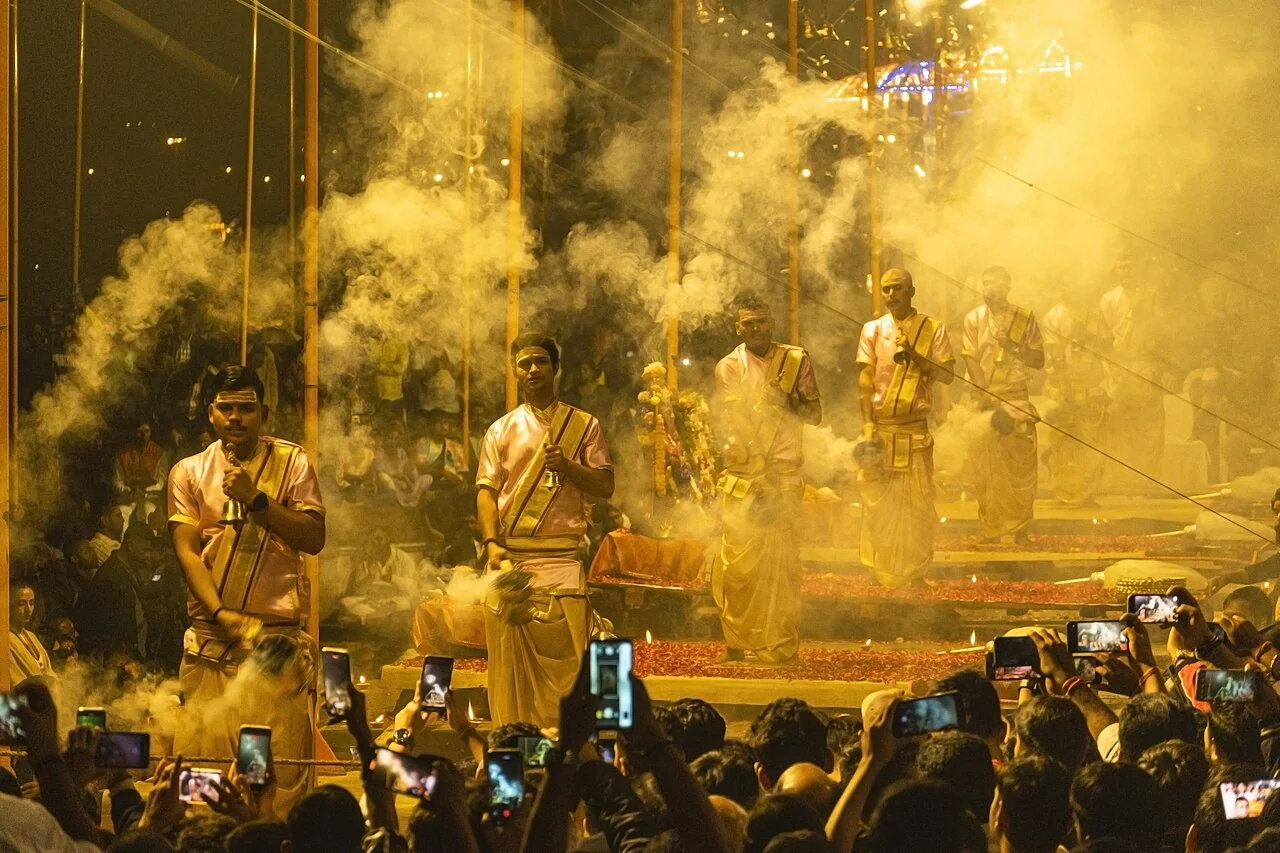
Article photograph: Vimalinarc / Wikimedia Commons; CC BY-SA 4.0. Source: https://commons.wikimedia.org/?curid=145136685. Licence: https://creativecommons.org/licenses/by-sa/4.0. Resized and converted to WebP; no generative editing.
BEFORE YOU GO
Frequently asked questions
Is there official VIP seating at Dashashwamedh Ghat?
Gangotri Seva Samiti's published FAQ says it has no VIP aarti seating and describes its public seating as free. That statement concerns its arrangement. Ask any other provider to identify the exact venue, service and organiser connection rather than relying on a generic VIP label.
Is a paid chair the same as a temple aarti ticket?
No. A chair or terrace is a viewing arrangement at a named location. A Kashi Vishwanath aarti ticket concerns a separate temple ceremony. A combined package must explain both services, including their different times, reporting requirements and inclusions.
Does booking a pujan include reserved seats for my family?
Do not assume so. Ask how many participants the pujan covers and whether any viewing seats are separately included. The organiser distinguishes ritual participation from public aarti viewing. Companions, children and additional guests need explicit confirmation within the actual service terms.
How much should I pay for VIP seating?
There is no verified universal rate covering every chair, terrace, boat and package. Compare the named service, location, group size, facilities and cancellation terms. Public viewing and a private paid service are different choices, so price alone cannot establish the right arrangement.
Will a festival booking guarantee access?
Only the actual confirmed terms and current event permissions can establish what is being offered. Traffic, pedestrian routes and boat operations may change. Reconfirm reporting and disruption arrangements close to the visit; a booking label cannot override a closure or official instruction.
REFERENCE NOTES
Sources and practical updates
These primary sources support the factual background of this guide. For your travel dates, confirm the current arrangements with the responsible venue, property or service provider.
- Gangotri Seva Samiti: its public seating, separate pujan and ceremony-duration reference
- Ganga Seva Nidhi: prayer with light, gratitude to the Ganga and evening worship
- Kashi government portal: aarti locations and the distinction between traditional worship and modern organisation