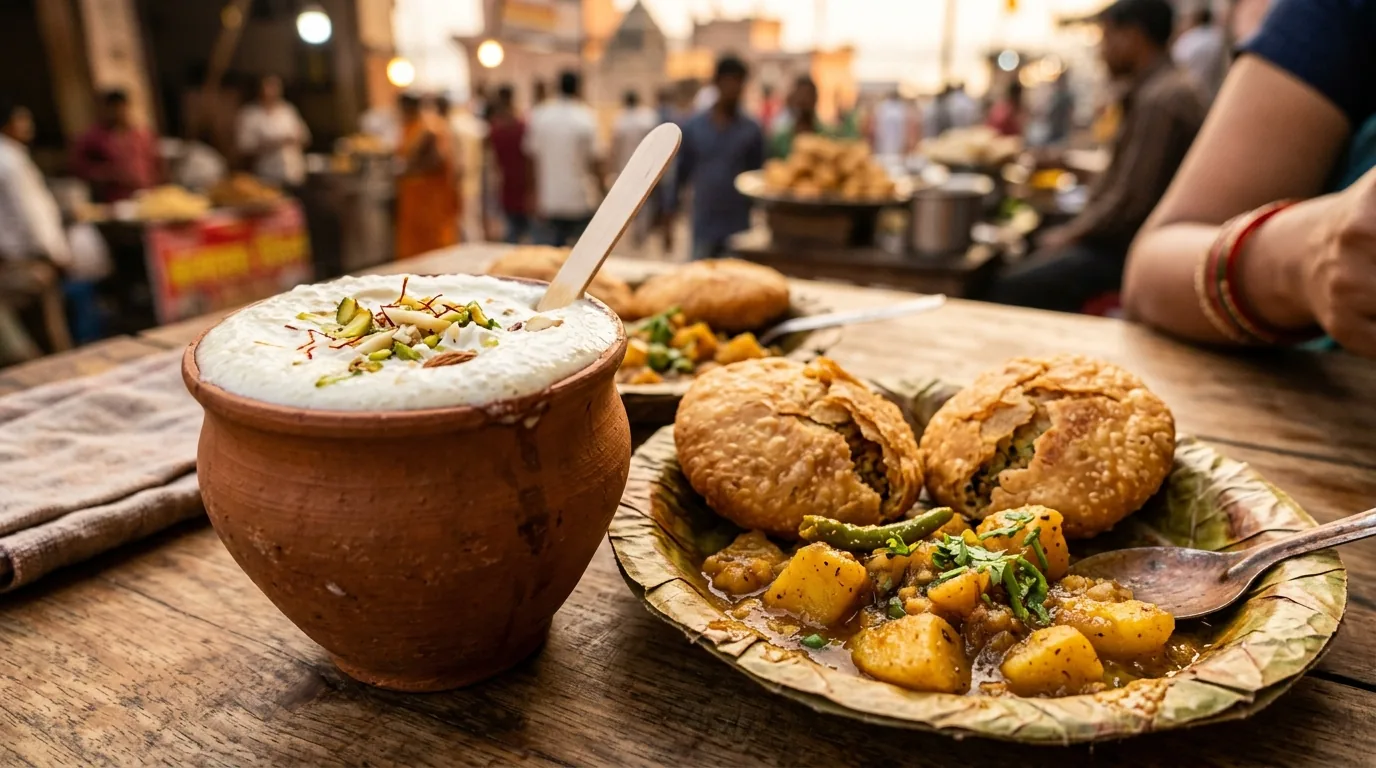
A good food day in Varanasi is made from small decisions: where to begin, what is being prepared now, how much to order and how far you really want to walk for the next taste. The city is easier to enjoy when food is woven into a neighbourhood visit rather than turned into a cross-city competition.
The Ministry of Tourism's culinary introduction is a useful starting point for the city's food identity. This guide turns that introduction into an independent planning framework, with room for different appetites and dietary requirements.
Get to know the dishes before choosing a shop
| Dish or drink | What to expect | A useful ordering question |
|---|---|---|
| Kachori-sabzi | A fried savoury bread served with a vegetable preparation | What is the filling, and how spicy is today's sabzi? |
| Jalebi | A crisp, syrup-coated sweet often paired with a breakfast stop | Can I order a small portion from the current batch? |
| Tamatar chaat | A tomato-based chaat with seasonings and toppings | What goes into this preparation, and can toppings be adjusted? |
| Lassi | A yogurt-based drink, with preparation and toppings varying by seller | What is the portion size, and what will be added? |
| Baati-chokha | A more substantial bread-and-vegetable meal | What does the complete serving include? |
| Chooda or choora matar | A local speciality to ask about on the current menu | Is it being made today, and what are the ingredients? |
| Malaiyyo | A speciality sweet to seek when it is locally available | Is this the current preparation, and how is it served? |
| Thandai | A flavoured drink with recipes and additions that can differ | Can you confirm a plain, non-intoxicating preparation and its ingredients? |
| Banarasi paan | A prepared betel-leaf offering with individually chosen additions | What are you adding, including any areca nut or tobacco? |
The Ministry's traditional food overview explains several of these preparations. Recipes are not uniform across all stalls. Let the cook describe the actual portion in front of you, particularly when an ingredient matters to your decision.
Choose contrasts rather than a long checklist
A savoury breakfast, a small sweet and a later chaat stop already give three different experiences. A heavy drink and several rich snacks in quick succession may leave little appetite for lunch. Share portions where appropriate, pause between stops and choose what interests you most.
Choose a food area that fits the rest of the day
Old City lanes and market streets
The Ministry's food and travel feature places food within the city's lane and riverfront experience. Use a compact Old City walk when you are already exploring the temple precinct or markets. Check the individual shop pin and the approach instead of assuming a well-known name has only one entrance or branch.
Godowlia and the central riverfront approach
This can be a practical area for a food pause around an evening outing, but account for the movement of people before and after the ceremony. Decide whether you want to eat before reaching the evening Aarti or wait until the initial exit rush has eased. Keep the food stop off the busiest walking line.
Assi and the southern side
When the day's route is based around Assi Ghat or the southern temples, it may be more comfortable to eat in that part of the city. Compare a local snack stop with a seated meal, especially if the group needs a bathroom, a longer break or a place to discuss ingredients.
These are editorial route choices rather than opening-hour promises. Confirm the particular outlet before making a long journey solely for one dish.
Build a food day with breathing space
- Morning: choose one breakfast. After a river walk, begin with a modest portion of kachori-sabzi or another preparation you can see being made. Add a small sweet if you want one.
- Midday: choose a meal or a pause. A seated lunch can be more useful than continuing to snack through the hottest or busiest part of the outing. Let the rest of the itinerary decide the location.
- Later: make one focused tasting stop. Try a chaat or a speciality drink when you have room for it, and ask about the complete preparation before ordering.
- Evening: keep the return simple. Place the final meal along your agreed route back rather than creating another distant transfer after a long day.
If you are combining food and shopping, the Varanasi shopping guide helps you organise the markets into a more coherent walk. For a wider sightseeing day, choose a nearby stop from the places-to-visit guide.

Ask what is seasonal and freshly available
A speciality named in a guide is not a guarantee that every shop will make it on every visit. Ask what is being prepared that day, especially when looking for malaiyyo or another seasonal favourite. A sensible alternative is often a better choice than a long detour for an item that has not been confirmed.
Festival periods can also change the experience: a sweet shop may be busy with a different style of service, an approach may be crowded, or your meal timing may need to shift. The festivals and culture guide can help you plan the wider visit, while the actual seller remains the best source for that day's menu.
When someone recommends a particular item, ask them to describe it. That conversation can tell you whether the recommendation suits your appetite, your ingredients to avoid and the amount of time you have.
Use a few clear questions before you order
- Ingredients: ask about dairy, ghee, nuts and any other ingredient you avoid. Ask about garnishes as well as the base preparation.
- Preparation: understand whether the dish is freshly cooked, assembled from prepared components or served chilled.
- Portion and price: confirm what one order contains and whether an added topping or larger cup changes the amount.
- Water and ice: ask about the preparation of drinks and choose an arrangement you are comfortable with.
- Dietary requirements: explain the requirement directly and decide whether the establishment can answer your questions clearly.
A popular shop name is useful for orientation, but it does not answer these questions for the particular dish or visit. Choose food you can assess comfortably and leave room to change your mind. For thandai and paan, be especially clear about what additions you do or do not want.
If a group has different needs, a seated meal with a clear menu may be more suitable than expecting every street-food stop to serve everyone. Build that option into the day before the group becomes tired or hungry.
Try a short tasting route instead of a cross-city circuit
For a self-guided outing, choose one neighbourhood and three simple stages: an introductory savoury stop, a short walk with a cultural or market pause, and a second contrasting taste. Save a meal for later if the tastings have already been substantial. There is no need to order every famous dish to have a satisfying introduction.
Keep the route flexible. Stop where you can wait without blocking the lane, ask before photographing a cook at work and follow the seller's collection and payment arrangement. Dispose of cups and packaging at an appropriate collection point rather than leaving them on a wall or the ghats.
A guided walk can add explanations and make an unfamiliar menu more approachable. Before booking, ask about the actual route, number of stops, group size, portion sizes and dietary arrangements. The tour planning guide explains how to compare those inclusions.
Plan spending by portions and inclusions
Use the displayed menu or the seller's current quote rather than an old online price as your reference. Establish the portion first: one cup, one plate and one tasting included in a tour can mean different amounts. Ask about any charge before adding extras.
For a group, agree whether you are sharing tastes or ordering complete meals. This keeps both the amount of food and the bill easier to understand. A modest cash reserve can be useful, but confirm which payment method the establishment actually accepts before ordering.
The best food budget is one that leaves you comfortable with your choices. Allow for water, a seated break and the journey back, as well as the dishes you came to taste. Use the local transport guide if your last stop is away from your accommodation.
Choose a food walk or a seated temple-area meal
These detailed guides separate local tastings from a researched restaurant shortlist and meal-access planning.
BEFORE YOU GO
Frequently asked questions
What food is Varanasi known for?
The city's food identity includes kachori-sabzi, tamatar chaat, lassi, chooda or choora matar, malaiyyo and Banarasi paan, alongside many sweets and everyday meals. Choose a few contrasting tastes across your visit. A local menu and a freshly prepared portion are more useful than trying to finish every dish on one checklist.
Where should I begin a first food walk?
Choose one compact area rather than crossing the city for each snack. The Old City lanes suit a walk combined with temples and markets; Godowlia can fit before or after a central riverfront visit. Assi and Lanka can work better around a southern-city day. Confirm the actual shop location and opening before setting out.
Is all food in Varanasi vegetarian?
Do not assume that every establishment or preparation has the same menu or dietary practice. Many well-known pilgrimage-area snacks are vegetarian, but you should still ask about the dish and kitchen you are using. Mention ingredients you avoid and check dairy, ghee, nuts, toppings and preparation utensils where relevant.
Is malaiyyo available throughout the year?
Treat it as a speciality to ask about locally rather than a guaranteed item on every visit. Availability depends on the season, seller and preparation. If it is not being made, choose another fresh local sweet instead of building a long cross-city journey around an unconfirmed menu item.
What should I ask when ordering thandai or paan?
For thandai, specify a plain, non-intoxicating preparation and ask about its ingredients. For paan, ask what is being added, including areca nut or tobacco, before deciding whether to order. You can also appreciate the preparation as a local craft without consuming it. Do not assume every version is the same.
Do I need a guide for a food walk?
An independent walk is practical when you are comfortable choosing stalls, asking questions and navigating a short route. A guide can help explain unfamiliar dishes and organise a small-group outing. Ask about the number of tastings, portion sizes, dietary requirements, walking distance and what the quoted price includes before booking.
REFERENCE NOTES
Sources and practical updates
These primary sources support the factual background of this guide. For your travel dates, confirm the current arrangements with the responsible venue, property or service provider.
- Ministry of Tourism: culinary delights of Varanasi
- Ministry of Tourism: Varanasi food and travel experiences
- Ministry of Tourism: traditional Varanasi food and cuisine