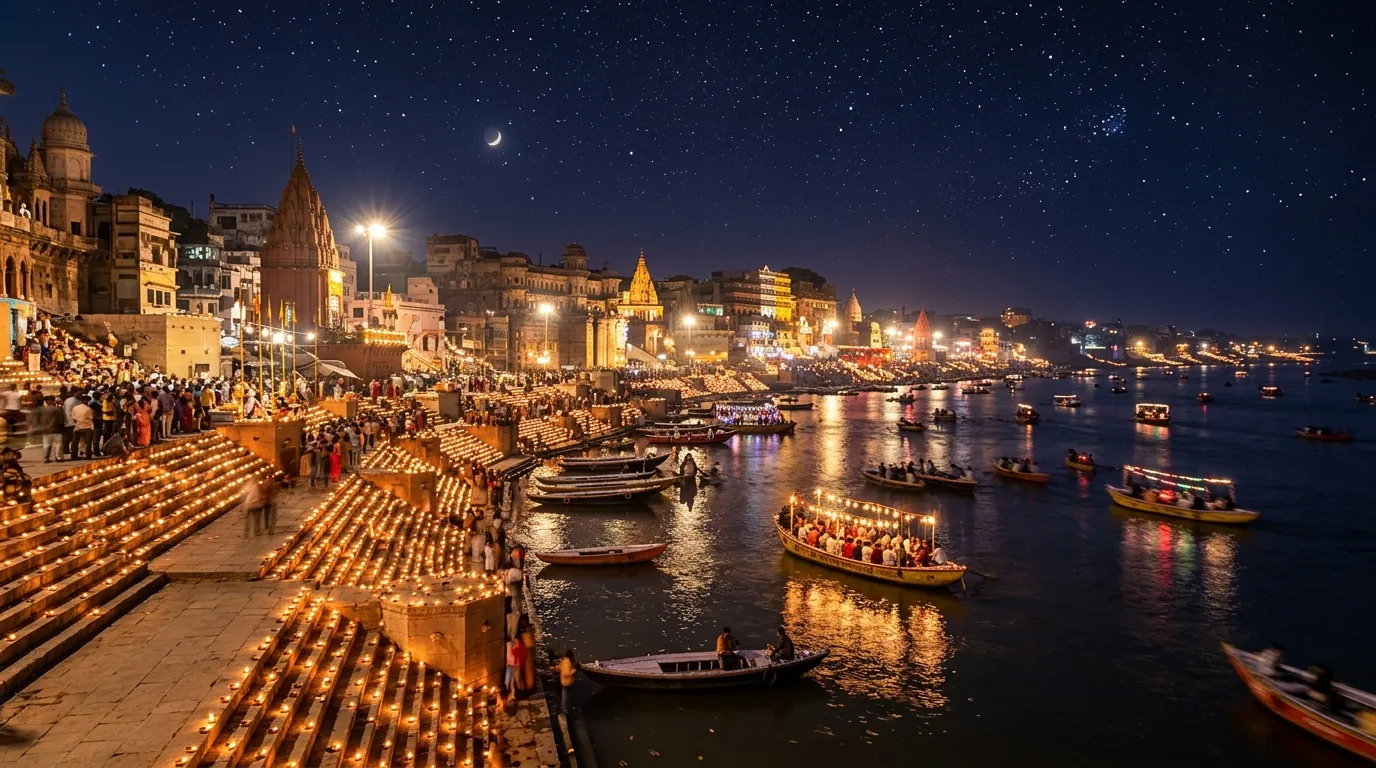
Varanasi's cultural life is larger than a photograph of illuminated ghats. It includes worship, performance, teaching, craft and the ordinary preparation that makes a public celebration possible. Understanding the kind of event you are attending helps you choose an appropriate pace and role as a visitor.
Use this guide for cultural context and an editorial planning framework. Check the actual year's dates, venue and access arrangements with the responsible organiser before building a journey around an event.
Distinguish an everyday ritual from an annual celebration
A riverfront Aarti and a festival night may share lamps, music and a place of worship, but they are different planning situations. A regular visit can focus on a single ceremony and a manageable return route. A large celebration may reshape the whole evening, including the approach, the viewing space and the journey back.
The district's culture and heritage overview places music, drama, religion and craft within the same living city. That is a useful starting point: a cultural experience can be a performance or a workshop as well as a major public event.
Decide what you want to understand. Is it the ritual, the music, the story being performed or the process of making something? A focused purpose makes it easier to choose between an ordinary ghat evening, a concert and a festival visit. The introduction to Varanasi provides the broader city context.
Use a seasonal framework, then confirm the programme
| Tradition or period | Cultural focus | What to confirm |
|---|---|---|
| Maha Shivratri | Shiva worship and related cultural activity | The year's date, temple arrangements and procession routes |
| Sankat Mochan music celebrations | Classical performance associated with the Hanuman Jayanti period | The actual announced programme and audience arrangements |
| Buddha Purnima | Buddhist observances and the wider cultural setting | The particular Sarnath venue or programme you intend to visit |
| Shravan observances | Shiva pilgrimage and temple-centred visits | The current approach, queues and local traffic controls |
| Ramlila and Dussehra season | The performance of the Ramayana tradition | The day's performance location and the route back |
| Diwali and Dev Deepawali period | Distinct observances, with Dev Deepawali associated with illuminated ghats | The correct festival date, viewing plan and authorised access |
The Ministry of Tourism's Maha Shivratri entry explains the tradition, while its event portal also records other cultural programmes. Older entries establish background, not a current timetable. For a future journey, look for the organiser's announcement for that particular year.
Choose a stay with a practical approach and return route when visiting a busy period. The hotel-area guide and transport guide help you turn the cultural choice into a workable trip.
Understand Dev Deepawali before planning the evening
The Ministry's Dev Deepawali description identifies the lighting of Varanasi's ghats as a defining feature. It is distinct from Diwali and belongs to the later festival period. Check the correct date for your travel year rather than using the name of one festival as a substitute for the other.
Decide your viewing area before entering the busiest approaches. Consider the needs of everyone in your group, the walking and steps involved, and how you will return afterwards. If a river outing is part of the plan, confirm whether it is permitted and what alternative applies if it cannot operate.
A quieter position with a clear exit may be a better fit than the most crowded central viewpoint. Give volunteers and residents room to prepare lamps and manage the space. Avoid moving through arrangements for the sake of a photograph.
The dedicated Dev Deepawali Ganga Aarti guide provides more context for the riverfront experience. For an ordinary evening, start instead with the regular evening Aarti guide.
Encounter Ramlila as a living performance tradition
UNESCO's Ramlila entry describes the performance of the Ramayana through narration, song, recital and dialogue. Inscribed in 2008, it includes the Ramnagar and Benares traditions among its representative examples.
This background changes how to plan the visit. Do not assume the format, venue and duration of a short theatre show. Establish where the performance you want to observe takes place, how the audience participates and what the local arrangements allow. Ask before recording or using equipment that could distract performers or other attendees.
Give the story time to unfold. A visitor who understands the episode being presented will often get more from a single carefully chosen performance than from briefly passing several locations. Arrange the return separately, particularly when the cultural outing takes you beyond your usual city base.
Listen to the City of Music beyond a festival headline
UNESCO's Creative Cities profile lists Varanasi as a City of Music since 2015 and describes the importance of the teacher-pupil tradition. This recognition is a reason to pay attention to the city's musical life, rather than a guarantee that any advertised performance has an official status.

Before attending, distinguish a public concert, a devotional programme, a demonstration and a lesson. Ask about the artist or organiser, the setting, the start time and the expected audience arrangement. Follow the event's own instructions about seating, entry and photography.
A morning programme can fit naturally into a southern riverfront day; the Assi Ghat guide explains that surrounding experience. Keep music as an activity you can attend properly, with time to arrive quietly and stay for a meaningful part of the programme.
Meet craft through the process, not only the purchase
The district's craft directory records local GI-linked traditions including brocades and sarees, Gulabi Meenakari and wooden lacquerware and toys. These are ways into the city's working life as well as things visitors may choose to buy.
When arranging a visit, ask what you will actually see. A working loom, a demonstration prepared for visitors and a retail showroom offer different experiences. Confirm the appointment with the maker or provider, respect the workshop's working space and ask which details may be photographed.
If you want to purchase, ask for a clear description of materials, process and price, and keep the receipt. An educational conversation should not make you feel obliged to buy. The shopping guide gives the detailed market and product context, so you can keep the cultural visit and the purchase decision thoughtful.
Prepare for participation with a clear, comfortable plan
- Identify the event precisely. Save the name, year, venue and the organiser's current announcement.
- Choose a realistic role. Decide whether you are observing worship, attending a performance or joining a workshop, and follow the relevant instructions.
- Plan access and return. Agree a meeting point, account for walking and give the group a way to leave without rushing.
- Discuss photographs beforehand. Ask permission where people, performers, workshops or sacred activity are involved.
- Leave room for ordinary life. Keep doors, working areas and circulation routes clear, and dispose of waste at appropriate points.
For a family or a visitor who finds dense crowds uncomfortable, an ordinary day can provide a more manageable introduction to the same living culture. Use the tour planning guide to compare a smaller cultural outing with a festival-centred journey.
Above all, attend the actual event rather than an imagined photograph of it. Good preparation leaves more attention for the story, music and people in front of you.
BEFORE YOU GO
Frequently asked questions
Are Diwali and Dev Deepawali the same festival?
No. They are distinct observances. Varanasi's Dev Deepawali is associated with the later full-moon festival period and the lighting of the ghats. Check the date for your actual travel year before booking accommodation or transport. An old event listing is useful background, not a confirmed programme for a future visit.
Does Ganga Aarti happen only on festival days?
No. The well-known riverfront Aarti is part of regular worship, while a major festival can bring a different scale of illumination, attendance and access arrangements. Use the dedicated Ganga Aarti guides for the ordinary visit, and check the specific festival arrangements separately when planning a crowded evening.
What is the UNESCO recognition associated with Varanasi?
Varanasi has been a UNESCO Creative City of Music since 2015. Separately, UNESCO inscribed Ramlila, the traditional performance of the Ramayana, on its Representative List of Intangible Cultural Heritage in 2008; its description includes the Ramnagar and Benares traditions. These are different forms of cultural recognition.
Can visitors attend a Ramlila performance?
Visitors can plan to observe public performances where attendance is allowed, but should confirm the current programme, location and local instructions. Ramlila is a living religious and theatrical tradition. Expect a different experience from a short, fixed-seat stage show, and arrange a practical route back after the performance.
How can I find a classical music performance?
Check the actual venue or organiser's current announcement, and ask a knowledgeable local host about the format, start time and audience arrangements. Concerts, devotional programmes and a private lesson are different experiences. Confirm recording permission and allow the performance to set the pace of your visit.
Can I visit a weaving or craft workshop?
Arrange the visit with the workshop or a provider who can name the actual maker and explain what is included. Ask whether you will see a working process, a demonstration or a retail showroom. Respect working space and photography preferences, and use the shopping guide to plan purchases with clear descriptions and receipts.
REFERENCE NOTES
Sources and practical updates
These primary sources support the factual background of this guide. For your travel dates, confirm the current arrangements with the responsible venue, property or service provider.
- UNESCO Creative Cities Network: Varanasi, City of Music
- UNESCO: Ramlila, the traditional performance of the Ramayana
- Ministry of Tourism Utsav: Dev Deepawali tradition
- Ministry of Tourism Utsav: Maha Shivratri tradition
- Varanasi district administration: geographical-indication crafts
- Varanasi district administration: culture and heritage
- Ministry of Tourism Utsav: cultural and religious event background