You can visit Kashi Vishwanath Temple, watch the evening Ganga Aarti, take a boat ride, eat kachori, and still leave without really experiencing Banaras. The city works differently. Some of its best moments happen when you wake before sunrise, walk without a fixed route through an ancient lane, stop for chai because a roadside stall smells too fragrant to ignore, sit quietly on a stone ghat for half an hour, or follow the sound of temple bells into a centuries-old courtyard you had not planned to visit.
That is why a good list of things to do in Varanasi needs more than monuments. Yes, there are sacred temples and monumental ghats. But there is also classical music of the Banaras Gharana, exquisite handloom silk weaving, morning Vedic fire rituals, sublime street food, Buddhist archaeological heritage, and a living culture that reveals itself only to those who slow down.
1. Watch the Sunrise Over the Ganga
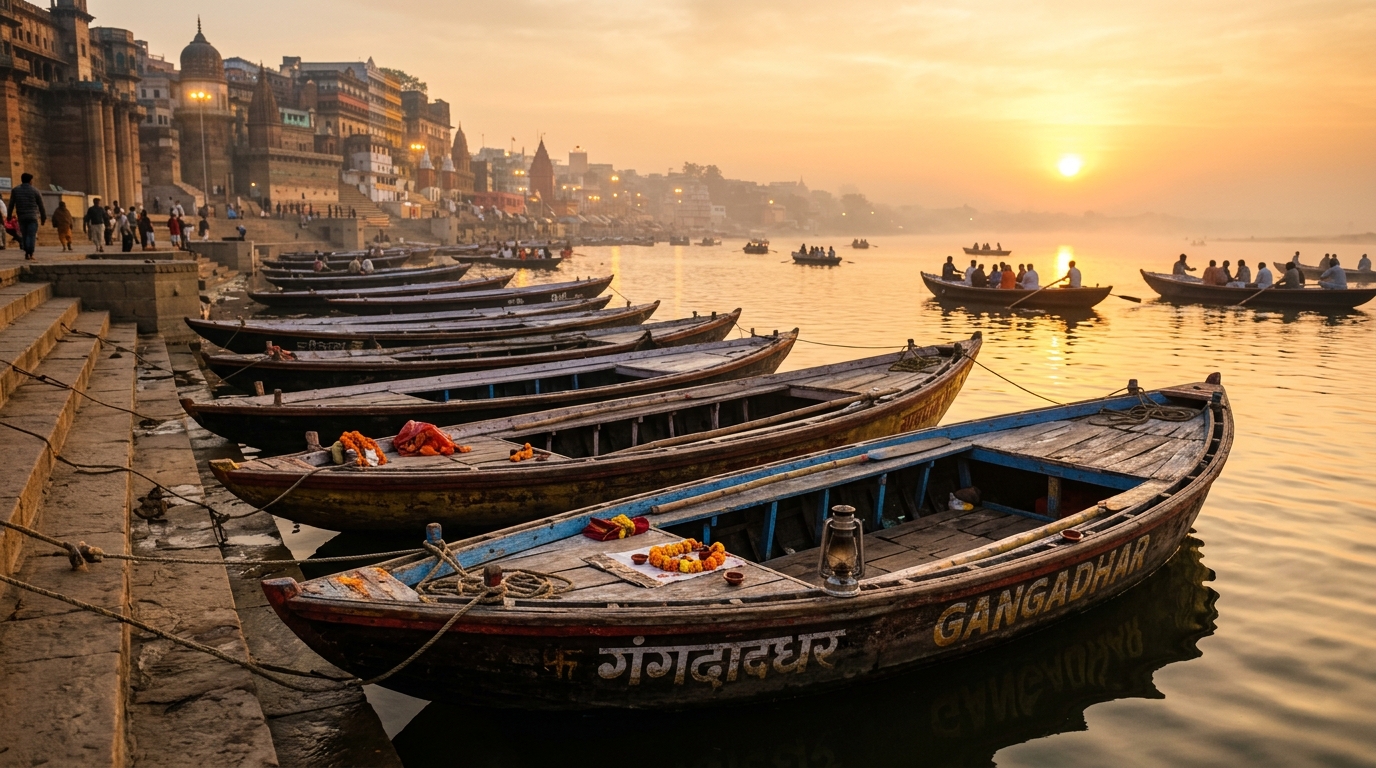
If there is one absolute rule for a first-time traveller in Varanasi, it is this: Wake up before sunrise. Reach the river while the city is still shaking off the night. The eastern horizon across the opposite sandy bank glows in gradients of purple, amber, and gold. Priests begin morning rituals, bathers take their first holy dip, and wooden rowboats slide silently across misty water. Head to Assi Ghat or sit on the steps of Dashashwamedh Ghat to witness Varanasi at its calmest, most poetic hour.
2. Take a Sunrise Boat Ride on the Ganga
Walking the stone ghats shows you the intimate details of city life; seeing them from a wooden boat gives you the grand architectural panorama. A morning boat ride on the Ganga allows you to understand the sweeping crescent of the riverfront. Fortresses, palaces, leaning temples, and bathing steps coalesce into one continuous living tapestry.
Booking Tip: Choose an unhurried, hand-rowed wooden boat rather than a noisy motorboat. Always agree on duration (typically 1 to 1.5 hours), exact route (Assi to Manikarnika and return), and total price before stepping on board.
3. Experience Subah-e-Banaras at Assi Ghat
Begin your day with Subah-e-Banaras, an acclaimed morning cultural initiative held daily at dawn on Assi Ghat. Unlike the dramatic crowd surge of the evening, this sunrise gathering blends Vedic Yajna (fire offerings chanted by young scholars), a graceful 20-minute morning Ganga Aarti facing the rising sun, classical Indian morning ragas, and a free 45-minute community Hatha Yoga session right on the stone steps.
4. Witness the Grand Evening Ganga Aarti
Every dusk without exception, seven young priests ascend elevated brass pedestals at Dashashwamedh Ghat to conduct the iconic 45-minute Ganga Aarti. The synchronised conch blowing, swirling incense, and roaring 108-wick brass lamps create an unforgettable devotional spectacle. Sit on the stone steps (free, arrive by 5:15 PM in winter) or view the ceremony from a stationary wooden boat moored on the water.
5. Visit Shri Kashi Vishwanath Temple & Corridor
The spiritual heartbeat of Kashi, Shri Kashi Vishwanath Temple houses the seventh of the sacred twelve Jyotirlingas of Lord Shiva. Plated with over 800 kg of pure gold donated in 1835 by Maharaja Ranjit Singh, the sanctum is now connected directly to the Ganga at Lalita Ghat through the grand 50,000-sq-meter Corridor. Utilize the free biometric lockers at Gate 4 (Chhatta Dwar) and consider pre-booking a ₹300 Sugam Darshan pass online to skip general queue lines.
6. Get Lost in the Ancient Lanes (Galis) of Old Kashi
If you travel only by car or auto from monument to monument, you will miss the true soul of Varanasi. The real Banaras lives inside its ancient labyrinth of narrow, shaded alleys (galis) around Chowk, Vishwanath Gali, and Thatheri Bazar. Within a 10-minute walk, you will encounter tiny centuries-old shrines, sweet shops frying fresh jalebis, flower garlands, silk looms, cows peacefully dozing, and welcoming neighbourhood courtyards.
7. Walk the Entire Riverfront: Assi to Dashashwamedh
One of the finest urban walks on the planet is the 40-to-60 minute stone promenade connecting Assi Ghat in the south to Dashashwamedh Ghat in the center. Along this unbroken stone walkway, you pass the wrestling akhada at Tulsi Ghat, the fortified battlements of Chet Singh Fort, the striped shrine of Kedar Ghat, Harishchandra cremation grounds, and the palatial stone facade of Darbhanga Palace.
8. Visit Manikarnika Ghat with Quiet Reverence
Manikarnika Ghat is the primary and most sacred cremation riverfront in Hinduism, where funeral pyres have burned continuously for millennia. Visiting Manikarnika confronts you with life's ultimate mortality and liberation. Important Etiquette: Never take photos or videos of active cremation fires or grieving relatives. Maintain solemn quiet and avoid touts asking for "cremation firewood donations."
9. Take a Day Trip to Sarnath: Where Buddha First Taught
Just 10 km north of Varanasi lies Sarnath, one of the four principal pilgrimage sites of world Buddhism. Here at the Deer Park, Gautama Buddha delivered his momentous First Sermon (Dharmachakra Pravartana) after attaining enlightenment. Explore the massive 5th-century Dhamek Stupa, ancient monastery ruins, Mulagandha Kuti Vihar, and the Sarnath Archaeological Museum housing the 3rd-century BCE Ashokan Lion Capital—the official National Emblem of India.
10. Explore the Serene Grounds of Banaras Hindu University (BHU)
Founded in 1916 by Bharat Ratna Pandit Madan Mohan Malaviya, Banaras Hindu University is one of Asia's largest residential universities. Its sprawling, lush campus is an oasis of calm. Visit the New Vishwanath Temple (Birla Temple), renowned for having one of the tallest marble temple spires in the world (77 meters), open to all visitors regardless of background.
11. Marvel at Ancient Art at Bharat Kala Bhavan
Located within the BHU campus, Bharat Kala Bhavan is an exceptional university museum holding over 100,000 antiquities. It features rare 5th-century Gupta-period sculptures, Mughal and Rajasthani miniature paintings, ancient palm-leaf manuscripts, and exquisite historical textiles including Banarasi brocades dating back centuries.
12. Discover the Royal Heritage at Ramnagar Fort
Situated across the Ganga on the eastern bank, Ramnagar Fort is the 18th-century sandstone palace of the Kashi Naresh (Maharaja of Varanasi). The eccentric museum houses royal vintage cars, ceremonial silver palanquins, antique elephant saddles (howdahs), ornate medieval weapons, and an intricate 150-year-old astronomical clock showing sun, moon, and zodiac alignments.
13. Embark on a Morning Banarasi Street Food Safari
Varanasi's street cuisine is an essential cultural institution. Wake up early to savor these timeless local specialties:
- Kachori Sabzi & Jalebi: Crisp, hing-infused puris served with spicy potato-chickpea curry, rounded off with piping-hot, syrup-dripping jalebis (head to Ram Bhandar or Chachi ki Dukan in Lanka).
- Tamatar Chaat: Unique to Banaras—spiced mashed tomatoes cooked with dry fruits, cumin, and hing, finished with sugar syrup and crispy namkeen sev (try Kashi Chaat Bhandar near Godowlia).
- Malaiyyo (Winter Specialty): A cloud-like, saffron-flavored milk froth topped with pistachios and almonds, prepared exclusively on foggy winter nights.
- Thick Kulhad Lassi: Hand-churned yogurt served in earthenware cups, topped with a thick slab of malai (clotted cream) and rabri (Blue Lassi Shop or Pehelwan Lassi).
14. Savor an Authentic Banarasi Paan
Immortalized in song and literature, Banarasi Paan is an art form. Fresh betel leaves (Maghai or Desi) are folded with gulkand (rose petal preserve), catechu (kattha), chuna, sweet fennel, cardamom, and silver foil. Ask for a Meetha Paan (sweet paan without tobacco) at landmark shops around Chowk or Godowlia.
15. Witness Heritage Silk Weavers & Handloom Looms
Varanasi's silk-weaving legacy dates back over 500 years. Step into the traditional Muslim weaver neighbourhoods (Mohallas) of Madanpura, Peeli Kothi, or Lallapura to witness master weavers operating wooden pit looms. Watch how real zari (silver and gold metallic thread) is painstakingly woven into intricate floral motifs (Kalka and Jal) to create heirloom Banarasi silk sarees.
16. Dive into the Bazaars of Godowlia & Vishwanath Gali
Immerse your senses in Varanasi's bustling traditional markets. Godowlia and Vishwanath Gali brim with hand-beaten brass bells, copper puja vessels, wooden toys, glass bangles, sandalwood incense, and vibrant fabrics. Practice friendly bargaining and keep your wallet secure in your front pocket.
17. Immerse in the Music of the Banaras Gharana
Varanasi is designated a UNESCO City of Music, home to the legendary Banaras Gharana of Indian classical music. The city produced icons like Bharat Ratna Ustad Bismillah Khan (Shehnai) and Pandit Ravi Shankar (Sitar). If your visit coincides with the annual Sankat Mochan Sangeet Samaroh (held in April/May), you can listen to India's greatest classical maestros perform all night in devotional reverence.
18. Join a Sunrise Yoga Session on the Ghats
There is no more serene place to practice Surya Namaskar than directly facing the rising sun across the holy river. Participate in the free daily yoga session at Assi Ghat during Subah-e-Banaras, or enroll in a multi-day Pranayama and meditation course at established ashrams around Shivala and Assi.
19. Photograph the Timeless Streets Responsibly
Varanasi is a visual wonderland for street photographers—the play of amber dawn light on water, ornate temple doorways, bustling chai vendors, and atmospheric stone stairways. Ethical Rule: Always ask permission before photographing sadhus or local residents, and never photograph cremations or grieving families at Manikarnika or Harishchandra Ghat.
20. Take a Guided Old-City Heritage Walk
A knowledgeable heritage guide unlocks secret layers of the city that casual tourists walk right past: hidden underground Shiva lingas, the secret history of Maratha queens who funded the ghats, centuries-old sweet recipes, and the unique Banarasi concept of Mauj and Masti (carefree joy).
21. Experience the City by Cycle Rickshaw & E-Rickshaw
When your feet need a rest from walking the cobblestones, hire a traditional cycle rickshaw or electric e-rickshaw to navigate between Godowlia, Chowk, and Maidagin. Riding at street level allows you to take in the vibrant colors, shop signs, and chatter of the city at a gentle, breezy pace.
22. Spend an Unplanned Evening at Assi Ghat
Not every moment needs an itinerary. On one evening of your trip, walk down to Assi Ghat without any schedule. Order a hot ginger-lemon tea in a clay kulhad, sit on the broad steps, listen to local university students debate philosophy, and watch the boats gently bob on the water.
23. Attend a Grand Festival (Dev Deepawali or Mahashivratri)
If your travel dates coincide with Dev Deepawali (celebrated on Kartik Purnima, 15 days after Diwali), all 88 ghats are illuminated with over one million flickering earthen diyas (oil lamps), turning the riverfront into a dazzling amphitheater of golden fire. During Mahashivratri, vibrant processions of Shiva devotees wind through the streets in euphoric celebration.
24. Cross the Ganga to the Sandy Eastern Bank
Hire a wooden boat to row you completely across the Ganga to the uninhabited eastern sandy bank. Looking back across the river gives you an extraordinary, panoramic view of Varanasi's entire stone skyline—from the high fortresses in the south to the spires of Kashi Vishwanath in the center.
25. Do Absolutely Nothing for an Hour: The Banarasi Art of "Mauj"
In local Banarasi philosophy, there is a revered concept known as Mauj, Masti, and Fakiri—the art of finding complete, blissful contentment without rushing or chasing. Find a quiet spot on Kedar or Scindia Ghat, put your smartphone away, and simply gaze at the river for one unhurried hour. You will realize that the greatest gift Varanasi gives you is the ability to be still.
Suggested 2-Day Classic Varanasi Itinerary
Ghats, Temples & Aarti
• 5:15 AM: Sunrise & Subah-e-Banaras at Assi Ghat.
• 6:15 AM: Sunrise boat ride across the 84 ghats.
• 8:00 AM: Kachori & Jalebi breakfast at Chowk.
• 10:30 AM: Kashi Vishwanath Temple & Corridor.
• 5:30 PM: Evening Ganga Aarti at Dashashwamedh.
• 8:00 PM: Banarasi Tamatar Chaat & Sweet Paan.
Sarnath, BHU & Silk
• 8:30 AM: Half-day excursion to Sarnath (Stupa & Museum).
• 1:00 PM: Traditional Baati Chokha lunch.
• 2:30 PM: BHU campus, Birla Temple & Bharat Kala Bhavan.
• 4:30 PM: Silk weaving loom demonstration in Madanpura.
• 6:30 PM: Relaxed evening tea & music at Assi Ghat.
Frequently Asked Questions About Things to Do in Varanasi
What is the single best thing to do in Varanasi?+
Experiencing the sacred river Ganga at sunrise—ideally from a quiet hand-rowed wooden boat, followed by morning rituals at Assi Ghat—is the quintessential Varanasi experience.
Is the evening Ganga Aarti worth seeing?+
Yes. The evening Ganga Aarti at Dashashwamedh Ghat is a hypnotic, multi-tiered brass lamp ritual. Arrive 60 minutes before dusk to secure steps or a boat seat.
Is Sarnath worth visiting from Varanasi?+
Absolutely. Just 10 km away, Sarnath is where Buddha preached his first sermon. The 5th-century Dhamek Stupa and the original Ashokan Lion Capital make it a world-class archaeological site.
How many days are recommended for Varanasi?+
Two days covers the essential highlights comfortably. Three to four days allows for relaxed food walks, silk loom visits, Sarnath, and quiet time on the ghats.
What famous foods should I eat in Varanasi?+
Do not miss morning Kachori-Jalebi, evening Tamatar Chaat, thick Kulhad Lassi, winter Malaiyyo, Baati Chokha, and authentic Banarasi Meetha Paan.