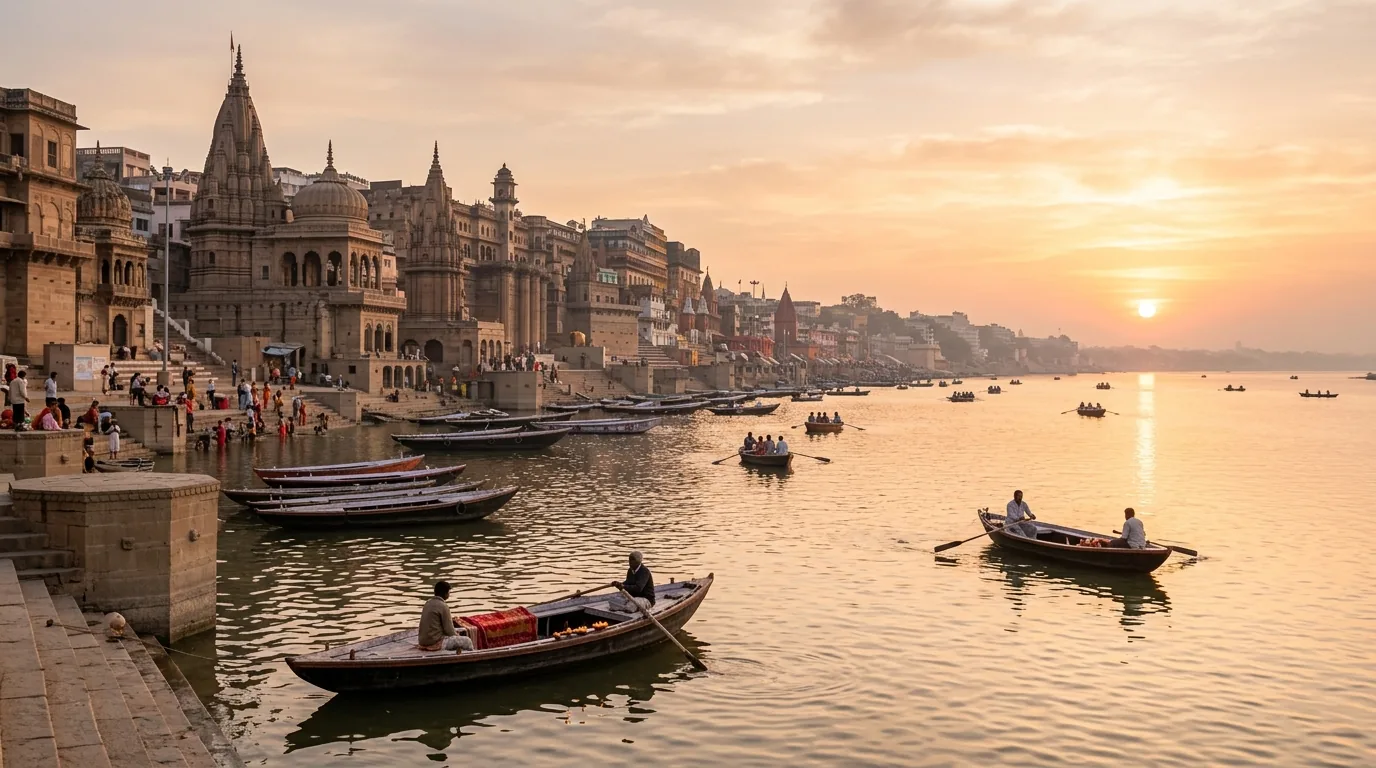
A good Old City walk has a theme, a manageable area and permission to stop before every lane begins to look the same. Varanasi's heritage is not confined to facades: it is also visible in the way a shop opens, a delivery negotiates a corner and a small sacred doorway shares space with everyday commerce. This self-guided planning outline focuses on the central lanes and a permitted riverfront connection. It is a cultural walk, distinct from a food tasting tour or a temple darshan itinerary.
Choose a small route with a clear beginning
Use a recognisable central approach around Godowlia as the broad starting area, then confirm a short occupied-lane loop with your accommodation. The route you actually follow should respect current pedestrian controls, building access and conditions at the ghats. This article does not promise a measured, signposted trail or a permanently open sequence of narrow passages.
Set a return point before starting. If someone in the group becomes tired, the walk should be easy to shorten without searching for an unfamiliar exit. Agree whether a guide is interpreting architecture and local history, arranging religious visits or providing a food experience; those are different services and should not be bundled vaguely into one price.
Look at the scale of the street
Begin with details that are openly visible: the depth of a shopfront, the position of a threshold, painted lettering or the way goods are stored vertically in a narrow space. These observations help explain how the street works without requiring entry to a residence or private workshop. Step aside to discuss them rather than stopping the flow of people.
Avoid giving every visible feature an uncertain date. Old-looking does not establish medieval, and a new sign does not make the underlying building recent. A reliable panel, archive or informed explanation can add history; otherwise describe what you can actually see. A walk becomes more authentic when it admits the limits of its interpretation.
Sacred doorways are working places
An exterior view of a shrine can add religious context to the streets, but a full temple visit needs its own preparation. Kashi Vishwanath has particular belongings and entry instructions; it is not a spontaneous camera stop within a lane walk. Use its dedicated visitor guide if worship is part of the day.
Ask before photographing worshippers or entering a space whose public status is unclear. Respect a person who prefers not to explain their practice. The most considerate moment to learn about a religious custom may be later, with an appropriate guide or a written source, rather than at the doorway while someone is waiting to pray.
Commerce, craft and the invitation to enter
Textile displays, brass goods and small counters can make a lane visually rich. Looking from a public place is different from expecting a craft demonstration. Ask before entering a workshop or recording someone at work, and be clear if you are simply interested in observing rather than buying.
If you decide to shop, give that decision its own time. Inspect a substantial purchase carefully and avoid treating a guide's recommendation as independent certification of quality. The shopping guide addresses purchasing questions; this walk's purpose is to notice the setting without pressuring either visitor or seller into a transaction.
Let the riverfront provide a change of scale
Where a permitted route reaches an open public ghat, pause to compare the enclosed lanes with the larger river view. Dashashwamedh is a relevant central reference, but its ceremony and crowds create a separate experience later in the day. Check the path you will use to return to the streets instead of assuming a continuous riverside walk is available.
Do not add active cremation areas for dramatic effect. Mourning is not a heritage performance, and privacy takes priority over the completeness of your circuit. A river view, a short conversation and a return through a familiar lane can finish the walk without intruding on anyone's grief.
Keep food and the finish simple
A tea or meal stop can be a natural end to the walk. If tasting is your main interest, follow the street food guide as a separate outing rather than trying to make every architectural pause another eating stop. Different people in a group may also need a seated break at different times.
Wear footwear suitable for uneven surfaces, keep belongings secure and take current access advice seriously. The visitor safety guide covers practical preparation. Leave with a few details you can explain to someone else: a street that solved a problem, a building that changed your sense of scale, or a question you want to research further.
BEFORE YOU GO
Frequently asked questions
Is this a fixed, measured walking trail?
No. It is a planning outline for a short central cultural walk. Confirm the route locally for your date and adapt to access controls and conditions. Choose a recognisable return point instead of depending on an uninterrupted chain of narrow lanes.
Does the walk include Kashi Vishwanath darshan?
Not automatically. Temple worship has separate belongings, security and entry arrangements. Plan it deliberately through the dedicated temple guides. A cultural walk can observe the wider setting without joining a ritual or a queue.
Should I hire a guide?
A knowledgeable guide can add useful interpretation if the scope and charge are clear. Ask what they will explain and whether shopping, food or religious services are involved. An introduction to a seller or a paid service is not the same as historical evidence.
REFERENCE NOTES
Sources and practical updates
These primary sources support the factual background of this guide. For your travel dates, confirm the current arrangements with the responsible venue, property or service provider.
- Varanasi district administration: riverfront setting
- Kashi Vishwanath Trust: current access and belongings notices