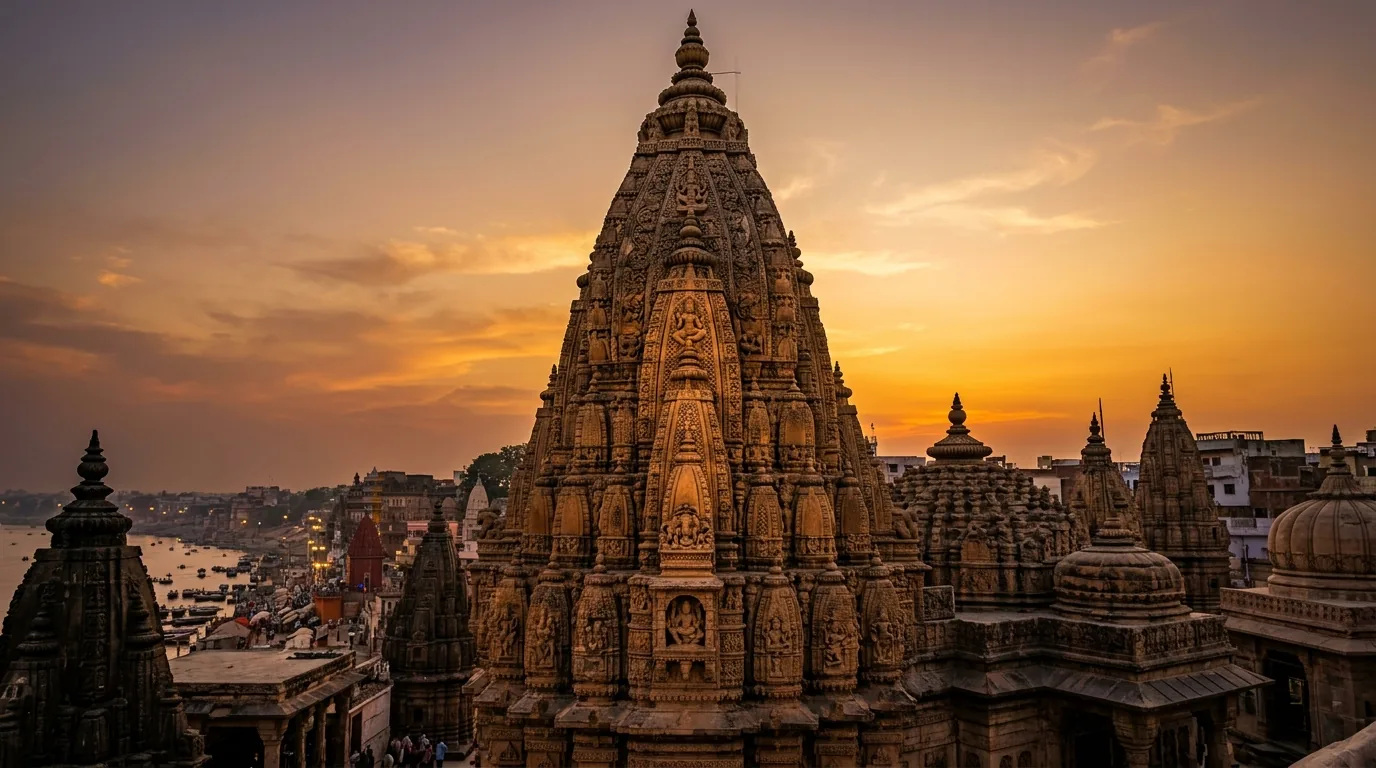
For many pilgrims, Kashi begins with a single purpose: darshan of Baba Vishwanath. The temple belongs to the living religious life of Varanasi, and a good visit leaves room for that purpose. Understand the shrine, choose the kind of visit you want, and organise the practical details before entering the Old City.
This guide introduces the temple and its setting. If you already know why you are going, use the step-by-step darshan guide for preparation, queues and the sequence of the visit.
Why Kashi Vishwanath matters to pilgrims
Kashi Vishwanath is a Shiva temple in Varanasi's Old City, on the western side of the Ganga. It is revered as one of the twelve Jyotirlingas. Vishwanath and Vishweshwar are names associated with Shiva as Lord of the Universe; Baba Vishwanath is a familiar devotional form of address.
In Hindu belief, Kashi has a special relationship with Shiva, spiritual liberation and the passage between life and death. These traditions explain the intensity of the pilgrimage.
You do not need an elaborate itinerary to appreciate the place. A carefully prepared darshan, followed by time to sit or walk somewhere appropriate outside the worship route, can be more meaningful than rushing between several ceremonies.
Before setting out, use the entry gates guide to distinguish the helpdesk, general approach and gate printed on your Aarti ticket.
The historic shrine and the modern Dham
The present temple's history is closely associated with the eighteenth-century rebuilding commissioned by Maharani Ahilyabai Holkar. The Kashi government portal also records Maharaja Ranjit Singh's contribution of gold to the temple in the nineteenth century. These historical patronages are part of the story behind its familiar Golden Temple identity.
The larger Kashi Vishwanath Dham development is a separate, modern chapter. Its first phase was inaugurated on 13 December 2021, improving the connection between the temple precinct and the river. The shrine, the surrounding Dham and the riverfront approach are connected spaces, but they are not interchangeable destinations.
This distinction matters when making plans: reaching the Dham does not mean that security, the relevant queue and darshan are already complete. A broad passage or open courtyard also does not make every route suitable for every wheelchair user. Ask about the actual approach and assistance required for your party.
Choose darshan, Aarti or a booked ritual
Start with what you want to take part in. General darshan, a special darshan service, Aarti attendance and a priest-led ritual serve different purposes. A payment for one service should not be assumed to include another.
| Visit | Main purpose | Planning point |
|---|---|---|
| General darshan | Offer prayers through the ordinary visitor process | General entry is free; allow for security and a variable queue |
| Sugam Darshan | A separately offered assisted darshan service | Check current availability, inclusions and restrictions before paying |
| Aarti attendance | Attend a particular scheduled worship ceremony | Follow that booking's reporting time and instructions |
| Rudrabhishek or another ritual | Participate in the specific ritual selected | Clarify the service, participants and materials included |
Use the online booking guide to understand the official process. For the opening ceremony of the day, the Mangala Aarti guide explains why an overnight arrival plan needs particular care.
Give the temple its own part of the day
Build the visit around the current darshan schedule or the reporting instructions on your confirmed booking. The hours when a temple precinct is open are not necessarily uninterrupted hours for general darshan. Worship ceremonies and special arrangements can change the visitor flow.
Check the temple timings guide before choosing your day, then confirm any dated notice through the temple's official information. Religious festivals and especially busy days need a more flexible schedule. No published average queue time can promise when your own visit will finish.
If travelling with family, agree what happens if the wait becomes uncomfortable: who stays together, where you will regroup, and whether another activity can be dropped. Keep a meal or rest break available afterwards. Booking a train immediately after an uncertain queue adds pressure to an otherwise important occasion.
Make the arrival simple
Travel to your accommodation first when you have large luggage. The temple's published notices advise bringing fewer belongings and prohibit electronic items such as phones, cameras and smart watches in the temple premises. Arrange storage before joining the queue, and keep any required booking printout available separately.
Wear clean, modest clothing suited to worship and to walking. For a separately booked ritual, confirm whether its instructions require particular clothing. Ask staff about any item you need for health or mobility rather than assuming that a general list resolves every individual situation.
The arrival and final-approach guide explains how to agree a practical drop-off. Carry a written hotel address and a meeting point; a plan stored only on a phone is less useful once that phone has been deposited.
Let worship set the pace inside
Follow the lane and security directions given on the day. Keep your group together without blocking the movement of other devotees, and have documents ready before they are requested. The moment in front of the deity may be brief; avoid stopping to negotiate extra time or a different form of access.
Do not assume that general entry or Sugam Darshan permits touching the Jyotirlinga. The temple's published Sugam terms explicitly distinguish that service from Sparsh Darshan. Any such access depends on the relevant authorised arrangements, not on a promise made outside the temple.
Offerings, additional worship and donations should be clear choices. Ask what is included and use the appropriate official counter for temple services. A simple darshan does not need to become a series of unplanned purchases to feel complete.
Continue with a short Old City outing
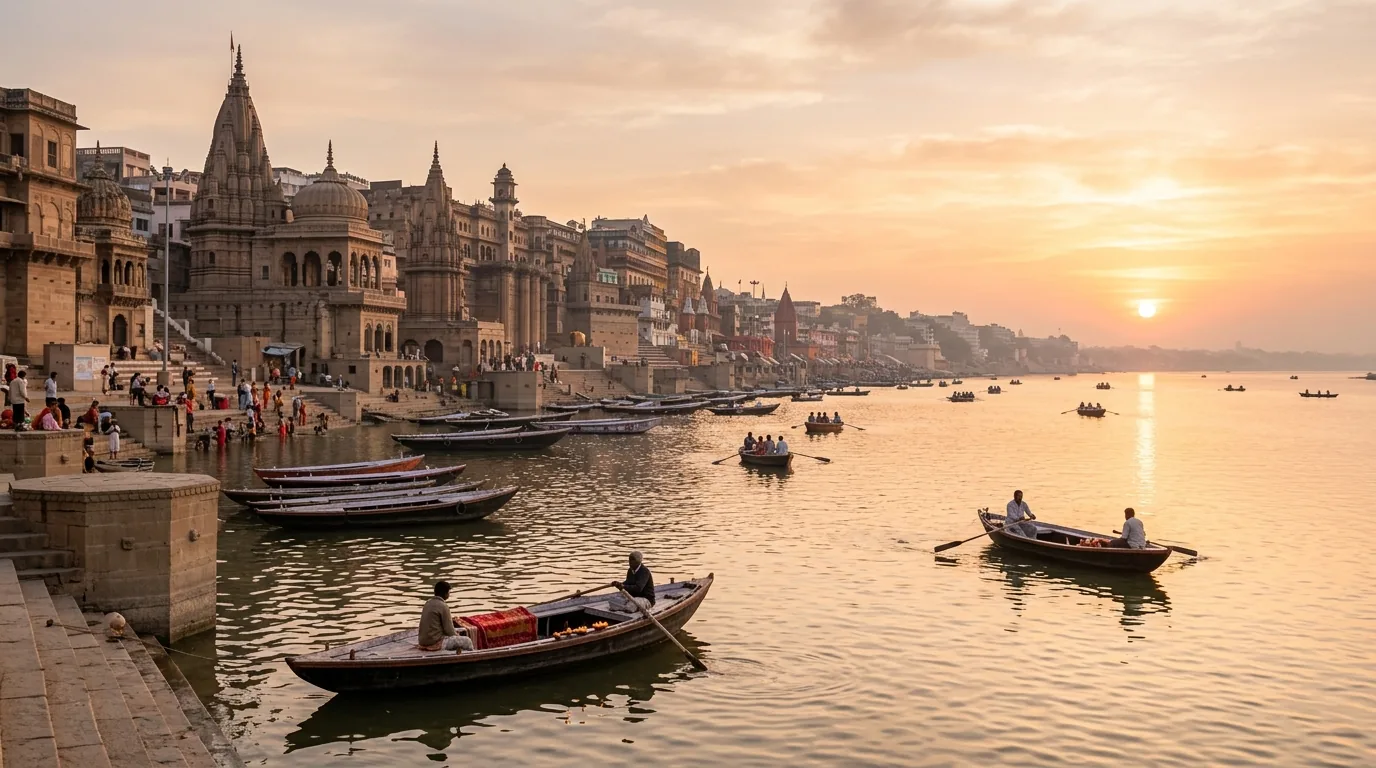
Collect your belongings before committing to another destination. If the group is comfortable and the route is open, the central riverfront can be a natural continuation. Read the Dashashwamedh Ghat guide to decide whether to visit in daylight or return for the evening atmosphere.
Temple Aarti and Ganga Aarti are different ceremonies in different settings. Leave a generous buffer if planning both, including the walk, belongings collection and the need to find a suitable viewing place. On a crowded day, choosing one main religious experience may give you a calmer visit.
For a broader pilgrimage, the Varanasi temples overview helps you choose another shrine by location and significance. Keep the next stop optional rather than allowing a checklist to dictate the pace of the day.
BEFORE YOU GO
Frequently asked questions
What is Kashi Vishwanath Temple known for?
It is a Shiva temple in Varanasi revered as one of the twelve Jyotirlingas. Its significance comes from Hindu traditions linking Kashi with Shiva and liberation, as well as the continuing practice of daily worship and pilgrimage.
Is Kashi Vishwanath the same as the BHU Vishwanath temple?
No. This guide covers Shri Kashi Vishwanath Temple in the Old City and its Dham. The Vishwanath temple at Banaras Hindu University is a separate destination. Use the full temple name when arranging a vehicle.
Is general entry to Kashi Vishwanath free?
The Temple Trust's published FAQ describes general entry as free. Sugam Darshan, Aarti attendance and particular rituals are separate services with their own terms. Check the current official arrangements before choosing or paying for one of them.
Does entering the Dham mean I have completed darshan?
No. The wider precinct, an entrance, the relevant reporting point and darshan are different parts of a visit. Follow the current route and security instructions, and allow time for the queue even after reaching the temple area.
Does Sugam Darshan allow touching the Jyotirlinga?
The Trust's published Sugam Darshan terms explicitly state that its ticket is not for Sparsh Darshan. Follow the particular service you have booked and the instructions given by temple staff rather than assuming one pass includes every form of access.
Can I combine Kashi Vishwanath with Ganga Aarti?
Yes, if you leave sufficient time for darshan, collecting belongings, walking and finding a suitable viewing place. Temple Aarti and Ganga Aarti are different ceremonies. Keep the second activity flexible when temple queues or crowd controls extend the first visit.
REFERENCE NOTES
Sources and practical updates
These primary sources support the factual background of this guide. For your travel dates, confirm the current arrangements with the responsible venue, property or service provider.
- Varanasi district administration: Kashi Vishwanath Temple
- Kashi government portal: temple background and historic patronage
- Prime Minister of India: inauguration of Kashi Vishwanath Dham, December 2021
- Shri Kashi Vishwanath Temple Trust: published visitor FAQ
- Shri Kashi Vishwanath Temple Trust: published visitor notices
- Shri Kashi Vishwanath Temple Trust: published Sugam Darshan service terms