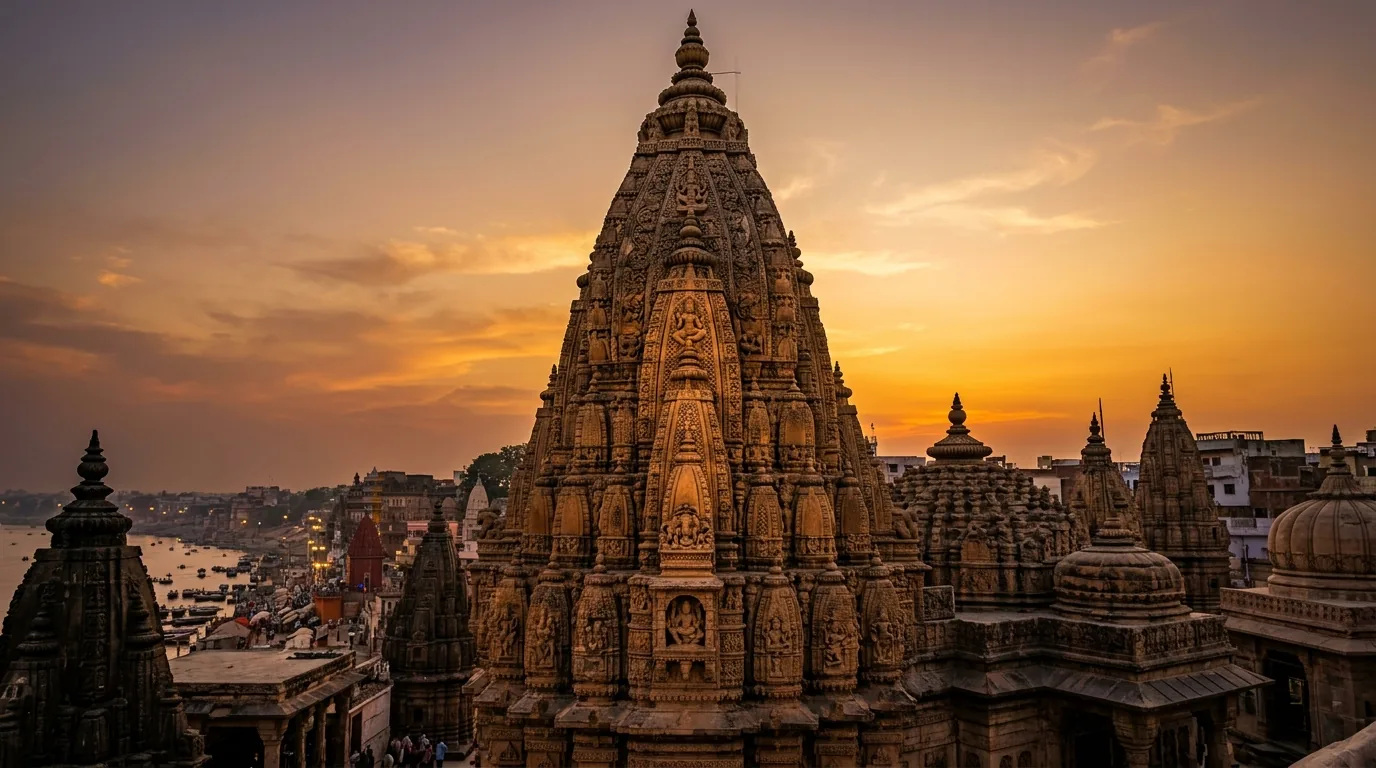
The best time for Kashi Vishwanath darshan is the window that suits your purpose and leaves room for the realities of the visit. Comfortable weather does not guarantee a short queue, and an early start does not replace a confirmed booking for a particular ceremony. Begin by deciding whether you want ordinary darshan, an aarti or assisted access. Then consider the season, the people travelling and the journey into the Old City. This guide helps you choose without pretending that tomorrow's crowd can be predicted precisely.
Choose your purpose before choosing an hour
An ordinary darshan visit and attendance at Mangala Aarti are different plans. One involves joining the authorised darshan arrangement during permitted periods; the other depends on a service booking and its reporting instructions. Arriving before sunrise does not by itself secure a place at a ticketed ceremony. Read the darshan guide before deciding what the day needs to include.
If you have chosen Sugam Darshan, use the available official slot and the instructions for Shastri allocation rather than treating a broad published service window as unrestricted access. The slot, walk to reporting, belongings deposit and security all need space in your schedule. A convenient-looking hour can be inconvenient if your train or flight reaches the city too close to it.
For a general visit without a fixed ritual, make flexibility your advantage. Keep another major attraction out of the immediate aftermath, particularly on an arrival day. The temple timings guide distinguishes published opening and worship periods. Those hours help orient a plan, but they do not reveal the length of the queue or establish that every entrance operates continuously.
Cooler months usually make the approach more comfortable
For many travellers, roughly October to March is a practical starting point for choosing dates because the walking and waiting can be easier than in the hottest part of the year. This is a comfort recommendation, not a promise of empty lanes or identical weather throughout that span. Check the forecast for the specific dates and the needs of anyone who struggles with cold mornings or extended standing.
Late autumn and winter can suit a combined temple-and-city itinerary, but the earliest hours may feel cold and fog can affect the journey. A visitor who finds a pre-dawn start tiring may prefer a permitted later window over an ambitious plan built around the smallest theoretical crowd. Comfortable worship is a better objective than winning a race to an entrance.
By spring, assess heat and walking distances carefully rather than relying only on a month label. The same itinerary can feel very different for a fit solo traveller and a family with older relatives. Choose accommodation, transport and rest opportunities together. The broader Varanasi travel guide helps place the temple visit within the pace of the whole trip.
Hot weather and the monsoon need a different plan
In hotter months, reduce unnecessary time outdoors before reaching the queue. Arrange the transfer, belongings and reporting details in advance, and leave time for rest rather than filling every available hour. Choose comfortable clothing and follow the permitted-items rules about what can be carried. An early or later permitted visit may be more comfortable, but the actual service schedule and conditions still govern entry.
During the monsoon, consider the approach as well as the temple. Wet surfaces, rainfall and river conditions can change how you reach the precinct or combine it with a ghat walk. Do not make a boat or uninterrupted riverside route the only way to reach a fixed booking. Ask for a land alternative and check local directions before departure.
A smaller apparent crowd does not automatically make a difficult-weather day the best choice. If a traveller has limited mobility or a tight departure connection, reliable access and a comfortable return may matter more. Use the how to reach guide to ask concrete questions about the vehicle stop, walking stretch, steps and the pickup after worship.
Match the time of day to your group
An early start can help a group avoid some daytime heat and preserve the rest of the day, but it also requires sleep, transport and completed document preparation. For booked Mangala Aarti, follow the reporting time and gate on the confirmation. General and Tatkal arrangements can differ. The Mangala Aarti guide explains why a pre-dawn arrival should be organised the evening before.
A later permitted window can suit people who arrive in the city that morning or who cannot comfortably manage the early transfer. Avoid treating the full published temple day as continuous general darshan. Worship periods and administrative controls can interrupt the experience you expect. Check the applicable schedule, then keep enough time for the queue and collection of belongings before an onward commitment.
Do not rely on an article naming one universally quiet hour. Crowd patterns change with pilgrim arrivals, school holidays, weekends, religious dates and local arrangements. Ask your accommodation and official helpdesk about current conditions while recognising that nobody can guarantee the actual waiting time. A useful plan offers choices if the first window becomes unsuitable.
Mondays and festivals: decide whether devotion or ease comes first
Mondays and major Shiva observances can be particularly important to devotees, so they deserve deliberate planning. If the religious significance of the day is the reason for your trip, allow a larger margin and simplify the rest of the itinerary. If your dates are flexible and easier movement is the priority, consider an ordinary day instead of assuming every calendar date provides the same experience.
Shravan, Mahashivratri and other major celebrations can bring changed access arrangements and heavy demand. Festival interest is a reason to check current instructions, not a reason to repeat an old entry diagram with confidence. Avoid booking an onward transfer that depends on completing darshan in a precise short interval. Confirm accommodation and transport early enough to reduce last-minute decisions.
Dev Deepawali and other riverfront celebrations can also affect the surrounding city's pace even when your main purpose is temple worship. Separate temple ceremonies from Ganga Aarti and from a festival river outing. Use the festivals and culture guide for background, then verify the current programme rather than applying an ordinary-day plan unchanged.
Leave a realistic buffer around darshan
| Your priority | A useful planning choice |
|---|---|
| Comfortable walking | Consider cooler dates and the actual forecast |
| A specific aarti | Build around the confirmed service and reporting time |
| A family visit | Choose a rested group and a flexible onward plan |
| A same-day departure | Protect the station or airport buffer first |
Build the visit from separate stages: leaving accommodation, reaching a permitted drop-off, walking, storing belongings, reporting if required, passing security, joining the authorised route, collecting belongings and returning. These stages can overlap in conversation but not necessarily in practice. Allowing time for only the road journey is one of the easiest ways to make a reasonable booking feel stressful.
If arriving with luggage, stop at suitable accommodation or verified storage before entering the lanes. Print papers where the service terms require them and agree a return meeting point before phones are deposited. The locker guide explains why finishing darshan is not the same as being ready to board a waiting vehicle.
Three ways to fit the visit into a Varanasi stay
For a relaxed two-day stay, choose one temple-focused half-day and leave its finishing time open. After worship and collection of belongings, decide whether there is energy for a short corridor or ghat visit. Use the second day for another neighbourhood or Sarnath rather than crowding all the city's major experiences around one uncertain queue.
For a short stay with older relatives, choose reliable transport and a manageable approach over a packed checklist. Ask about the complete route, opportunities to rest and available assistance. A booked service may help organise the visit, but it should not be assumed to remove all standing, walking or security requirements. Confirm the specific arrangement for the person travelling.
For a ceremony-led pilgrimage, let the booked ritual determine accommodation location, sleep and transfer planning. Keep the period afterwards gentle and avoid relying on a sunrise boat to solve a temple transfer. Our Varanasi itineraries provide a broader structure; adapt them around confirmed worship arrangements, weather and the group's energy instead of treating them as fixed appointments.
BEFORE YOU GO
Frequently asked questions
Which month is best for Kashi Vishwanath darshan?
Many visitors find the cooler October-to-March period more comfortable for walking and waiting. Check actual weather and religious dates: a pleasant month can still include very busy days.
Is early morning always the least crowded time?
No dependable daily crowd forecast is available here. Early visits can help with heat and itinerary planning, but ceremonies, pilgrim arrivals and access controls can still create substantial demand.
Can I arrive at any time between opening and closing?
Do not equate the full temple day with continuous general darshan. Read the published worship schedule and current visitor instructions, or follow the slot and reporting terms on your ticket.
Should I avoid Monday?
That depends on your purpose. Monday may be important for devotion, while a flexible traveller prioritising easier movement may prefer another day. Neither choice guarantees a particular queue length.
Can I combine temple darshan and evening Ganga Aarti?
Yes, with a generous gap for the queue, belongings collection, walking and finding a viewing place. Keep the second activity flexible rather than promising a fixed temple finishing time.
Is a monsoon visit possible?
Plan around current conditions and official instructions. Rain and river levels can affect the approach and ghat connections. Keep a land route and avoid depending on an operating boat service.
REFERENCE NOTES
Sources and practical updates
These primary sources support the factual background of this guide. For your travel dates, confirm the current arrangements with the responsible venue, property or service provider.
- Government of Uttar Pradesh: seasonal weather background
- Inland Waterways Authority of India: Varanasi seasonal climate context
- Shri Kashi Vishwanath Temple Trust: published visitor FAQ
- Temple Trust: published Sugam Darshan service conditions
- Temple Trust: visitor notices; verify current access before travelling