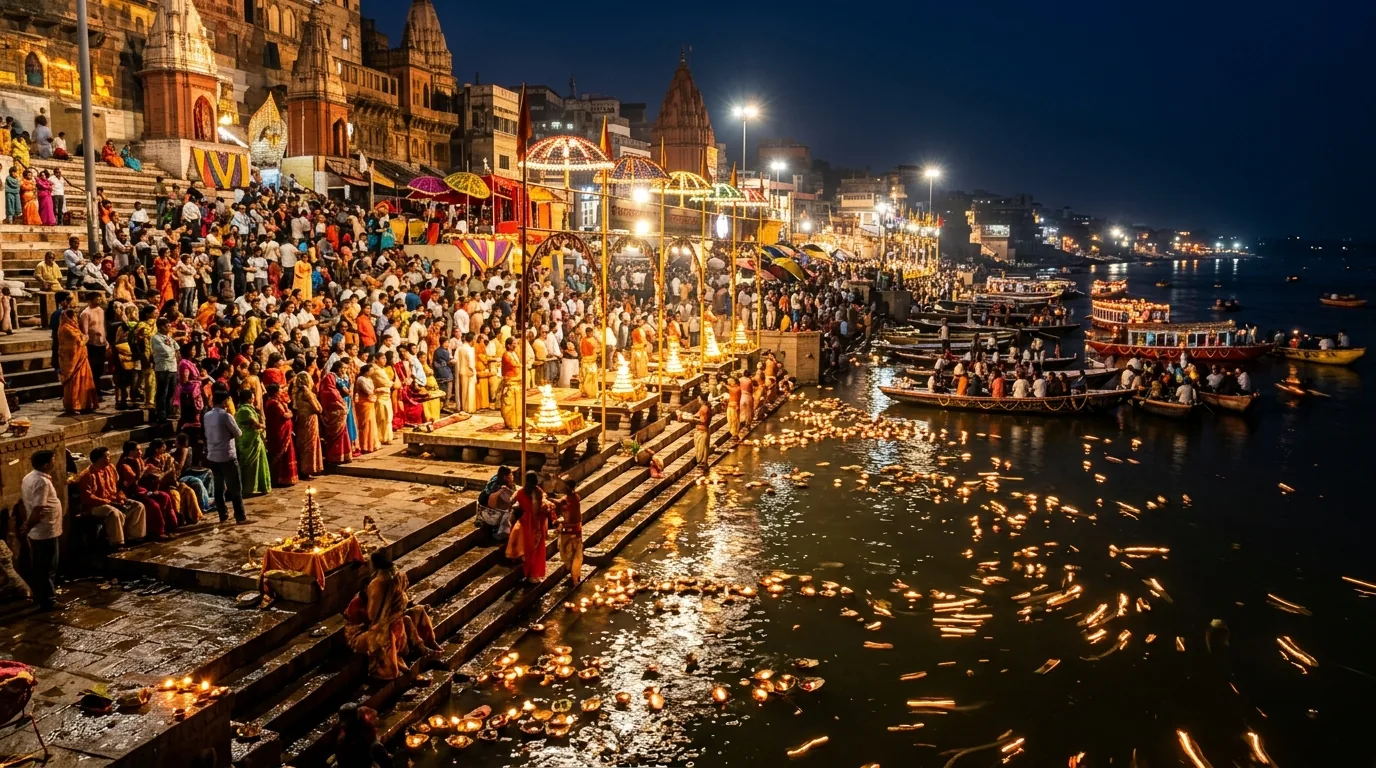
The right hotel in Varanasi is the one that makes your particular trip work. A riverfront address can put a dawn walk close to the door; a road-connected property can make luggage, family arrivals and repeated vehicle journeys simpler. Begin with that trade-off, then compare rooms and rates.
This guide helps you make a shortlist with clear questions. Use it alongside the arrival and transport guide and your daily itinerary, so that the accommodation choice supports the whole visit.
Compare the main areas before comparing hotel names
| Area | A good fit when you want | Questions before booking |
|---|---|---|
| Old City and central riverfront | A visit centred on the temple precinct, ghats and markets | Where is the permitted drop-off? How much walking and how many steps remain? |
| Assi and the southern riverfront | A base for river mornings and a southern-city route | Is the entrance on a vehicle-accessible road or inside a lane? What is the route to your planned activities? |
| Cantonment and Nadesar | A stay organised around vehicle transfers and time at the property | How will you reach and return from the ghats, particularly after an evening outing? |
| Sarnath side | A visit with a strong focus on Buddhist heritage or local commitments there | How often will you travel into central Varanasi, and is the extra transfer acceptable? |
These are planning categories, not a promise that every property in an area has the same atmosphere or access. Look at the actual entrance and room, then ask how the route behaves at the time you are likely to arrive. A hotel name followed by a familiar ghat does not establish that your vehicle will stop at its reception.
Choose a stay format that suits your priorities
A ghat-front or heritage stay
This format suits visitors who value a close relationship with the riverfront and are comfortable checking the approach carefully. Ask about the room category, stairs, luggage assistance and any transfer that forms part of arrival. If an advertised view is a major reason for booking, obtain a room-specific explanation rather than relying on a photograph of the shared terrace.
A road-connected full-service hotel
Consider this format when you want the property itself to provide a comfortable pause between outings. Check meals, parking, lift access and pickup arrangements, then budget time for the journeys to the Old City. A larger property can simplify some needs, but the exact room and route still deserve the same questions.
A guesthouse or smaller independent stay
Look for a clear description of the room, bathroom, reception arrangements and the person responsible for your booking. Ask how late arrival is handled and who you should contact if the entrance is difficult to find. Smaller properties vary considerably, so evaluate the actual arrangements instead of inferring them from the category label.
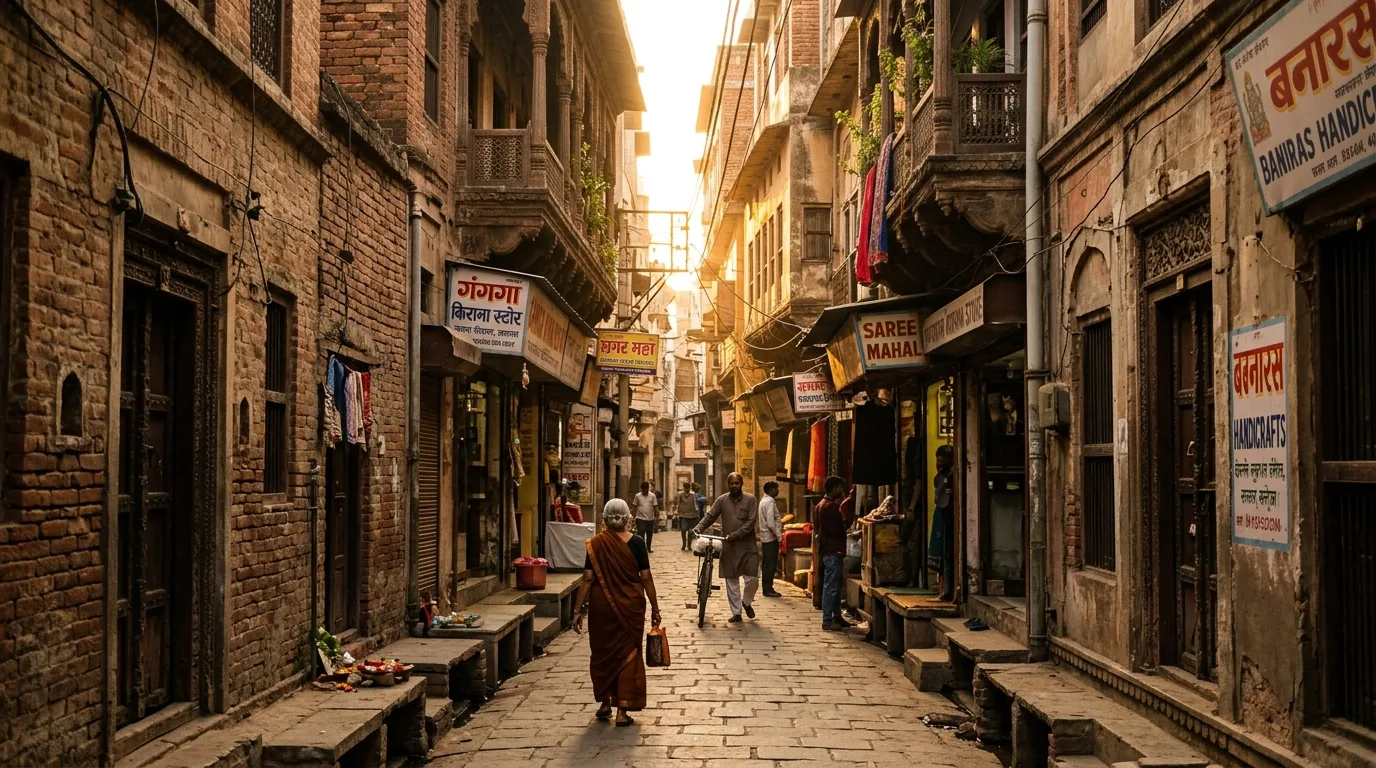
Use first-party hotel examples to understand the differences
These three properties illustrate different stay formats. Their own websites establish the location and broad character described here; ask the property for the room, access and booking terms that apply to your dates.
NADESAR GROUNDS
Taj Ganges, Varanasi
The official Taj Ganges page places the hotel at Nadesar Grounds and describes landscaped grounds and full-service facilities. It is a useful example to compare when a property-based stay and organised vehicle outings appeal to you.
Ask next: the exact room category, transfer cost, meal plan and the return arrangement after a riverfront evening.
GARDEN PALACE SETTING
Taj Nadesar Palace
The official Nadesar Palace page describes a palace property within gardens at Nadesar. Compare the character of this stay with your desire to spend time at the property as well as exploring the city.
Ask next: the specific accommodation, access requirements and how each planned city outing will be arranged.
DARBHANGA GHAT
BrijRama Palace
Brij Hotels' official address locates BrijRama Palace at Darbhanga Ghat. Its property overview describes a riverfront heritage stay and explains that room categories have different outlooks.
Ask next: the currently workable arrival route, a road-based alternative if needed, and which room category provides the view you expect.
Use the same questions for any other hotel on your shortlist. Current price, availability and suitability require a conversation about the actual reservation; a location verified from a first-party website is the beginning of that process.
Compare the total booking, not just the first price shown
- Room and occupancy: confirm the bed arrangement, number of guests, bathroom setup and the category being priced.
- Meals: check whether breakfast or other meals are included, what the service hours are and whether they fit early outings.
- Taxes and extras: obtain a final total that explains any extra bed, transfer, parking or other charge relevant to your stay.
- Changes and cancellation: read the deadline, the refund method and which company handles amendments.
- Arrival and departure: ask whether early check-in or late check-out is merely a request or a confirmed paid arrangement.
- Payment: verify the booking recipient and contact the property through independently checked details if a payment message seems inconsistent with your reservation.
Keep the confirmation, policy and the address together. When comparing two quotes, make the dates, occupancy and inclusions identical first. This produces a more useful comparison than assuming one booking channel is always cheaper.
Make family and accessibility questions specific
Describe the needs of your group before asking whether a property is suitable. A family with a stroller, an older traveller who needs short walking stretches and a wheelchair user may require very different arrangements. Ask for information about the whole journey from vehicle to room.
Useful questions include the number of entrance steps, lift access to the booked floor, doorway and bathroom arrangements, and the distance to a comfortable place to sit. Ask whether meals can be accessed easily and whether staff can explain the route in advance. A lift listed as a facility is only one part of an accessible stay.
For children, confirm the actual bed or cot arrangement, occupancy policy and meal charges directly. For a quieter room, explain your preference and ask about its position; room outlook, street activity and internal function spaces can all matter. Record the response alongside the booking rather than leaving it as an informal assumption.
Agree the arrival before you travel
- Share the precise arrival point. Send the flight or train details, including the railway station code, to the person arranging pickup.
- Ask for the exact meeting point. A map pin for the hotel and a vehicle pickup location are not always the same thing.
- Confirm luggage handling. Establish who will meet you if the final section involves lanes or steps, and whether that service has a charge.
- Keep a fallback route. If arrival uses a boat or another conditional transfer, ask how the property handles an interruption.
- Save the return arrangement. Your departure can require a different sequence from arrival, especially after an early checkout.
These details become especially useful when arrival is late, the group is tired or you are visiting during a major festival. Use the festival planning guide to identify the extra questions a busy event period creates.
Match the base to the trip you are actually taking
A short pilgrimage visit: prioritise the temple route, manageable approaches and time for rest. Check the temples guide and the exact entry arrangements before choosing a hotel solely for proximity.
A slower cultural stay: compare the room and neighbourhood with your interest in music, food and crafts. A comfortable pause at the property may be as valuable as being beside a busy viewing point.
A family trip with several transfers: put the vehicle handover and walking demands near the top of the decision. The tour planning guide can help reduce repeated cross-city journeys.
A riverfront-focused visit: decide which stretch of the ghats matters to you and compare the approach to each property. For an evening plan, choose your Aarti viewing area before assuming the same hotel serves every part of the river equally well.
Compare temple-area stays by their real approach
The detailed shortlist compares operator information with the access, luggage and room-category questions to settle before booking.
BEFORE YOU GO
Frequently asked questions
Which area is best for a first visit to Varanasi?
There is no single best area for every traveller. Choose the Old City for a walk-focused temple and ghat visit, Assi for a southern riverfront base, or a road-connected Cantonment or Nadesar property when vehicles and luggage are a higher priority. Check the exact entrance and your own daily route before deciding.
Does a hotel near a ghat always have a river view?
No. A location description, a rooftop view and a river-facing bedroom are different things. Ask for the precise room category, what can be seen from that room and whether the view is private or from a shared terrace. Keep the confirmation with your reservation rather than relying on a general property photograph.
Can a taxi reach a riverfront hotel entrance?
It depends on the property, the approach road and current traffic controls. Some final approaches involve lanes, steps or an arranged transfer. Ask the hotel where your vehicle can stop, who will meet you and how luggage will be carried. Confirm an alternative when a boat transfer is not operating.
How do I compare hotel prices properly?
Compare the same dates, room type, occupancy and cancellation terms. Include taxes, meals, extra beds and transfers in the total. A cheaper headline rate can have a very different final cost or refund condition. Get the final inclusions in writing from the actual booking provider before paying.
What should older travellers ask before booking?
Ask about the complete route from the vehicle drop-off to the room: walking distance, steps, lift access, bathroom layout and opportunities to rest. A lift inside a building does not establish that the approach from the street is step-free. Share your specific requirements directly with the property.
Should I book through an official hotel website?
A property's own website is a useful place to verify its location, contact details, room categories and current terms. You can compare that information with other booking channels, but check which company receives payment and handles changes. Use independently verified contact details if a message asks you to pay outside the original booking process.
REFERENCE NOTES
Sources and practical updates
These primary sources support the factual background of this guide. For your travel dates, confirm the current arrangements with the responsible venue, property or service provider.
- Taj Hotels: Taj Ganges official property information
- Taj Hotels: Taj Nadesar Palace official property information
- Brij Hotels: BrijRama Palace official property information
- Brij Hotels: BrijRama Palace official address