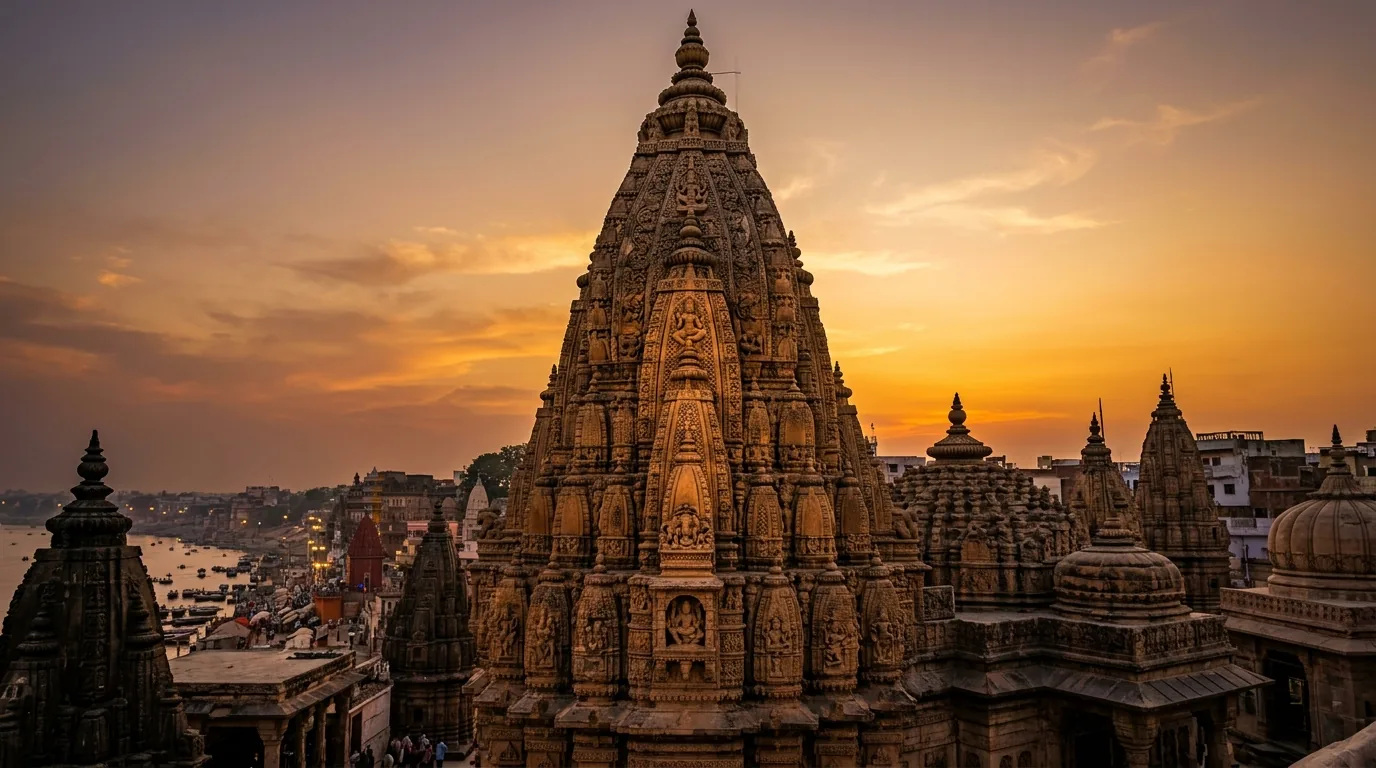
The Kashi Vishwanath Corridor changes how a visitor encounters the temple and the Ganga: the sacred destination is approached through a wider precinct rather than understood only as a doorway hidden in an old lane. Yet the Dham is still a place of worship with security, queues and service-specific arrangements. Visiting the corridor, reaching a reporting desk and completing darshan are different experiences. Plan them separately and the visit becomes easier to understand, whether you are coming for pilgrimage, architecture or a connection with the riverfront.
What the Kashi Vishwanath Corridor is
The corridor is part of the redeveloped Shri Kashi Vishwanath Dham, linking the temple precinct with the Ganga-facing side of the Old City. The first phase was inaugurated on 13 December 2021. Its purpose included creating a more accessible connection between the shrine and the river. That physical relationship is the useful starting point for a visitor; the corridor is not another temple elsewhere in Varanasi.
The historic shrine and the modern redevelopment should not be confused in descriptions of age or significance. The Dham's architecture and circulation are recent interventions around an older and continuing place of devotion. For the temple's wider religious and historical background, read the Kashi Vishwanath Temple guide. Here, the focus is the precinct, its approaches and how to organise time within and around it.
You may hear the words corridor, Dham and temple complex used loosely in conversation. When arranging assistance, be more specific: do you want to reach a general approach, a booked-service reporting point, a permitted river entrance or the darshan queue? Naming the wider redevelopment alone may not give a driver or companion enough information to take you to the correct place.
Understand the temple, precinct and river connection
The temple is the devotional centre; the broader precinct supports movement and visitor services around it. The river connection is an approach and orientation feature, not proof that a particular worship service can be reached from every side at all times. Staff may direct different visitors through different queues or reporting points depending on bookings, crowd control and the day's access arrangements.
For orientation, Lalita Ghat is an important riverfront reference near the Dham. The published temple FAQ also discusses ghat-side entry, but river conditions and administrative decisions can alter access. Do not use a photograph of open steps as confirmation for your travel date. Ask about the active route before building a plan that depends on entering from a boat or leaving directly towards the water.
A first-time visitor benefits from understanding the sequence before arriving: approach the area, resolve belongings and reporting, pass the applicable checks, follow the permitted route and collect belongings afterwards. The entry gates guide explains why gate numbers must be read in relation to the service and the actual instructions, rather than treated as a permanent shortcut diagram.
Arriving from the lanes or the riverfront
For a road arrival, agree where the vehicle can legally stop and how much walking remains. The Old City approach can involve pedestrian movement, changing traffic controls and a final stretch through busy streets. Ask your accommodation for a clear route suited to the people travelling, not simply the closest map pin. A larger open precinct does not mean that a car can deliver you to every internal destination.
For a riverfront arrival, confirm both the landing arrangement and the permitted onward route. Boat operations, the water level, steps and security instructions all matter. Keep a land alternative, especially if you have a fixed worship booking. A boat outing can be an enjoyable separate experience, but it should not become the only transport solution for a time-sensitive reporting requirement.
If travelling with older relatives or someone who uses mobility assistance, ask about the complete journey. The useful questions concern surfaces, steps, walking distance, queues, assistance and the way back. The how to reach guide can help organise that conversation. Do not assume that the broadest-looking entrance is automatically the authorised or easiest route for every visitor.
Darshan and booked services need their own preparation
Arriving in the Dham does not mean that you have completed darshan or secured entry to an aarti. General darshan follows the authorised arrangement, while paid services have particular conditions. Check your confirmation before reaching the precinct so you know whether to report for assistance, which papers are needed and what time you must be available for the next stage.
The Sugam Darshan guide explains assisted priority access and the reporting process. It should not be interpreted as unrestricted movement or permission for Sparsh Darshan. Similarly, an aarti booking should be planned around its stated gate and reporting conditions. Different ticket categories can name different arrangements; the word corridor on a travel itinerary does not override them.
For a visit centred on architecture or the river connection, keep expectations respectful and realistic. Access can be controlled because this is a working sacred precinct. Follow instructions about where visitors may stand, move or photograph. If the permitted route is different from the one you imagined, adapt without obstructing queues or asking other visitors to make space for a sightseeing detour.
Facilities: identify the service you actually need
The redevelopment was planned with visitor facilities and restored smaller shrines as well as improved circulation. Government project descriptions are helpful background, but a list of buildings is not a current opening-hours directory. If you need a toilet, assistance desk, drinking-water point or another facility, ask identifiable staff where the operational service is along your permitted route.
Plan belongings before entering a controlled area. The published Trust FAQ identifies designated lockers, while electronic devices remain a separate security issue. Do not infer phone permission from an open courtyard or from seeing someone using a device outside a checkpoint. Use the mobile rules and locker facility guides to make a practical plan for storage, documents and collection.
Keep essential information available without a screen: the accommodation address, meeting point and relevant booking details. Families should decide who carries the receipt and where to regroup after worship. If an accessibility need affects the visit, describe it to the official helpdesk before arrival instead of relying on an unspecific promise that the complex is fully accessible from every possible approach.
Look beyond the main axis without rushing
The precinct rewards a slower attention to how spaces connect: the relationship between the shrine, courtyards, smaller sacred places and the river-facing approach. Government accounts of the redevelopment describe the recovery and restoration of older temples during the project. Treat these as active devotional spaces, not scenery to enter without checking what worshippers and staff are doing.
Let the permitted path determine what you explore. A meaningful visit does not require seeing every corner or recording every architectural detail. Pause where you are not blocking movement, give worshippers room and follow photography restrictions. Where you can observe quietly, the changing scale between narrow Old City streets and the broader precinct can be understood without a long checklist of named buildings.
Avoid turning project statistics into visitor guarantees. An expanded area does not eliminate crowding, and a public inauguration description does not establish today's queue time, facility capacity or access route. Keep historical background separate from operational advice. This distinction makes it easier to enjoy the place while still making practical decisions from current information.
Combine the Dham with nearby ghats
| Your main aim | A sensible sequence |
|---|---|
| Temple worship | Reporting and darshan first; riverfront afterwards if permitted |
| Understanding the corridor | Check access, then explore the authorised precinct route |
| A short ghat visit | Choose one nearby stop and keep a land return |
| Evening Ganga Aarti | Leave a separate buffer for belongings and the walk |
Lalita Ghat is a natural orientation point, while Dashashwamedh provides a distinct riverfront experience farther along the central ghats. Manikarnika requires particular sensitivity because cremation and mourning are part of its daily life. Choose the next stop according to your energy, remaining daylight and the current path, not because every nearby place must fit into one visit.
Our ghats near Kashi Vishwanath guide explains these walking connections without promising uninterrupted access at the waterline. After rain or high water, an upper-lane route may be necessary. Collect belongings before setting off, confirm the return destination and allow one simple onward activity to remain optional. The corridor works best within an itinerary that leaves room for both worship and the city around it.
BEFORE YOU GO
Frequently asked questions
Is the corridor the same as the temple?
The corridor belongs to the wider redeveloped Dham around the shrine. Reaching the precinct is different from completing darshan or reporting for a booked worship service.
When was Kashi Vishwanath Dham inaugurated?
The first phase was inaugurated on 13 December 2021. This dates the modern redevelopment, not the religious tradition or the age of the historic shrine it surrounds.
Can I enter the corridor directly from a boat?
Do not assume so. Confirm the permitted landing, river-side access and the route for your visit. Keep a land alternative if water conditions or official controls change arrangements.
Does corridor access include an aarti ticket?
No ticket inclusion should be inferred from reaching the area. Aarti attendance and assisted darshan follow their own booking conditions, reporting points and availability.
Is the whole route step-free?
This guide cannot guarantee that from every approach. Ask about the actual vehicle stop, entrance, surfaces, steps, assistance and return route for the person travelling.
Which ghat can I combine with a corridor visit?
Lalita is an important nearby orientation point; Dashashwamedh and Manikarnika are other central-riverfront choices. Check the open walking route and observe the different etiquette at each place.
REFERENCE NOTES
Sources and practical updates
These primary sources support the factual background of this guide. For your travel dates, confirm the current arrangements with the responsible venue, property or service provider.
- Prime Minister of India: Dham inauguration and redevelopment background, December 2021
- Kashi government portal: Lalita Ghat
- Shri Kashi Vishwanath Temple Trust: published visitor FAQ
- Temple Trust: published Sugam Darshan service conditions
- Temple Trust: visitor notices; verify current access before travelling