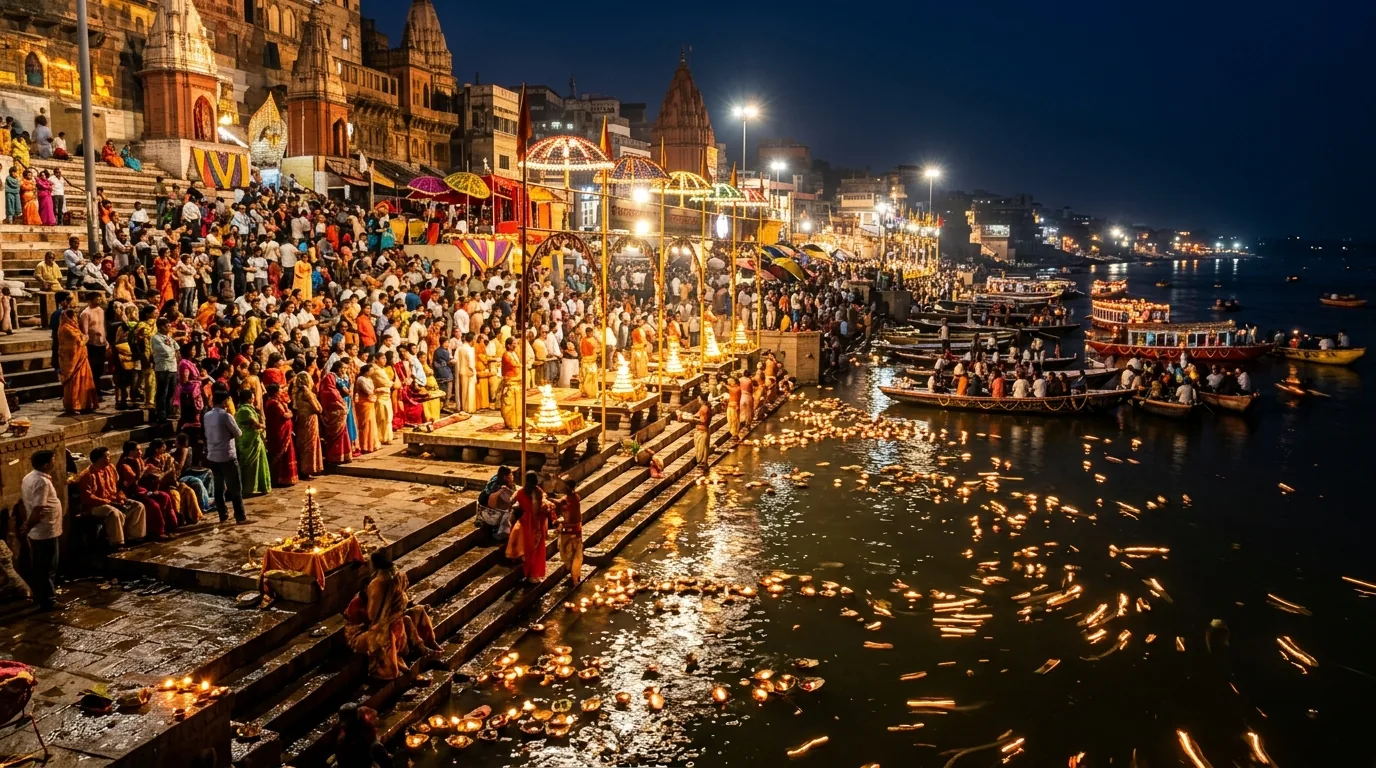
A temple visit can lead naturally towards the Ganga, but nearby on a map does not always mean effortless on foot. The area around Kashi Vishwanath combines controlled temple approaches, narrow lanes, broad stretches of the Dham and stepped river landings. Choose a ghat for the experience you want, then check the route that is actually open. This guide helps you connect worship with the central riverfront without assigning misleading gate-to-water distances or treating every ghat as the same kind of sightseeing stop.
Start with the temple exit you actually use
Before deciding where to walk, complete the practical end of the temple visit. Collect deposited belongings, put footwear back on and regroup with companions. An exit that is convenient for the current darshan route may be different from your original approach. If your driver is waiting elsewhere, confirm the revised plan before turning towards the river.
The Kashi Vishwanath Corridor guide explains the relationship between the Dham and its river-facing side. That connection is useful orientation, but it does not guarantee that every entrance, exit or ghat path is open on a given day. Ask staff which route visitors may currently use and whether a lane alternative is needed.
Avoid choosing a route solely from a straight-line distance. A short map measurement can omit steps, screening, blocked passages or the need to return for belongings. For a family, a clear open route with a recognisable return point is usually more useful than the closest apparent pin. Make the walking plan only after you know where the group has actually emerged.
Lalita Ghat: a useful riverfront orientation point
Lalita Ghat is one of the most useful names to recognise when connecting the Dham with the river. The government Kashi portal places it north of Dashashwamedh and describes its association with Nepalese patronage. For the visitor, its value is both geographic and atmospheric: it helps locate the central river connection without assuming that a single numbered temple gate tells the whole story.
If approaching from the Dham, follow the currently authorised route and pause before committing to the steps. Check the surface, the water level and the way back. A broad view of the river can be satisfying without descending as far as the landing. Do not interpret a visible boat as permission to use an otherwise restricted approach.
The surrounding area also brings smaller sacred places and distinctive architectural details into a short visit. Ask before entering an active shrine and avoid treating worship spaces as photo platforms. If your main objective is a calm first encounter with the river after darshan, choose a place to pause that leaves circulation clear rather than walking onward immediately in search of a longer checklist.
Meer Ghat and the central lanes
Meer Ghat is another central-riverfront reference worth understanding through the route you are actually taking. A sequence of ghats can appear continuous from the river while the walking experience on land involves changes of level and short diversions. Ask for the open connection rather than assuming the lowest steps provide an uninterrupted path between neighbouring names.
The lanes above the ghats can be the more practical way to connect temple-related stops when lower paths are wet or busy. They also require attention: movement is shared with residents, worshippers, delivery activity and people heading towards the river. Walk in a compact group, keep doorways clear and step aside before consulting a map or discussing the next turn.
If you intend to visit a nearby shrine as well as the ghat, verify its own access and etiquette. The Varanasi temples guide can be used as a planning starting point, but the number of stops should match the group's energy. A short riverfront pause may be a better continuation than another long queue after temple darshan.
Dashashwamedh Ghat: choose it for the evening ceremony
Dashashwamedh is a distinct destination, not simply a convenient extension of the temple exit. It is widely known for evening Ganga Aarti and attracts visitors for its ritual setting and riverfront activity. If the ceremony is your aim, allocate time for the approach, selecting a suitable viewing place and leaving afterwards. Do not assume that finishing temple darshan shortly before the start creates an easy connection.
During the day, the ghat can be understood at a different pace. Watch where people are bathing, praying, working or boarding boats, and avoid standing in their way. You do not need to purchase a river outing to spend time on the public ghat. If considering a boat, separate the decision from any pressure created by the crowds or a claim that all shore viewing is unavailable.
Read the Dashashwamedh Ghat guide for the setting and the Ganga Aarti timings guide for ceremony planning. Timings and crowd arrangements should be checked for your visit. Keep a generous gap after temple worship, especially when you still need to retrieve electronics and find companions before walking onward.
Manikarnika Ghat: visit with particular restraint
Manikarnika is an active cremation ghat and a sacred place associated with Hindu beliefs about death and liberation. The official Kashi portal describes cremation activity as part of its continuing function. A visitor should approach it as a place where families are carrying out deeply personal rites, rather than a spectacle to collect between other attractions.
Keep cameras away from cremations and mourners. Give funeral processions and workers space, do not block a route and avoid stepping into an area simply because someone offers to lead you there. A respectful view from an appropriate public position is different from approaching a pyre or photographing a family. If unsure where to stand, withdraw to a less intrusive place.
There is no obligation to accept an unsolicited guide, donation demand or claim that payment grants privileged access to mourning. Make any religious contribution through a verified arrangement of your own choice. The Manikarnika Ghat guide provides context and visitor precautions. For children, consider whether a brief explanation from farther away is more appropriate than entering a busy working area.
Scindia and Panchganga: optional extensions, not compulsory stops
If the group has time and the route is open, a longer central-riverfront walk can continue towards Scindia and Panchganga. Treat that as a separate extension after assessing conditions, rather than adding it automatically to a temple morning. More steps, uneven surfaces and the need to return can turn a short outing into a tiring one for companions who were already standing during darshan.
Ask locally about the permitted connection, particularly near working areas or after high water. The presence of people farther along the river does not prove that the route between you and them is appropriate for visitors. Where a waterline path is interrupted, take an explained upper-lane alternative or shorten the walk. Do not climb across a barrier to preserve a planned ghat sequence.
A good riverfront outing does not depend on reaching a distant endpoint. Choose a turnaround point, keep enough energy for the return and know where you can reconnect with a vehicle. The wider ghats directory helps distinguish destinations, while this guide keeps the immediate temple connection practical. Leave a longer Assi-to-central-ghats walk for a day planned specifically around walking.
Pick a route that fits the remaining day
| What you want after darshan | Planning choice |
|---|---|
| A first look at the Ganga | Ask for the open route towards Lalita and pause nearby |
| Evening Ganga Aarti | Treat Dashashwamedh as a separate timed activity |
| Sacred context around death rites | Read Manikarnika etiquette before approaching |
| A longer ghat walk | Confirm connections, energy and the return route |
For a short visit, choose one nearby riverfront stop and return before fatigue changes the mood of the day. For a longer afternoon, add another ghat only after checking surfaces and the group's comfort. Carry what you need without overloading the walk, and remember that toilet, resting and transport arrangements should not be assumed at every landing.
During rain or high water, riverside continuity can change substantially. Follow current restrictions, avoid wet edges and keep the land route central to the plan. If an onward boat is cancelled, the visit should still have a workable ending. The transport guide helps organise the return, while the places-to-visit guide offers alternatives when a longer river walk is unsuitable.
BEFORE YOU GO
Frequently asked questions
Which ghat is closest to Kashi Vishwanath?
Lalita is a useful nearby riverfront reference for the Dham. The practical nearest stop depends on the exit you use and the currently open approach, so avoid relying only on straight-line map distances.
Can I walk from the temple to Dashashwamedh?
Plan an open permitted walking connection and allow for belongings collection, steps and crowds. If going for evening aarti, leave a separate arrival margin rather than treating the walk as a fixed short transfer.
Is Manikarnika appropriate for sightseeing?
It is an active sacred cremation area. Visit only with restraint, keep cameras away from cremations and mourners, and avoid obstructing workers or funeral processions.
Are all central ghats connected by a walking path?
Do not assume uninterrupted access at the waterline. River levels, surfaces and controls can interrupt connections. Use an explained upper-lane route or shorten the walk when necessary.
Can older visitors manage the route?
Ask about the specific steps, surfaces, distance and return. A map label such as nearby does not establish an accessible route. Choose a shorter stop and confirmed assistance where needed.
Should I book a boat to return from the ghats?
A boat can be optional when permitted and suitable. Keep a land return because operations, boarding points and river conditions can change, especially around high water or poor weather.
REFERENCE NOTES
Sources and practical updates
These primary sources support the factual background of this guide. For your travel dates, confirm the current arrangements with the responsible venue, property or service provider.
- Kashi government portal: Lalita Ghat
- Kashi government portal: Manikarnika and its active sacred role
- Incredible India, Ministry of Tourism: Dashashwamedh Ghat
- Prime Minister of India: Dham inauguration and redevelopment background, December 2021