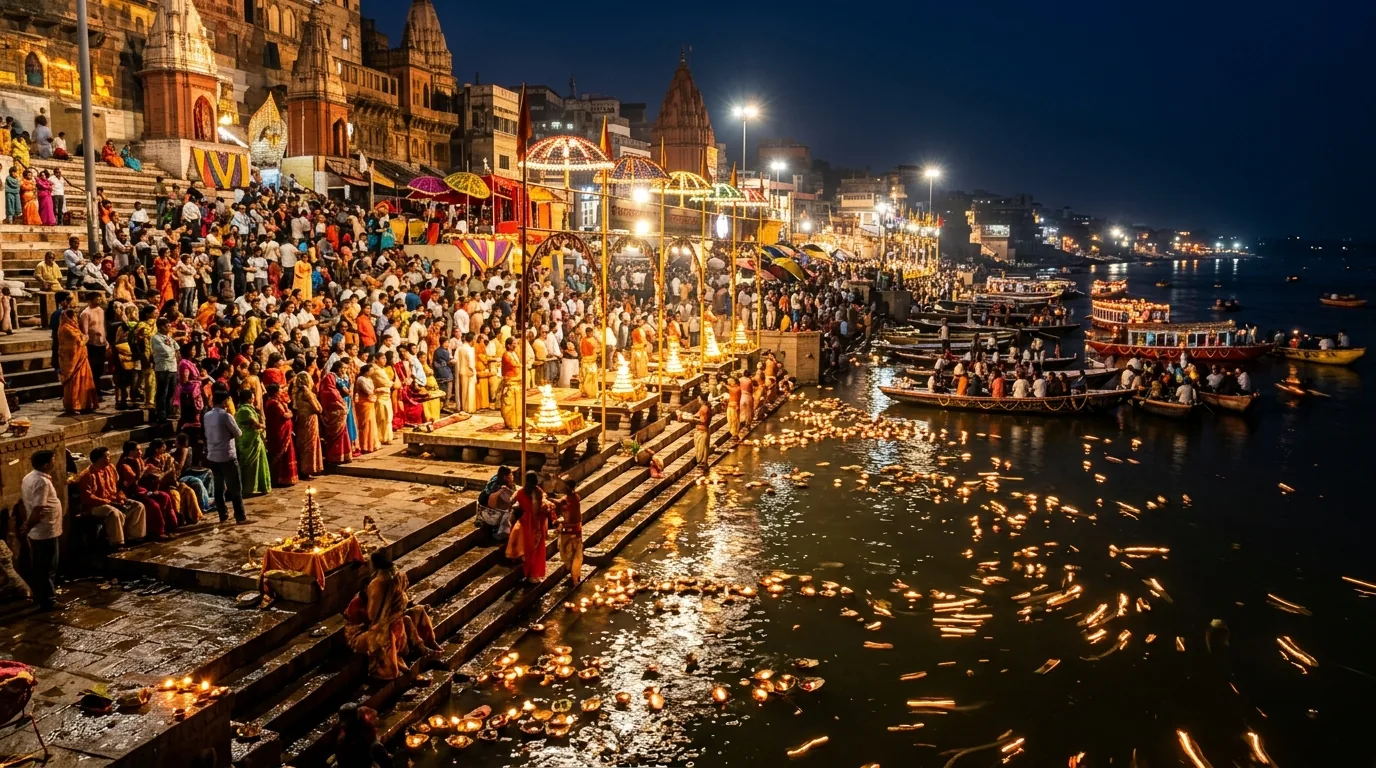
At Dashashwamedh Ghat, the change from an ordinary afternoon to an evening gathering is part of the experience. Boats collect along the river, visitors choose a place on the steps and the routes from the market become busier. Coming a little earlier lets you understand the setting before the lamps become the centre of attention.
Get your bearings at the central riverfront
Dashashwamedh Ghat stands on the Ganga beside Varanasi's Old City, near the Kashi Vishwanath precinct. Its landward approach connects with the Godowlia area and the lanes leading toward the river. It is a useful meeting point in a city itinerary, but the name covers a busy place rather than a single entrance, ticket counter or reserved viewing enclosure.
During the day, worship, bathing, boats and visitors share the riverfront. The evening gathering adds a much larger audience. If you are choosing a base for several days, compare this central setting with Assi Ghat on the southern side. Choose according to your route and preferred pace, rather than assuming every riverside neighbourhood feels the same.
Look beyond the evening photograph
A daytime visit helps you see how the steps, landings and lanes fit together. Pause away from the busiest stairway, identify your way back and notice the areas being used for prayer. The practical reward is simple: when you return for Aarti, you already understand where you are.
Read the name as part of Kashi's sacred tradition
The name is associated with ten Ashwamedha sacrifices. In the legend recorded by the official Kashi portal, Brahma performed them to welcome Shiva to Kashi. This sacred tradition is part of the ghat's identity; the story of its present buildings belongs to a separate architectural history.
That distinction helps make sense of the riverfront. A sacred place may preserve a very old tradition while its steps and structures belong to different periods of building and repair. The district administration notes that much of Varanasi's ghat architecture was rebuilt under later patrons. Avoid treating the age of the city's religious identity as the age of every stone you see.
For a wider introduction to the city's names, beliefs and cultural life, read about Varanasi. Dashashwamedh is an introduction to that living setting, rather than a monument that can be understood through one foundation date.
Choose between a daytime visit and an Aarti evening
| Your aim | A suitable approach | Leave room for |
|---|---|---|
| Understand the ghat | Come in daylight for the steps, river views and surrounding lanes. | A quieter pause away from active rituals and walking routes. |
| Watch evening Ganga Aarti | Reach the area before the main gathering and identify the ceremony platform. | Waiting time, the ceremony and the slower departure afterwards. |
| Combine temple and riverfront | Give temple entry its own block, followed by a break before the ghat. | Security checks, uncertain queue length and the change of walking route. |
The Ministry of Tourism lists the ghat as open 24 hours. Access information for a public riverfront does not mean every service runs throughout the night. The pleasant time to sit also depends on heat, rainfall, water level and the day's crowd arrangements.
For a first Aarti visit, an hour before the locally confirmed start is a useful arrival target. That is planning advice, not a reserved-seat guarantee. The Ganga Aarti timings guide separates published programme information from arrival buffers and same-day checks.
Approach through Godowlia with a clear return plan
Give your driver the destination and ask where vehicles are permitted to stop that day. The final approach from the Godowlia side is commonly completed on foot, with access affected by traffic controls and crowd management. A quoted road journey ends at the allowed drop-off point, not necessarily at the river steps.
Save a recognisable meeting point outside the tightest pedestrian flow. If travelling as a group, agree where to regroup before entering the busiest stretch and keep the accommodation details available. After the ceremony, a driver may need to meet you farther from the river than you expect.
With a train, flight or luggage
Leave large bags at your accommodation or another confirmed storage arrangement before visiting. Do not use the end of Aarti as the start of a tightly timed station transfer: leaving the ghat, finding transport and crossing the city all take additional time. The local transport guide helps you plan the complete transfer instead of relying only on a map's driving estimate.
Choose a viewpoint without losing the setting
The evening worship honours the Ganga with lamps, incense, recitation and bells. The official Kashi portal describes an event usually just after sunset, lasting roughly 45 minutes. That general description is more useful than assuming one clock time applies every evening of the year. Identify the particular platform and follow the instructions of its organisers.
From land, check the sightline while people are still settling. A place near the front can be difficult to leave; a little distance may be preferable for a child, an older companion or anyone who needs room to move. Keep passageways and the space around ritual equipment clear.
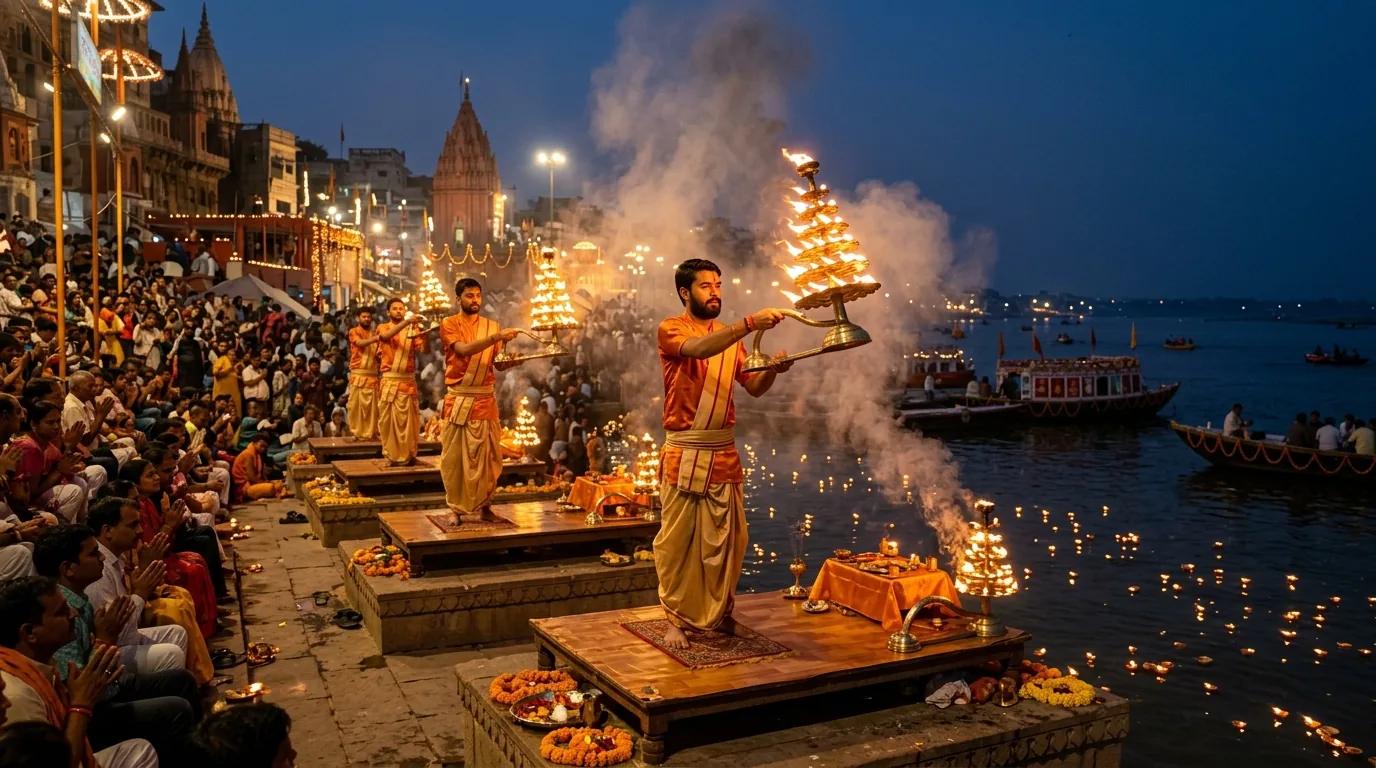
A boat provides a broad river view but involves a separate service. Confirm the boarding time, passenger limit, life jackets, total price and return landing before agreeing. Public viewing, a private seat and a boat trip are different arrangements. Our Dashashwamedh Ghat Ganga Aarti guide explains the ceremony and viewing choices in detail.
Build a compact Old City outing
A temple visit and Dashashwamedh can share a day, but give each its own purpose. Check the Kashi Vishwanath darshan guide before choosing a temple entry arrangement. Riverfront access and temple access are separate: being near the precinct does not remove security checks, booking conditions or queues.
After a daytime look at the ghat, choose a short lane walk, a meal or a pause before the evening gathering. The shopping guide can help if markets are part of the plan. Keep purchases manageable if you are still going to spend time among a standing crowd.
If you continue toward Manikarnika Ghat, change your expectations and behaviour. It is an active cremation setting, where bereaved families and those doing their work need privacy and clear passage. Keep cameras away from funeral activity and follow instructions. A longer ghat walk should remain flexible when a section is wet, blocked or in use.
Make the visit comfortable in a busy public space
Wear shoes with grip and check the surface before descending toward the water. The steps can be uneven, wet or muddy. Discuss the actual approach with a companion who has limited mobility; a short viewing pause at a suitable level may be better than a long descent. Do not assume a mapped route provides step-free access.
Use a toilet and arrange drinking water before settling for the ceremony. Ask a venue directly about its current facilities and charges. Keep valuables secure and avoid leaving a bag to reserve a place. Ask consent for close portraits, keep camera equipment out of the walking line and avoid flash directed at the ceremony.
During high water, follow local barriers and boating restrictions. On festival evenings, allow extra time and accept changes to entry or exit routes. You do not need to reach the lowest step or secure the closest position for the visit to be worthwhile; a comfortable place with a clear route out often makes the evening easier to enjoy.
BEFORE YOU GO
Frequently asked questions
Where is Dashashwamedh Ghat in Varanasi?
It is on the central Ganga riverfront beside the Old City, near the Kashi Vishwanath precinct. The approach connects with the Godowlia area and the lanes toward the river. Confirm the permitted vehicle stop and final walking route rather than treating the ghat name as a single entrance.
Should I visit Dashashwamedh only for evening Aarti?
A daytime visit is worthwhile for understanding the steps, river activity and surrounding lanes. It also gives you a chance to identify your return route before the evening audience gathers. Choose a position that leaves space for worshippers and people working at the landing.
What time is the evening Aarti at Dashashwamedh?
The official Kashi portal describes evening Ganga Aarti as usually beginning just after sunset and lasting about 45 minutes. Confirm the specific platform and date before setting out. Your pickup, boarding or private-seat reporting time may be earlier than the ceremony itself.
Is it better to watch from the steps or a boat?
Choose according to comfort, sightline and the needs of your group. The steps keep you within the gathering; a boat offers a broad river view through a separate service. Confirm its total price, boarding and return points, passenger limit and life jackets before agreeing.
Can I combine the ghat with Kashi Vishwanath darshan?
Yes, with separate blocks for the two visits. Temple security and queues need their own allowance, followed by time for food, water and the route to the river. Do not make an evening meeting depend on the shortest possible temple wait.
Can I continue walking from Dashashwamedh to Manikarnika?
A further riverfront outing is possible when the route and local conditions allow, but keep a street alternative. At Manikarnika, give funeral activity and bereaved families privacy, keep cameras away from rites and follow instructions. Wet or occupied sections may change the usable walk.
REFERENCE NOTES
Sources and practical updates
These primary sources support the factual background of this guide. For your travel dates, confirm the current arrangements with the responsible venue, property or service provider.
- Official Kashi portal: Dashashwamedh location and sacred tradition
- Official Kashi portal: river Aarti setting and timing
- Ministry of Tourism: Dashashwamedh Ghat visitor context
- Varanasi district administration: riverfront ghats and architecture