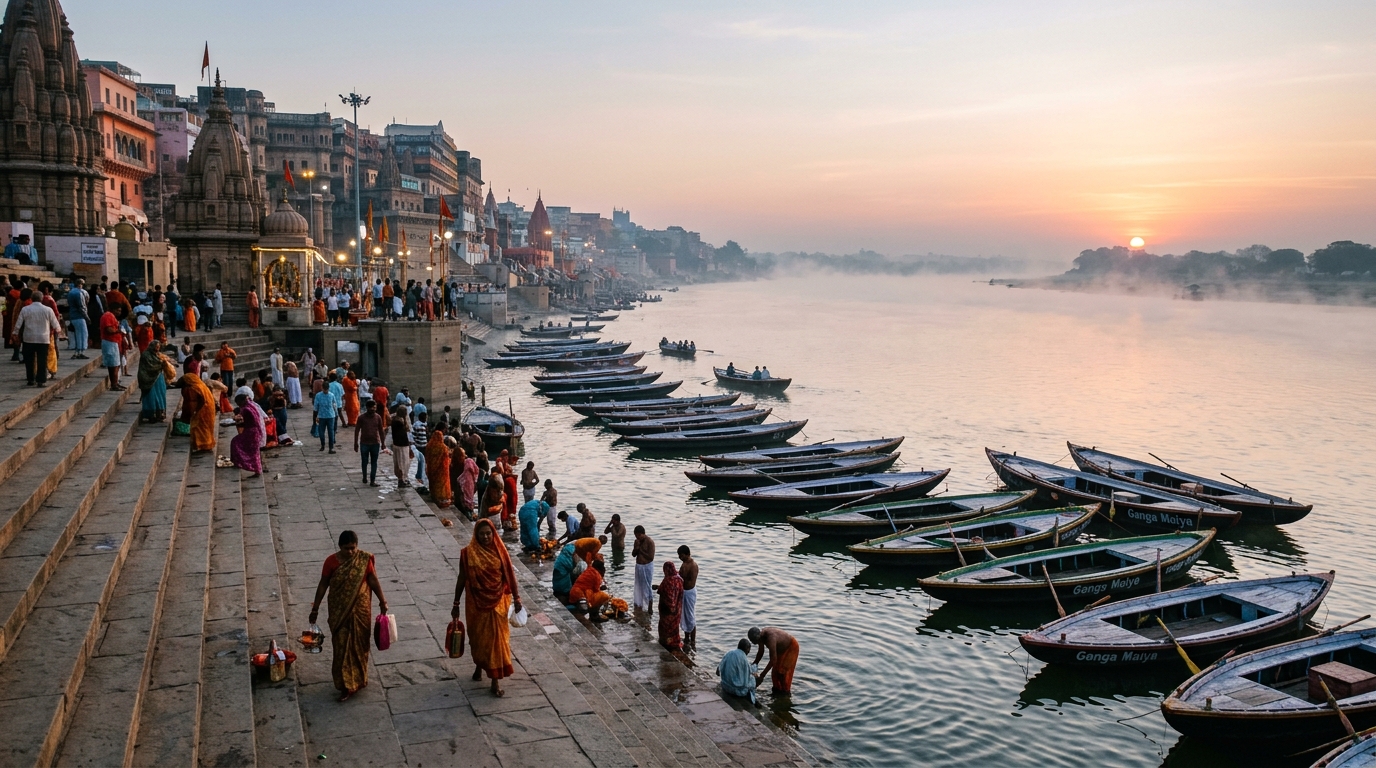
Assi Ghat marks the southernmost frontier of the historic sacred city of Varanasi. While Dashashwamedh Ghat is famous for evening intensity, Assi is universally celebrated for its tranquil, soulful morning magic. It is the premier gathering ground for spiritual seekers, yogis, artists, and international travelers who congregate before daybreak to witness Subah-e-Banaras—a living cultural celebration of Vedic fire rituals, classical Indian music, and dawn river contemplation.
Quick Facts & Visitor Summary
| Feature | Details |
|---|---|
| Location | Southernmost ghat, 2 km north of Banaras Hindu University (BHU) |
| Key Highlight | Subah-e-Banaras: Daily Vedic Yajna, Morning Aarti, Classical Ragas, and Sunrise Yoga |
| Morning Program Timing | 5:00 AM – 7:30 AM (Summer) / 5:30 AM – 8:00 AM (Winter) |
| Vehicular Drop-off | Direct road access! Autos, e-rickshaws, and private cabs can drop right at the ghat square. |
| Historical Connection | Goswami Tulsidas lived, meditated, and authored works near here in the 16th century. |
| Vibe & Atmosphere | Spacious, artsy, bohemian, student-friendly, and filled with charming bakeries and rooftop cafes. |
Mythology: The Origin of the Name "Assi"
The name Varanasi is geographically derived from two sacred river boundaries: the Varuna in the north, and the Assi in the south. In Hindu mythology, Goddess Durga slew the ferocious demon generals Shumbha and Nishumbha on this riverbank. Having accomplished the battle, her curved sword (Asi) fell to the earth, carving the riverbed that flows into the Ganga at this exact junction.
The Subah-e-Banaras Morning Program: What to Expect
Initiated by the Uttar Pradesh Government and local cultural custodians, Subah-e-Banaras is a structured morning ritual open freely to every visitor. The program unfolds in four distinct stages:
Vedic Yajna & Chanting
Young Vedic scholars from local Gurukuls kindle the sacred havan kund, reciting ancient mantras from the Rigveda and Yajurveda as aromatic camphor and samidha woods burn in the crisp morning air.
Morning Ganga Aarti
Clad in saffron dhotis, young priests perform a graceful 20-minute Aarti facing the rising sun, waving brass multi-tiered lamps while conch shells herald the arrival of daylight.
Classical Ragas & Instruments
Renowned vocalists and instrumentalists (Sitar, Shehnai, Sarod, Flute, and Santoor) perform classical morning ragas like Bhairav, Todi, and Lalit on the open-air stage.
Free Sunrise Yoga & Pranayama
Certified yoga masters lead a 45-minute gentle Hatha Yoga, Surya Namaskar, and Pranayama breathing session on the ghat steps. Mats are provided free of cost; anyone may participate.
Why Assi Ghat is the Best Base for Where to Stay
For many travelers, staying near Assi Ghat is vastly superior to staying near Godowlia or Dashashwamedh Ghat for three reasons:
- Direct Road Accessibility: Unlike the pedestrian-only alleys of the old city, taxis, auto-rickshaws, and airport cabs can drive straight to Assi crossing without luggage hassles.
- Clean, Slower Pace: The stone steps are wider and significantly less crowded during mid-day, making it ideal for peaceful reading and river contemplation.
- Cosmopolitan Food Scene: Assi is surrounded by iconic cafes, including Pizzeria Vaatika Cafe (famous for wood-fired pizzas and homemade apple pie), Aum Cafe, bakeries, and traditional street chai stalls serving lemon ginger chai in clay kulhads.
Walking from Assi to Dashashwamedh: The Sacred Ghat Walk
One of the finest self-guided experiences in Varanasi is the 40-minute riverside walk from Assi Ghat heading north to Dashashwamedh Ghat. Along this continuous stone pathway, you pass iconic landmarks:
- Tulsi Ghat: Home to the historic Akhada (traditional wrestling pit) founded by Tulsidas.
- Chet Singh Ghat: A fortified 18th-century stone palace with bastions overlooking the water.
- Harishchandra Ghat: One of the two historic cremation ghats where ancient funeral pyres burn respectfully.
- Kedar Ghat: Vibrant red-and-white striped South Indian style Shiva temple and holy kund.