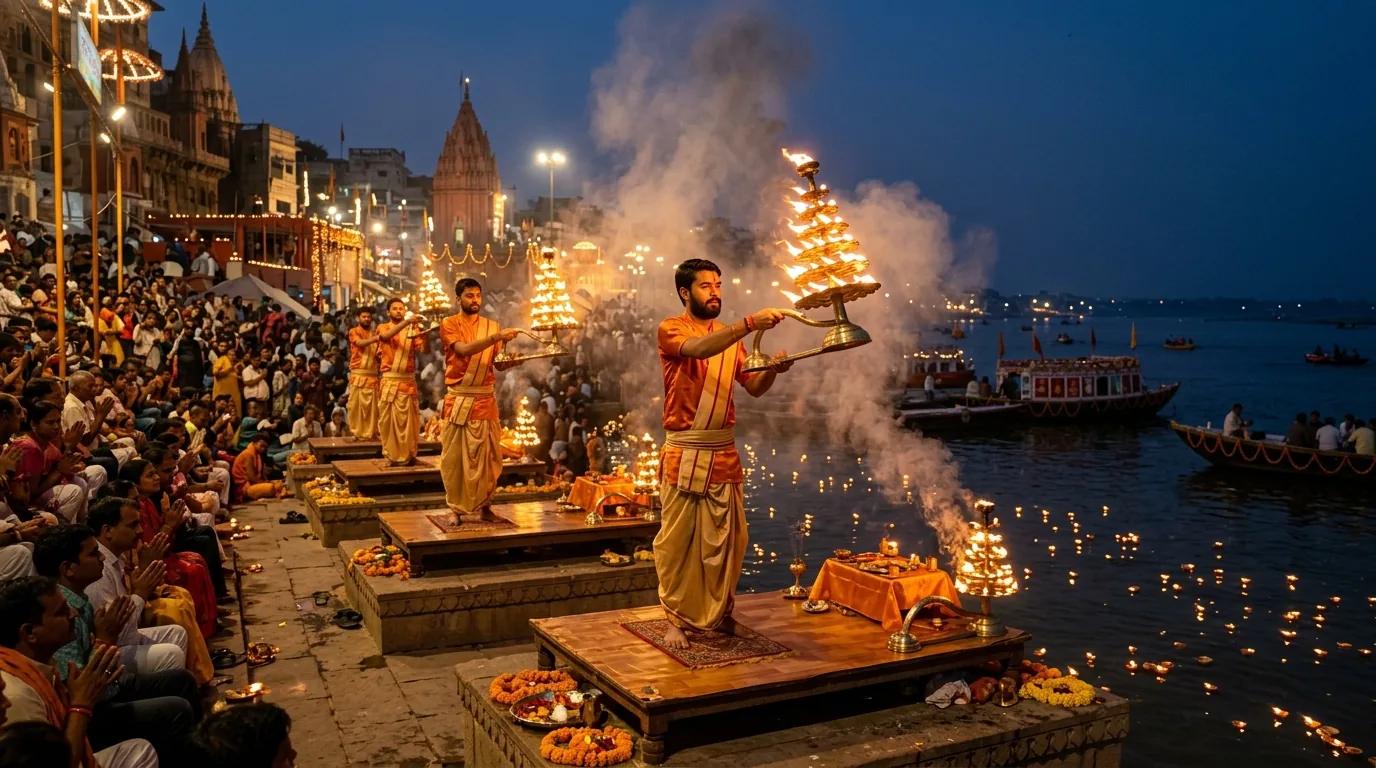
Plan Ganga Aarti around the ceremony you want to attend. Assi's dawn programme and Dashashwamedh's evening worship follow different schedules. Once you have chosen the event, work back from the start to your arrival on the steps and the time you need to leave your hotel.
Start with the published timetable, then confirm your date
Dashashwamedh's evening Aarti is described by the official Kashi portal as beginning just after sunset and lasting about 45 minutes. Assi's Subah-e-Banaras organisers publish seasonal times for their complete morning programme. The distinction matters: a two-hour morning gathering includes more than the lamp ritual itself.
| Ceremony or programme | Published timing reference | How to use it |
|---|---|---|
| Dashashwamedh evening Ganga Aarti | Usually just after sunset; approximately 45 minutes, according to the official Kashi portal | Confirm the particular platform's start that day before planning your arrival. |
| Assi: Subah-e-Banaras, summer | 4:50 AM to 7:00 AM, published by the organiser | This is the complete programme window, not the duration of Aarti alone. |
| Assi: Subah-e-Banaras, winter | 5:40 AM to 7:45 AM, published by the organiser | The published page does not state seasonal changeover dates; check which slot applies. |
| Assi evening Aarti | The official Assi listing confirms an evening ceremony without a fixed clock time | Ask about the evening event specifically; do not use the Subah-e-Banaras timetable. |
These are published references, not a live feed from today's venue. Sunset time alone also does not tell you the exact moment an organiser will begin. Recheck the ceremony, location and current instructions close to your visit, especially when travelling for a particular ritual rather than a general riverfront evening.
Choose the ceremony before choosing the hour
Assi at dawn
Subah-e-Banaras combines worship with a wider cultural morning. Its listed sequence includes Vedic recitation, Aarti, a yajna, music and yoga. Arrive for the published start if the opening matters to you. A sunrise photograph and attendance from the first ritual are different goals, because the programme begins before sunrise.
Dashashwamedh in the evening
Here the central planning issue is the gathering around the ceremony. The riverfront begins filling before the lamps are raised, so reaching the ghat at the expected start leaves little time to orient yourself. Read the Dashashwamedh Aarti guide for the setting and viewing arrangements.
For the dawn sequence and Assi's separate evening event, use the Assi Ghat Aarti guide. You can attend dawn and evening on the same day, but put a meal and a proper rest between the two outings.
Count backwards from the start to your departure
Your departure time needs to include the whole journey: getting a vehicle, reaching the permitted drop-off, walking to the river and finding a suitable place. A route app's driving estimate covers only part of that sequence.
- Confirm the ceremony start. Name the ghat and whether you mean morning or evening.
- Choose an arrival target. For an ordinary evening at Dashashwamedh, about an hour beforehand is a useful planning buffer. For the dawn programme at Assi, aim to be there before the listed opening, with time to find the gathering.
- Add the approach. Ask about the current vehicle stop, final walk and any barriers.
- Add a personal margin. Children, limited mobility, a group meeting or a boat booking may require more time.
These arrival buffers are editorial recommendations, not official reporting times or guarantees of a front-row place. A quieter spot farther back can suit your group better than an uncomfortable wait near the platform. The viewing-position guide helps you choose according to comfort and sightline.
Ask three clear questions on the day
Ask the organiser or the people managing the relevant platform: “What time does this ceremony start today?”, “Which approach is open?” and “Where may our group wait?” For Subah-e-Banaras, use the organiser's published contact details or ask at the programme venue in advance. A local accommodation host can help you establish contact and arrange the journey.
Confirm the answer concerns the event you want. A boat operator may quote a boarding time, a private seating provider may give a reporting time, and a guide may give a hotel pickup. Those times are useful for their services but do not all describe the ritual's start.
Keep the agreed meeting details saved offline. If companions will arrive separately, exchange the specific meeting point rather than only the ghat name. Once the audience has gathered, moving across the steps or taking a phone call may be difficult.
Allow for waiting, worship and the way back
An approximately 45-minute evening ceremony does not make this a 45-minute excursion. You also need arrival time and the journey out after the audience begins to disperse. Avoid booking a tight onward train connection from the moment you expect the final lamp to be lowered.
At Assi, decide whether you are staying for the complete morning programme. Leaving after the early worship is different from attending the music and yoga as well. Tell a waiting driver which plan you have chosen, and agree what happens if the visit runs longer.
If you are watching from a boat
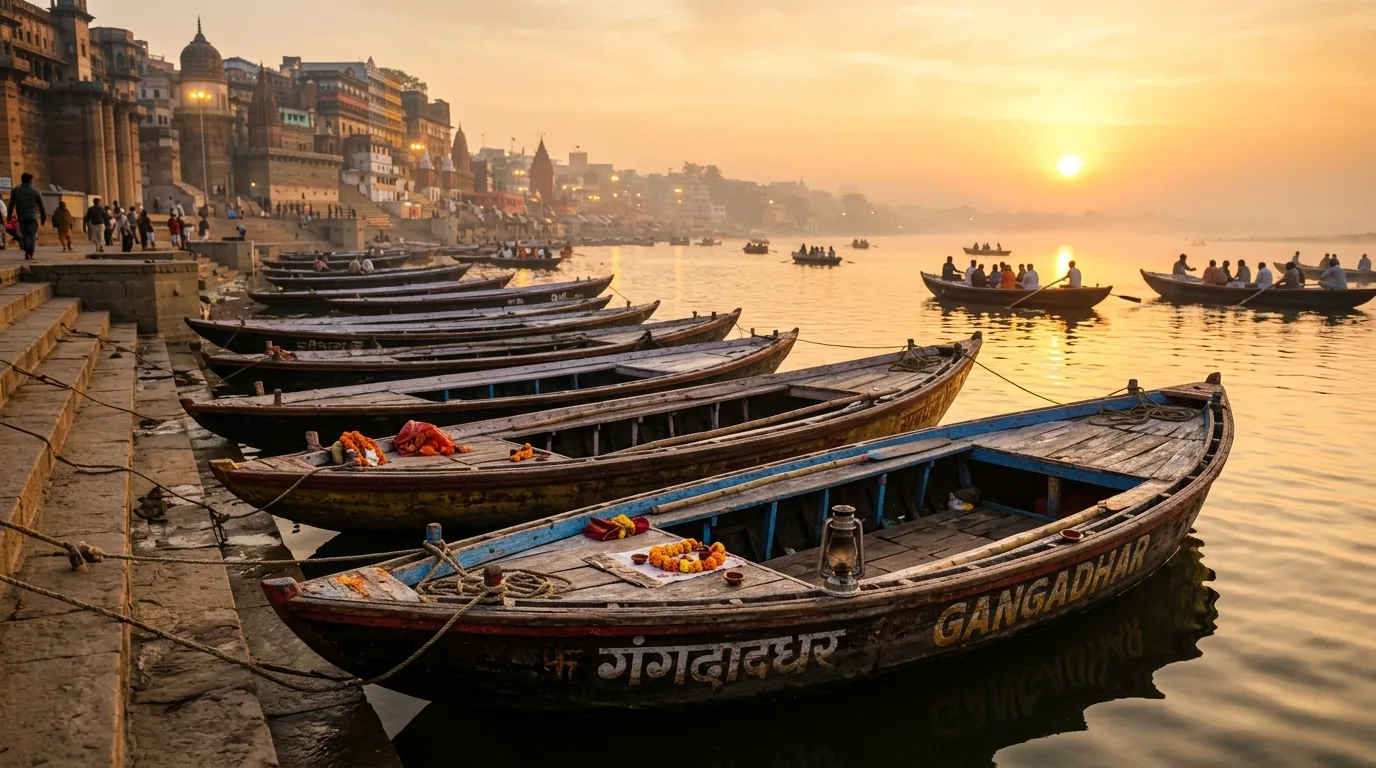
Confirm when boarding closes, where the boat departs, whether the quote includes a river ride, and where you will disembark. Allow time to put on life jackets and board without rushing. A ceremony's approximate finish is not a guarantee of an immediate return to the same step. The transport guide can help you plan the journey after you get back to land.
Keep temple appointments separate from river Aarti
Shri Kashi Vishwanath's Mangala Aarti is a temple ritual with its own booking and reporting arrangements. It is not the same event as the morning worship at Assi. Check the Mangala Aarti guide before deciding which early-morning experience to attend.
A temple darshan followed by evening river worship is easier when you leave a flexible interval between them. Security checks and queue length can change the first visit; the river ceremony will not wait for that queue. Use the temple timings guide to understand the temple's separate daily rhythm, then choose a realistic break for food, water and the walk.
Adjust for festivals, weather and a late arrival
Festival days can change crowd levels, the usable approaches and the time needed to get away. For Dev Deepawali, read the dedicated festival guide and check the arrangements for your actual date. An ordinary-day arrival buffer cannot promise the same access during a major celebration.
During rain or high water, follow local instructions about platforms, steps and boating. Do not assume a riverfront route remains open because it was available on a previous visit. A land-based viewpoint may be the practical option, and a restricted lower landing should remain unused.
If you arrive late, stop looking for the closest possible place and find a position you can reach without pushing through worshippers. Keep stairs and exits clear. If the event has finished, enjoy a short riverfront pause or return for another ceremony; there is no need to force a rushed boat transfer to salvage the evening.
BEFORE YOU GO
Frequently asked questions
Is there one fixed Ganga Aarti time for all of Varanasi?
No. The ghat, organiser, season and whether you mean morning or evening matter. The Kashi portal describes evening worship as usually just after sunset. Subah-e-Banaras publishes different seasonal windows for its full morning programme at Assi. Confirm the event and date together.
What are the published morning programme times at Assi?
The Subah-e-Banaras organiser lists summer hours of 4:50 to 7:00 AM and winter hours of 5:40 to 7:45 AM. These are Indian Standard Time and cover the complete programme, including activities beyond Aarti. The published page does not specify seasonal changeover dates, so check which start applies to your visit.
How early should I arrive for Dashashwamedh evening Aarti?
For an ordinary evening, about an hour before the confirmed start is a useful planning buffer, not an official reporting requirement or a guaranteed viewing position. Add travel and the final walk before that target. Festivals, a boat service or mobility needs may require more time.
Does the boat boarding time mean the Aarti start time?
It may be an earlier service appointment. Ask separately about boarding, the ceremony and the return landing. Confirm where the boat leaves, how long it waits and what the price includes. Keep enough time to find the boat and board calmly.
Is Kashi Vishwanath Mangala Aarti the morning Ganga Aarti?
They are separate ceremonies. Mangala Aarti takes place at the temple under its own admission and reporting arrangements. Assi dawn worship is part of the riverside Subah-e-Banaras programme. Choose the experience you want before arranging an early pickup.
What should I do if a festival or bad weather changes the plan?
Check the relevant organiser and on-site instructions for your date. Follow changes to platforms, approaches, boating and lower-step access. An ordinary-day timing reference cannot guarantee festival access. If you arrive late, use a reachable viewpoint and keep stairs and exits clear.
REFERENCE NOTES
Sources and practical updates
These primary sources support the factual background of this guide. For your travel dates, confirm the current arrangements with the responsible venue, property or service provider.
- Subah-e-Banaras organiser: summer and winter full-programme timings
- Subah-e-Banaras organiser: dawn programme and activities
- Official Kashi portal: evening Aarti and approximate duration
- Official Kashi portal: separate morning and evening Assi activities