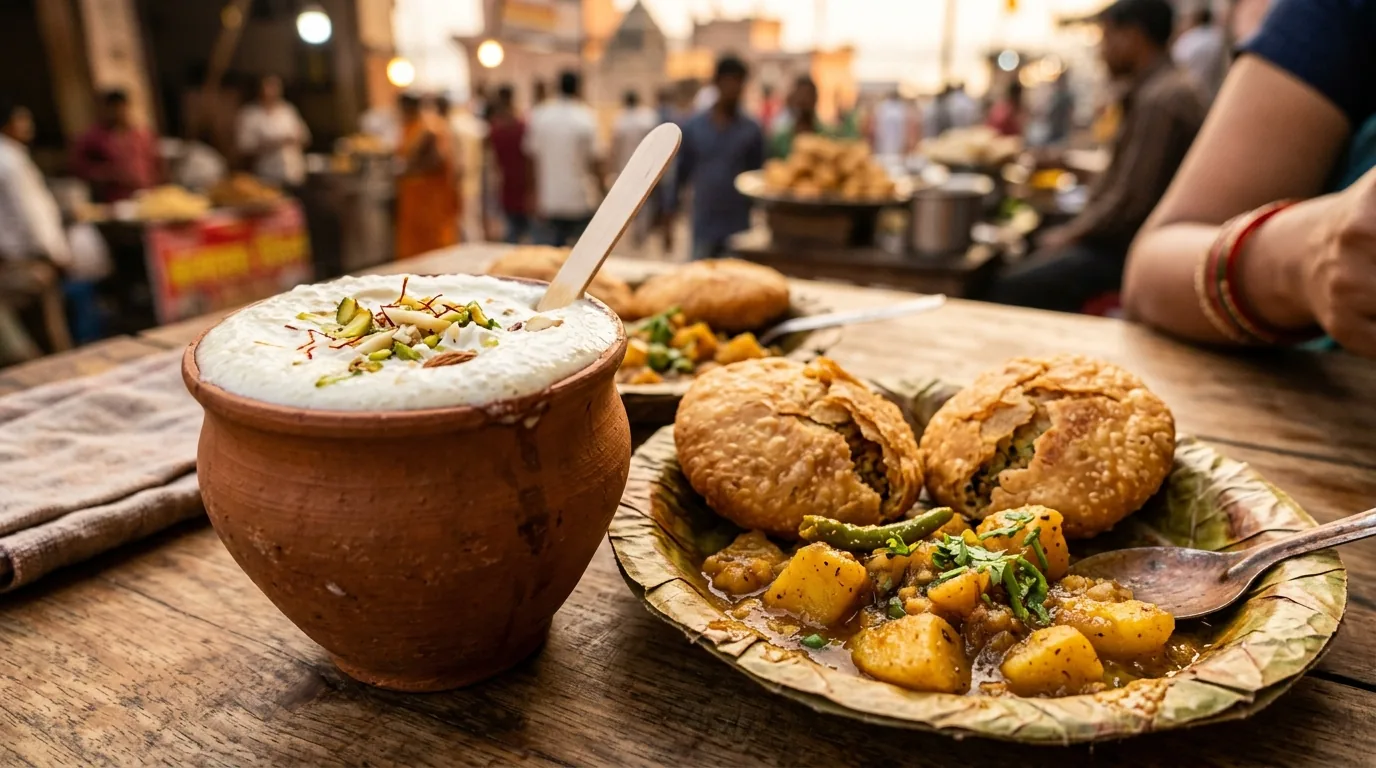
The pleasure of eating in Varanasi lies partly in noticing what is being made at that moment. A breakfast shop frying kachori is offering a different experience from an evening chaat counter, and a winter sweet deserves its own place in the morning. You do not need to eat everything in one walk to understand the city's appetite.
Begin with two or three dishes, stay within one neighbourhood and leave room to return. This guide explains the flavours and practical food circuits, rather than presenting a competition between shops or an unverified price list.
Start with a proper Banarasi breakfast
Kachori-sabzi is a substantial way to begin: a fried savoury bread with a vegetable preparation served alongside. Fillings, size and the style of sabzi vary, so look at the current serving before ordering. Ask for one modest plate if you want to taste more than one breakfast item.
Jalebi brings a different texture to the same morning: crisp fried spirals coated in syrup. Watch for a fresh batch and ask how a small portion is sold. A little can be enough after kachori; there is no need to order a full extra serving for each traveller.
Kachori Gali and the broader Chowk–Thatheri Bazaar area are useful places to look for this breakfast culture. The Ministry of Tourism identifies Kachori Gali near Vishwanath as a traditional kachori destination. Treat the neighbourhood as a starting point, then choose a currently operating shop and check what is ready.
Do not turn breakfast into an obstacle for temple visitors or shoppers moving through a narrow lane. Step aside before eating, keep the queue clear and ask before photographing a busy cook. The preparation can be fascinating without requiring the person serving you to pause for a camera.
If the family prefers a seated meal, use the restaurants near Kashi Vishwanath guide. A food walk and a comfortable breakfast table are different choices, and either can be right after an early start.
Understand what makes the chaat interesting
Tamatar chaat is one of the dishes worth seeking specifically in Varanasi. Expect a warm tomato-led preparation with seasoning and contrasting toppings, rather than assuming it will resemble a cold salad. Recipes differ between counters, and the balance of sweetness, sourness and heat is part of the comparison.
Palak chaat uses fried spinach as a crisp base, often with curd, chutneys and toppings. The first bite has a different character from tamatar chaat, so the two make a useful small tasting pair. Ask whether a portion can be shared instead of ordering several rich dishes at once.
Tikki, dahi-based preparations and golgappa add further possibilities. Check the actual components at the counter. A request for less chilli does not necessarily remove every spicy chutney, and a dish with curd is not suitable for someone avoiding dairy unless the preparation is changed appropriately.
Kashi Chaat Bhandar appears in the Ministry of Tourism's culinary introduction as a recognised chaat stop. Use the name to identify a candidate, not as proof that every menu item is available or that a queue guarantees the best choice for your group. Confirm the current address, serving and price when you visit.
For a first tasting, order one hot chaat and one contrasting preparation between willing companions. Eat them while their textures are still distinct, then decide whether you want more. That gives you a clearer impression than rushing through five bowls simply because a checklist says they are famous.
Choose a compact neighbourhood circuit
| Food circuit | Best purpose | A manageable tasting idea | Practical limit |
|---|---|---|---|
| Chowk and Thatheri Bazaar | Breakfast and winter-speciality browsing | Kachori, a little jalebi and one seasonal enquiry | Narrow market lanes and variable serving batches |
| Kachori Gali and temple-side lanes | A short food stop around an Old City visit | One breakfast plate or a drink | Worship queues and security approaches take priority |
| Godowlia and Dashashwamedh Road | Afternoon or evening chaat | A shared tamatar chaat followed by one other dish | Aarti-bound pedestrian movement |
| Assi and Lanka-side neighbourhoods | A separate southern food outing | A small local snack and a seated meal if wanted | Do not treat it as a quick extension of a Chowk walk |
These are suggested food neighbourhoods, not measured shop-to-shop routes or guarantees of opening. Choose the circuit that fits where you already are. Travelling across the city for one extra snack can consume more time than the eating itself.
For an Old City morning, keep the route compact and allow pauses to find your bearings. If you are visiting the temple first, follow its current belongings instructions and collect deposited items before beginning the food walk. Do not carry a full meal plan into a temple queue.
For aarti day, eat before the final viewing approach or after leaving the busiest flow, depending on the family's appetite. A long chaat queue immediately before your intended viewing arrival can undo an otherwise sensible evening plan.
Leave room for lassi, chai and thandai
Banarasi lassi can be a substantial serving rather than a light drink. Ask about portion size and toppings before ordering, especially if you have already eaten breakfast. One shared serving may suit a tasting walk, while another traveller may want it as the main stop.
Chai offers a shorter pause, but observe where the vendor expects customers to stand. A busy tea counter may have little room for a large group lingering with backpacks. Ask about the price and serving vessel, then dispose of it where instructed.
Thandai varies by recipe and supplier. Ask what has been added, including nuts, dairy and any optional intoxicating ingredient. If you want a plain preparation, state that clearly rather than assuming that every glass sold under the same name is identical.
Drinks are worth planning around the weather and your own preferences. There is no requirement to have lassi, thandai and another milk-based sweet in the same hour. Spread them across the trip and choose a place whose preparation and serving practices you are comfortable with.
Keep drinking water separate from the tasting itinerary. Choose a source you trust, and check what water and ice are used where relevant. An expensive-looking glass or an attractive clay cup does not establish how a drink was prepared.
Ask about winter specialities at the right time
Malaiyyo, also written malaiyo, is a delicate milk-foam sweet closely associated with the cool season. Think of it as a light-textured dessert, not a large bowl of thick cream. Preparation and flavouring vary, and availability depends on the seller and conditions.
Seek it on a winter morning and ask whether the day's batch is ready. Do not treat a particular calendar date as a guaranteed beginning or end of the season. A shop may sell out, alter production or offer another sweet instead.
Choora matar, also written chooda or chura matar, combines flattened rice with peas and seasoning in its familiar local form. It provides a savoury contrast to winter sweets. Ask what is being made that day and whether dairy, nuts or other additions are included in that version.
Chena dahi vada is another local dish listed in the Ministry of Tourism's Varanasi introduction. Because names can conceal unfamiliar ingredients, ask the vendor to describe the preparation. A traveller expecting a standard lentil-based dahi vada should not assume every similarly named local serving has the same composition.
The best time to visit guide helps with the broader seasonal trip. For food, the practical rule is more immediate: ask what is being prepared now, and leave space for an available speciality rather than demanding a dish from an old photograph.
Order with clear prices and dietary questions
Ask the current price before ordering and establish the portion. A quoted amount may refer to a plate, a glass, a weight or a piece. Clarify toppings and extra servings instead of assuming they are all included.
For dietary needs, describe ingredients rather than relying only on a broad label. Vegetarian food can contain milk, curd, cream, ghee or nuts. A Jain or no-onion-and-garlic request needs direct discussion about the preparation, and a busy street counter may not be able to alter a pre-made batch.
Choose freshly prepared food where you can observe the serving, clean utensils and reasonable handling. Look at the counter itself instead of taking popularity or a social-media ranking as a complete quality check. If the arrangement does not suit you, choose another stop without feeling obliged to finish a famous-food list.
For children, start with a small serving and keep a familiar meal available as an alternative. A full afternoon of unfamiliar snacks may not suit every appetite. Ask for adjustable toppings where possible, but accept that a vendor may be unable to change a prepared base.
Paan is part of the city's food culture, but it is optional. Ask exactly what is being put into it, including areca nut and tobacco, rather than treating “sweet” as a full ingredient description. You can appreciate the wrapping skill without ordering a preparation you do not want.
Build a food day that leaves appetite for tomorrow
A manageable first day might contain a shared kachori breakfast, a later lassi stop and one evening chaat. That is enough variety to notice the differences without spending the whole day moving between queues. Add a winter sweet on another morning if it is available.
On the second day, explore another neighbourhood or choose a proper seated meal. Baati-chokha can make sense as a meal in its own right rather than an extra snack squeezed after several tastings. Give heavier dishes the time and appetite they need.
Keep your notes simple: dish, neighbourhood, shop name and what you liked. That is more useful for a return visit than assuming a ranking tells you what your own palate will prefer. Ask permission before photographing people, pay clearly and leave the eating space tidy.
The Varanasi food hub connects the broader meal-planning options. A good street-food visit is personal and selective: a few well-chosen servings, enough time to enjoy them and a route that fits naturally into the rest of your day.
BEFORE YOU GO
Frequently asked questions
What should I try first in Varanasi?
Kachori-sabzi for breakfast and tamatar chaat later make a useful starting pair. Add a small sweet or drink according to appetite. There is no need to taste every well-known dish in one outing to enjoy the city's food culture.
Is malaiyyo available throughout the year?
It is associated with cool-season mornings, and availability varies with the seller and conditions. Ask about the day's preparation rather than relying on a fixed calendar promise. A winter visit improves the opportunity but does not guarantee every shop has stock.
Which area is good for a short food walk?
Choose one cluster that fits your location: Chowk and Thatheri Bazaar for breakfast browsing, temple-side lanes for a compact stop, or Godowlia–Dashashwamedh Road for chaat. These are neighbourhood suggestions; confirm individual shops and current serving times locally.
Is vegetarian street food automatically dairy-free?
No. Milk, curd, ghee, cream and nuts can appear in vegetarian preparations. Explain your ingredient requirements directly and ask about the actual batch. A street counter may not be able to adjust a dish that has already been prepared.
Are the prices in this guide fixed?
No fixed menu prices are published here. Ask the current amount and portion before ordering, including toppings or extra servings. That is more useful than relying on an old online price for a different size or preparation.
REFERENCE NOTES
Sources and practical updates
These primary sources support the factual background of this guide. For your travel dates, confirm the current arrangements with the responsible venue, property or service provider.
- Ministry of Tourism: Varanasi culinary identity, Kachori Gali and Kashi Chaat Bhandar
- Ministry of Tourism: recognised Varanasi dishes including choora matar and chena dahi vada
- Ministry of Tourism food introduction: kachori, chaat and paan preparations
- Lonely Planet food reporting: cool-season malaiyo and chooda matar