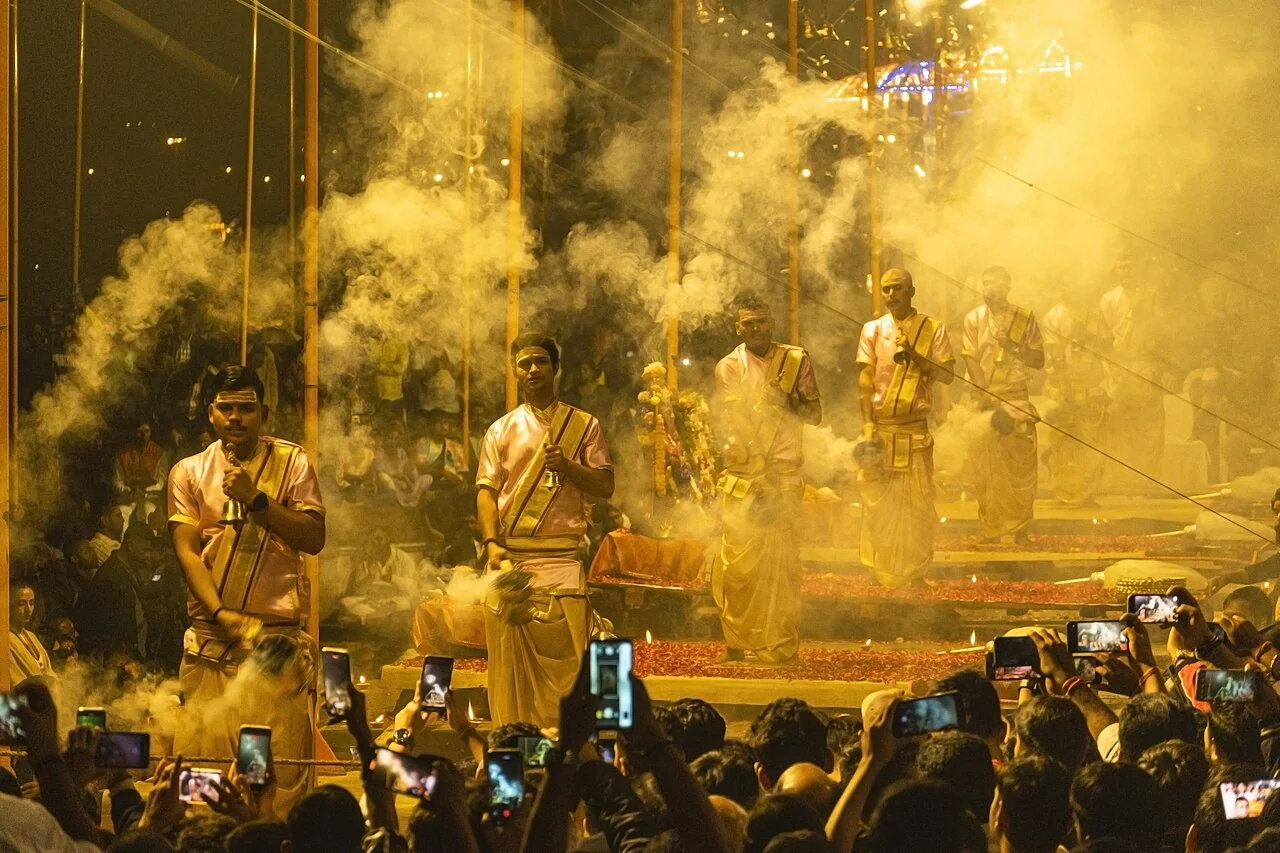
On a first visit to Varanasi, Ganga Aarti is often the one experience everyone has pictured in advance: lamps above the river, bells in the evening air and boats waiting beyond the steps. The real evening begins much earlier, with the choice of a ghat, the walk from the road and the search for a place where you can settle.
This guide follows that visit from preparation to the journey back. It is not another list of every ceremony time or viewing package. Use it to understand the sequence, then follow the focused guides where you need more detail. With the practical decisions made beforehand, you can spend the ceremony watching and listening rather than arranging the next part of the evening.
Step one: know what you are coming to observe
Aarti is an offering of light in worship. At the riverfront, the Ganga is honoured as a goddess and a source of life. The movements, chanting and offerings have religious meaning for the priests and devotees; the ceremony is more than a visual attraction assembled for visitors.
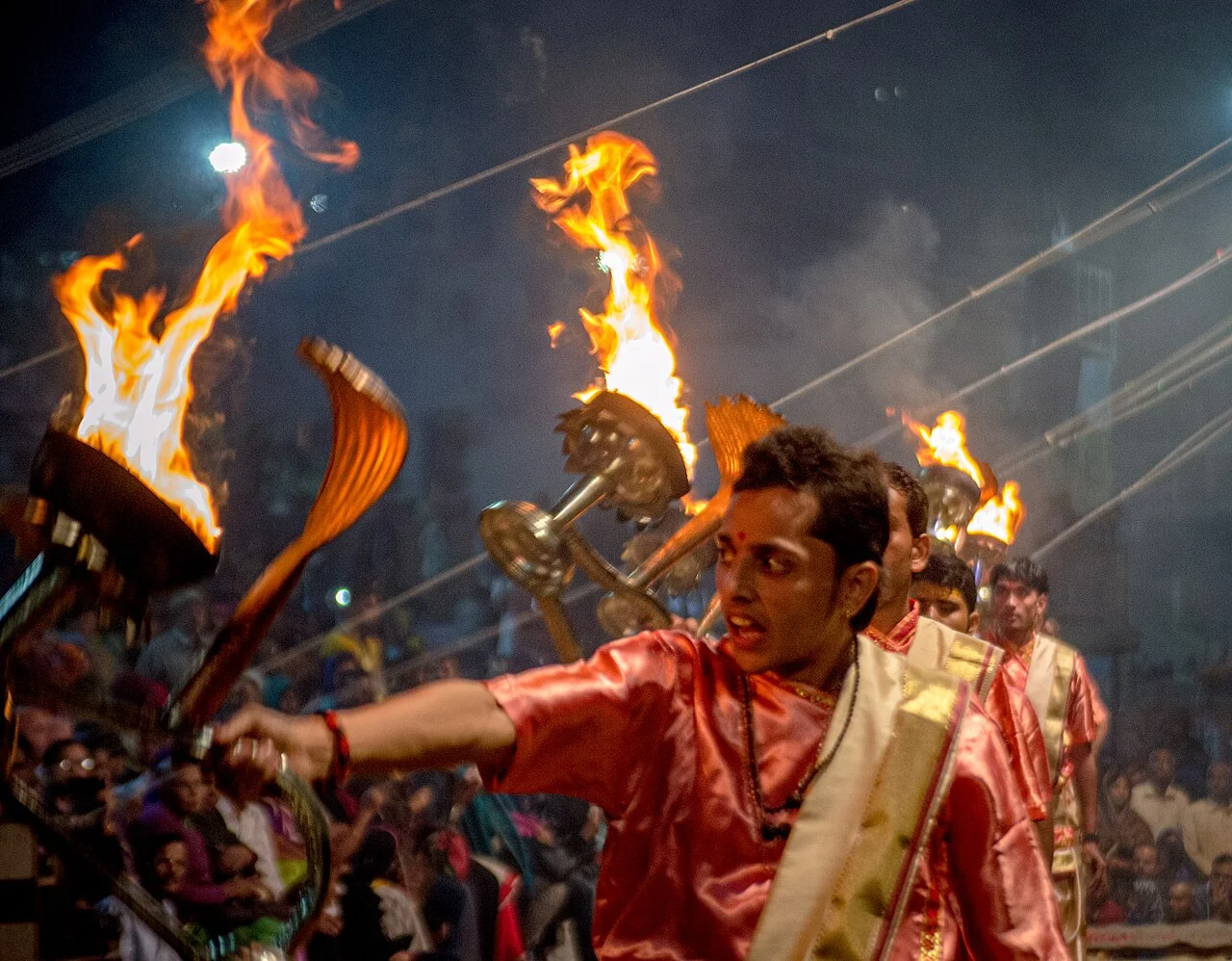
You may hear conch shells, bells and devotional music, and see incense and lamps used in a coordinated sequence. The details vary by organiser. There is no need to learn every gesture before arriving, and quiet observation is welcome without joining a ritual or repeating words you do not understand.
Modern organised evening gatherings should be distinguished from the much older reverence for the river. Avoid expecting every element of today's presentation to be an unchanged ancient practice. It is enough to understand the purpose and give the people worshipping around you space and consideration.
Explain that context to children or companions before leaving. It helps everyone understand why they should remain outside the ritual platforms, lower their voices during prayers and avoid treating a priest's working space as a convenient place for a photograph.
Step two: choose one ceremony and one viewing plan
For many first-time visitors, the evening gathering at Dashashwamedh is the natural choice. Assi offers another evening setting and the separate dawn Subah-e-Banaras programme. Choose the visit that fits your location, sleep and interests instead of trying to attend several overlapping ceremonies.
Then choose the viewing arrangement. Public shore viewing, a named private venue and a boat are different experiences. You can observe without buying an elaborate package, but any paid service should have a clear provider, meeting point and description.
| Decision before leaving | A useful answer | Where to read more |
|---|---|---|
| Which ceremony? | A named ghat and morning or evening visit | The ghat-comparison guide |
| When does it start? | A locally confirmed time for your date | The timings guide |
| Where will we watch? | A permitted shore position or clearly described booked service | The viewing and seating guides |
| When must we be ready? | A viewing target or operator's reporting deadline | The arrival guide |
| How will we return? | A reachable meeting point and agreed transport plan | The transport guide |
The best-ghats guide helps with the location decision. Once made, avoid reopening it repeatedly during the afternoon; you need time to enjoy the chosen visit, not compare it with every alternative.
Step three: keep the afternoon easy enough to enjoy the evening
Finish major temple visits well before the aarti arrival target. A delayed darshan, belongings collection or a long lane walk can absorb the time you thought was available for reaching the river. Keep one earlier activity optional so that the evening does not depend on every queue being short.
Have a meal or snack at a time that suits you, and use a known toilet before entering the busiest section. Carry water for the approach, a small amount of cash and only the belongings you can manage comfortably. Secure footwear matters on the steps more than dressing for a photograph.
Check the same-day start through an identified organiser or a reliable current local contact. Evening worship is associated with sunset, but a remembered time from another season may be wrong. The timings guide explains the broader pattern; current instructions determine the actual plan.
If a boat or venue is booked, confirm the meeting instructions before leaving the hotel. Save them offline and keep the accommodation address available. For companions who may separate temporarily, agree where to reunite. These small arrangements are easier in a quiet room than in a crowded lane with several phones ringing.
Step four: treat the approach as part of the visit
Ask the driver where the vehicle can actually stop. For Dashashwamedh, the final approach may be on foot through the Old City. A road junction, the top of the steps and the place where you will watch are three different arrival points.
Walk at a pace the whole group can sustain. If you need directions, use the named ghat or venue and ask before taking an uncertain turn. Stop in a clear place to consult a map rather than forming a group across a narrow lane.
For an ordinary evening, about 60–90 minutes settled at the chosen shore viewing area is a useful personal target. The road journey, walk and essential stops come before that. This is editorial advice, not an official entry deadline or a guarantee of space.
During a festival, check the current event plan instead of adding a few minutes to an ordinary-day estimate. Restrictions may affect the entire approach. Our arrival guide explains the different shore, boat and festival calculations.
Step five: settle where the whole group can remain comfortably
Look at the route out before choosing the view. A position close to the lamps may be difficult to leave if several dense rows fill behind you. Families and slower-moving visitors should value a manageable exit as well as visibility.
Stay away from the immediate water edge and keep stairs and walking passages clear. Do not climb onto railings, mooring points or ritual platforms. If a position is already occupied, ask politely or choose another; an arriving visitor does not have priority over someone who has been waiting.
At a private venue, confirm the actual seat and facilities before assuming the booking is fulfilled. On a boat, identify the correct vessel, check suitable life jackets and board only when it is properly positioned. The seating guide separates those services from public attendance.
Use the waiting period to observe the riverfront and understand the layout. There is no need to buy every offering that passes your position. If you choose a ritual or service, establish the amount and purpose before accepting it. Keep donations a considered choice rather than an automatic response to pressure in the crowd.
Step six: watch the ceremony with attention
As worship begins, allow the sequence to develop. The largest lamps are one part of it. Listening to the recitation and watching the preparation can make the later movements more meaningful than waiting only for the photograph you expected.
Photography depends on current instructions and consideration for others. Turn off flash, avoid holding a phone above someone's view for the whole ceremony, and ask before close portraits. Our photography guide offers practical low-light advice without requiring you to move through worshippers.
Participation is optional. You can observe quietly, receive a blessing if invited and comfortable, or remain seated. There is no need to enter the river, purchase an offering or copy gestures whose meaning you do not know. Follow clear instructions when joining a specific rite.
Allow roughly 45–60 minutes as a broad ceremony budget, recognising that organisers and occasions differ. That reference does not include your arrival and departure. If a child or companion becomes uncomfortable with noise, smoke or crowding, leave by the permitted route rather than insisting on finishing because the timetable says you should.
Step seven: leave with the same care you used to arrive
The last lamp does not end the practical evening. Many people begin moving at once, and a familiar-looking stair can become harder to negotiate in the departing crowd. Keep your group together and follow staff directions rather than forcing a shortcut against the pedestrian flow.
Where permitted and comfortable, let the first surge ease without occupying a working route. Check that everyone has their belongings before entering the lanes. Save photo review and shopping discussions for a place where you can stand without obstructing others.
Meet your driver at the agreed reachable point. If the original stop is restricted, confirm an alternative clearly rather than walking towards a vehicle location that cannot be reached. Boat passengers should also know their return ghat before departure; it may change the final journey to the hotel.
Leave space afterwards for dinner, water and rest. A first evening already contains a substantial walk, a wait and a ceremony. It need not be followed by another long temple queue simply because the city remains awake.
If the visit leaves you curious, choose a different experience on another day: an Assi morning, a considered riverfront walk or time learning about a particular shrine. You will understand more by allowing those experiences their own pace than by trying to turn the first evening into a complete tour of Kashi.
The aim is a visit you can follow comfortably from beginning to end. Once the location, approach, viewing choice and return are clear, the ceremony can become what you came for: time beside the Ganga, attentive to a living act of worship.
Photograph sources and licences
Hero photograph: Vimalinarc / Wikimedia Commons; CC BY-SA 4.0. Source: https://commons.wikimedia.org/?curid=145136685. Licence: https://creativecommons.org/licenses/by-sa/4.0. Resized and converted to WebP; no generative editing.
Article photograph: Philip Nalangan / Wikimedia Commons; CC BY-SA 4.0. Source: https://commons.wikimedia.org/?curid=185193105. Licence: https://creativecommons.org/licenses/by-sa/4.0. Resized and converted to WebP; no generative editing.
BEFORE YOU GO
Frequently asked questions
Do I need to understand Hindu rituals before attending?
No. A basic understanding that aarti is worship with offerings of light is enough to begin. Observe quietly, keep access clear and follow instructions if you join a particular rite. Participation, offerings and donations are optional choices rather than requirements for respectful observation.
Do I have to buy a ticket to watch?
Public viewing and paid services are different. An organiser may provide free public viewing while businesses sell boats, terraces, guiding or other arrangements. Ask what a payment covers and who provides it. A generic VIP label does not identify a necessary public-entry ticket.
Can I combine Kashi Vishwanath and Ganga Aarti in one day?
Yes, with enough separation between them. Temple reporting, security, queues and belongings collection can extend the first visit. Complete it well before your riverside arrival target and keep another activity optional, rather than expecting a quick walk to recover a delayed afternoon.
What if I arrive after the ceremony starts?
Follow staff directions and accept an available permitted view. Do not push towards the front, climb an unstable structure or stand in a walking route. If access is full or the group is uncomfortable, choose another authorised position or another evening.
Is the dawn programme at Assi the same experience?
It is a distinct visit. Subah-e-Banaras includes worship within a broader programme of recitation, music and yoga. Its seasonal opening and predawn transport need separate planning. You can enjoy both during a trip, preferably with enough sleep between an evening and an early morning.
REFERENCE NOTES
Sources and practical updates
These primary sources support the factual background of this guide. For your travel dates, confirm the current arrangements with the responsible venue, property or service provider.
- Ganga Seva Nidhi: prayer with light, gratitude to the Ganga and evening worship
- Gangotri Seva Samiti: its public seating, separate pujan and ceremony-duration reference
- Subah-e-Banaras organisers: dawn programme and seasonal reference windows
- Ministry of Tourism, Incredible India: Varanasi visitor and seasonal context