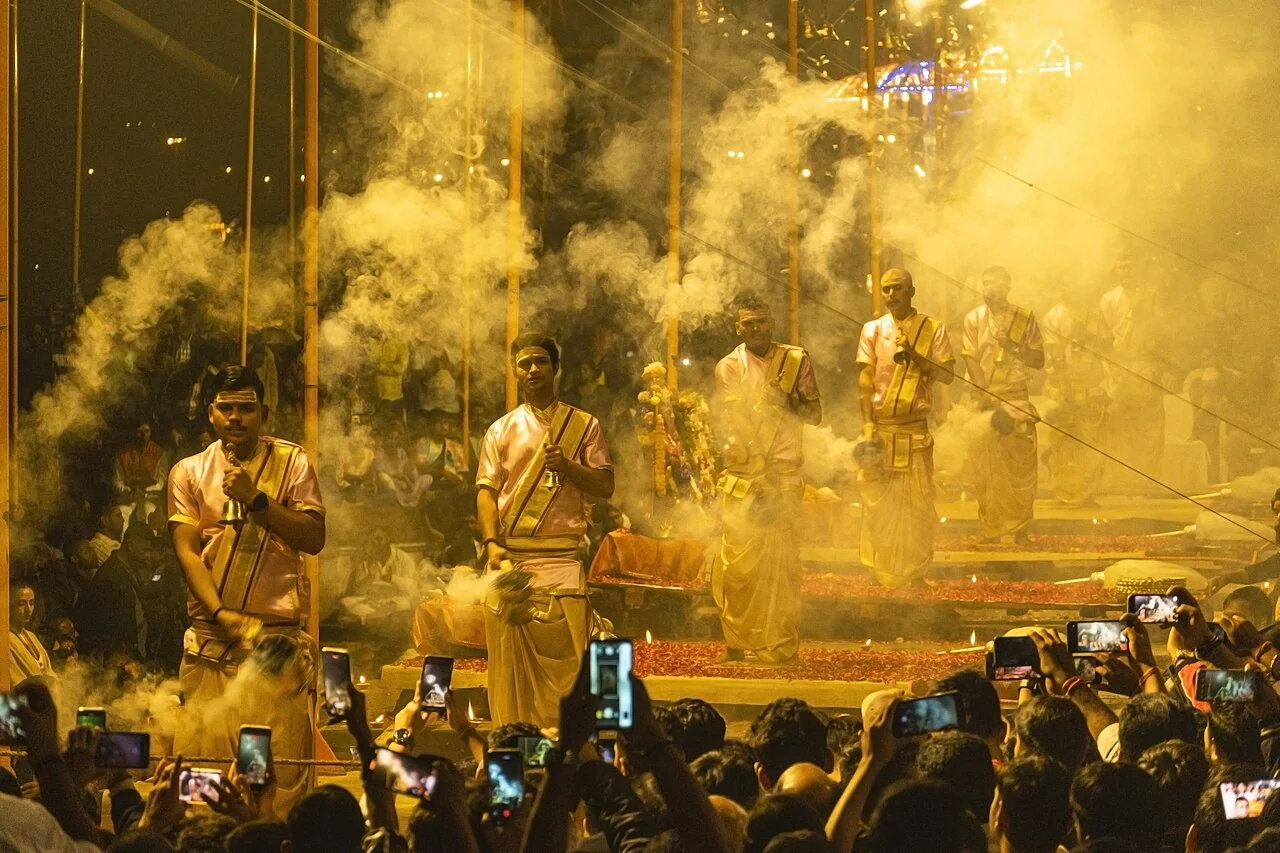
The best ghat for Ganga Aarti depends on what you want from the visit. For some travellers it is the scale of the evening gathering at Dashashwamedh. For others it is a dawn at Assi, a position that allows them to leave with a child, or an approach that does not consume all their walking energy.
Start with the location and the time of day, then think about the view. This guide compares ghat settings and their practical demands. It complements our best place to watch Ganga Aarti guide, which concentrates on shore, boat and other viewing arrangements within the experience you choose.
Compare the ghats by the visit they create
Dashashwamedh and Assi are the clearest starting choices for most first-time visitors. Other ghats can have local worship, but a smaller ceremony needs a same-day check rather than an assumption that every riverfront has an identical daily programme.
| Ghat or area | Main appeal | Traveller it may suit | What to check |
|---|---|---|---|
| Dashashwamedh | A major central evening aarti gathering | Visitors wanting the well-known large ceremony | Approach restrictions, waiting time and a suitable return route |
| Rajendra Prasad side | An adjoining central riverfront perspective | Visitors comparing permitted positions near the main gathering | Actual stage, sightline and crowd movement that evening |
| Assi in the morning | Subah-e-Banaras: worship within a wider dawn programme | Early risers interested in recitation, music and a gentler start | Seasonal opening and the active programme location |
| Assi in the evening | A southern riverfront aarti setting | Travellers staying around Assi or preferring that neighbourhood | Current ceremony time and available viewing space |
| Kedar or another local ghat | Neighbourhood worship in its own setting | Repeat visitors interested in smaller local observances | Whether a ceremony is taking place, where and when |
These are location choices, not quality rankings. No row promises an empty ghat, a front seat or a continuously step-free approach.
Dashashwamedh: choose it for the central evening gathering
Dashashwamedh is the strongest choice when your main aim is the large evening ceremony familiar from images of Varanasi. The river, ritual platforms, lamps and gathered crowd create a concentrated experience. It deserves a generous time block rather than a brief stop between unrelated activities.
The central location also brings practical demands. Vehicles may leave you at a permitted road point, followed by a walk through busy approaches and down steps. Ask where the ride ends and which pedestrian route is in use before deciding how much time to allow.
Arrive with a clear viewing preference but enough flexibility to change it. A place slightly further back can be more manageable than a crowded front edge, especially for families. Keep walking routes clear and avoid turning a search for the perfect angle into repeated movement through seated worshippers.
The ghat fits naturally with an earlier Old City outing, but not with a tightly timed late darshan. Complete your temple visit and collect belongings before your aarti arrival target. See the Dashashwamedh guide for the setting and our arrival guide for the time calculation.
Rajendra Prasad: an adjoining area, not a crowd-free shortcut
Rajendra Prasad Ghat adjoins the central aarti area. It can be useful when comparing positions, meeting arrangements or the approach to a particular organiser's ceremony. Its closeness makes it easy to confuse a new ghat name with an entirely separate experience.
Check the actual platform and the direction of view. Seeing lamps at an angle is different from having a clear view of the entire ceremony. Ask which gathering a service refers to before paying for a chair, guide or boat meeting there.
Do not expect the adjoining area to remain quiet while Dashashwamedh is busy. Crowds, boat boarding and through-movement can extend beyond a stage's immediate frontage. The relevant question is whether a specific permitted position suits your group that evening, rather than whether a map labels it differently.
It may also serve as a convenient orientation point for an agreed meeting. Use a precise landmark and confirm it with the operator. “Near Rajendra Prasad” still covers enough activity to make a last-minute phone search frustrating. If the area is being cleared or redirected, follow the staff's instructions rather than holding a meeting point that is no longer usable.
Assi at dawn: choose a morning with several parts
Assi's Subah-e-Banaras is a dawn programme rather than simply an evening ceremony performed earlier. The organisers describe Vedic recitation, aarti, a yajna, classical music and yoga. Decide whether you want the opening worship, the music or the full sequence before arranging breakfast or a boat ride.
Their published reference windows are 4:50–7:00 AM in summer and 5:40–7:45 AM in winter. Confirm the applicable start near your visit. The page does not give a precise calendar switch between the seasons, so month labels from an unrelated blog should not determine your alarm.
Assi is particularly convenient for travellers staying in the southern neighbourhoods. That convenience can matter more than an abstract claim about the “best” ceremony. A short familiar approach after enough sleep may create a better morning than crossing the city before dawn with an exhausted group.
Families can choose a comfortable length of stay, while visitors interested in music should leave time beyond the lamps. Read the morning programme guide before booking a simultaneous sunrise boat departure. You cannot watch the opening on shore while already travelling away from it on the river.
Assi in the evening and smaller local ceremonies
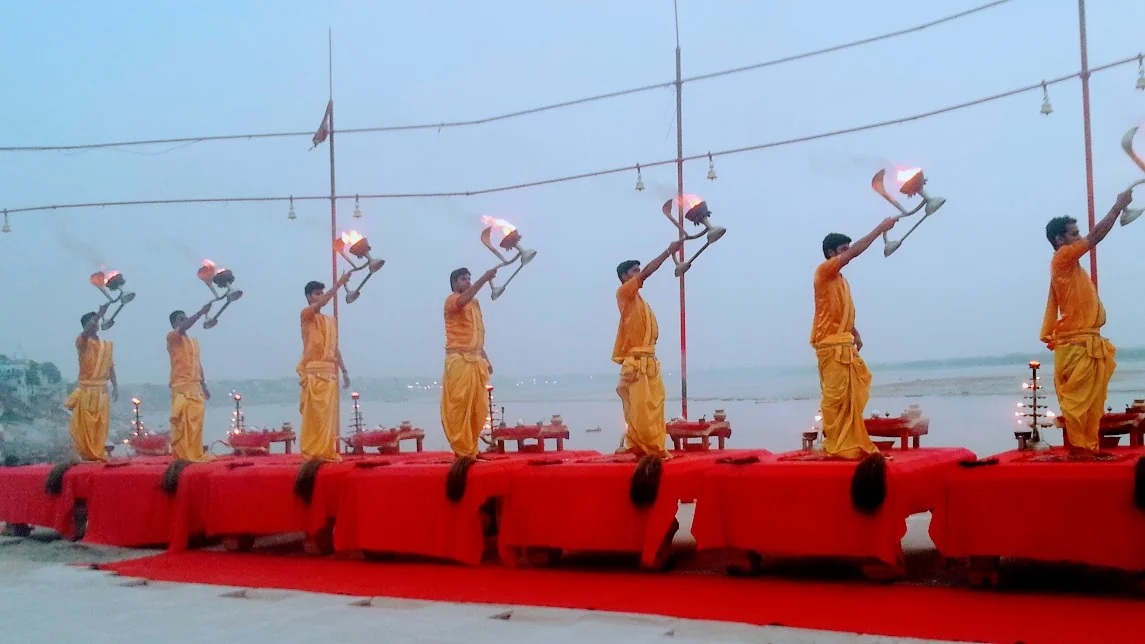
An Assi evening can suit visitors whose accommodation and dinner plans are already in the south. It removes the need to cross the city solely because Dashashwamedh is the name they recognise. However, verify the evening ceremony separately: the dawn programme's timetable does not apply.
Assess the space and approach in person when possible. Assi can also become crowded, particularly on holidays and major occasions. Its reputation for a more relaxed atmosphere should not become a promise that every evening is easy for every visitor.
The government Kashi portal also mentions smaller aarti observances at places including Kedar and other ghats. Treat those references as leads for local confirmation. Ask an identified temple or event contact whether worship is taking place on your date and whether visitors can observe without obstructing the ritual.
Smaller does not automatically mean simpler access. A ghat may have steep steps, limited seating or a narrow approach even when fewer people attend. If your plan depends on accessible seating, transport or a fixed start, establish those details before choosing the local alternative.
Match the ghat to your group and interests
For a first visit centred on the large evening spectacle, begin with Dashashwamedh and organise the approach carefully. For recitation, morning music and a different light on the river, choose Assi at dawn. For a short trip based around Assi, its evening setting may be the most coherent choice once the current programme is confirmed.
Families should prioritise a manageable way out, a toilet stop beforehand and a waiting period their children can tolerate. A less central permitted shore position may suit them better than the closest view. Our aarti with kids guide works through those decisions.
Older visitors and people with mobility needs should ask about the entire journey, not only seating. Road access, final walking distance, stairways and the return are all part of the visit. A chair is useful only if the person can reach and leave it comfortably.
Photographers should choose a stable permitted position with an unobstructed line, rather than moving between several ghats during the ceremony. The photography guide explains low-light choices and etiquette. For a boat view, the ghat decision becomes partly a boarding decision: the advertised ceremony location may differ from the departure and return ghats.
Timing, weather and the evening after the choice
Once you select the ghat, confirm the current start and work backwards. For an ordinary Dashashwamedh evening, about 60–90 minutes settled at your viewing area is a useful editorial target. Add road travel, the final walk and essential stops before that. An operator's earlier reporting requirement takes priority.
During major festivals, recheck the whole arrangement. Public movement, vehicle access and boating may differ substantially from an ordinary evening. Another ghat name is not a guarantee of escaping the same regional crowd or river restrictions.
Rain and high water can move the usable activity to a higher level or change access entirely. Check the current position instead of navigating towards the lowest steps shown in an old photograph. Do not cross a flooded or closed connection to reach a preferred ghat.
Agree on the return before the ceremony begins. Save the accommodation address, choose a reachable road meeting point and allow time for the first departing crowd. A ghat that suits your arrival should also suit the journey back.
You do not need to compare every ceremony during a short stay. One well-planned evening and, if it interests you, a separate Assi morning can provide two distinct experiences. Choose the setting that supports your attention to the worship, rather than spending the visit searching for a universally perfect ghat.
Photograph sources and licences
Hero photograph: Vimalinarc / Wikimedia Commons; CC BY-SA 4.0. Source: https://commons.wikimedia.org/?curid=145136685. Licence: https://creativecommons.org/licenses/by-sa/4.0. Resized and converted to WebP; no generative editing.
Article photograph: Titodutta / Wikimedia Commons; CC0. Source: https://commons.wikimedia.org/?curid=69796122. Licence: http://creativecommons.org/publicdomain/zero/1.0/deed.en. Resized and converted to WebP; no generative editing.
BEFORE YOU GO
Frequently asked questions
Which ghat should a first-time visitor choose for evening aarti?
Dashashwamedh is a useful first choice for the major central evening gathering. Plan its busy approach, viewing position and return carefully. Assi is another option, especially for visitors staying in the south, but confirm its evening programme separately before arranging transport.
Is Assi better for morning or evening aarti?
They offer different visits. The dawn Subah-e-Banaras programme combines worship with recitation, music and yoga. Evening aarti is a separate arrangement with its own time. Choose according to your interests, sleep and location rather than assuming one timetable covers both.
Is Rajendra Prasad Ghat quieter than Dashashwamedh?
Do not rely on that assumption. It adjoins the central gathering area, so crowd movement can extend through it. Check the particular permitted position, actual stage and approach on the day. A separate map label does not establish a separate crowd pattern.
Can I attend a smaller ceremony at another ghat?
Possibly, after confirming the current local observance with an identified responsible contact. Tourism references to local aartis are not a dated schedule for every ghat. Check the location, start, visitor arrangements and approach before making it the fixed purpose of an outing.
Which ghat is best for seniors or limited mobility?
The answer depends on the exact approach and the person's needs. Ask about road drop-off, walking, steps, seating and return access together. Neither a famous ghat nor a paid chair establishes a step-free visit. Verify the particular route before committing.
REFERENCE NOTES
Sources and practical updates
These primary sources support the factual background of this guide. For your travel dates, confirm the current arrangements with the responsible venue, property or service provider.
- Kashi government portal: aarti locations and the distinction between traditional worship and modern organisation
- Ganga Seva Nidhi: prayer with light, gratitude to the Ganga and evening worship
- Subah-e-Banaras organisers: dawn programme and seasonal reference windows
- Ministry of Tourism, Incredible India: Varanasi visitor and seasonal context