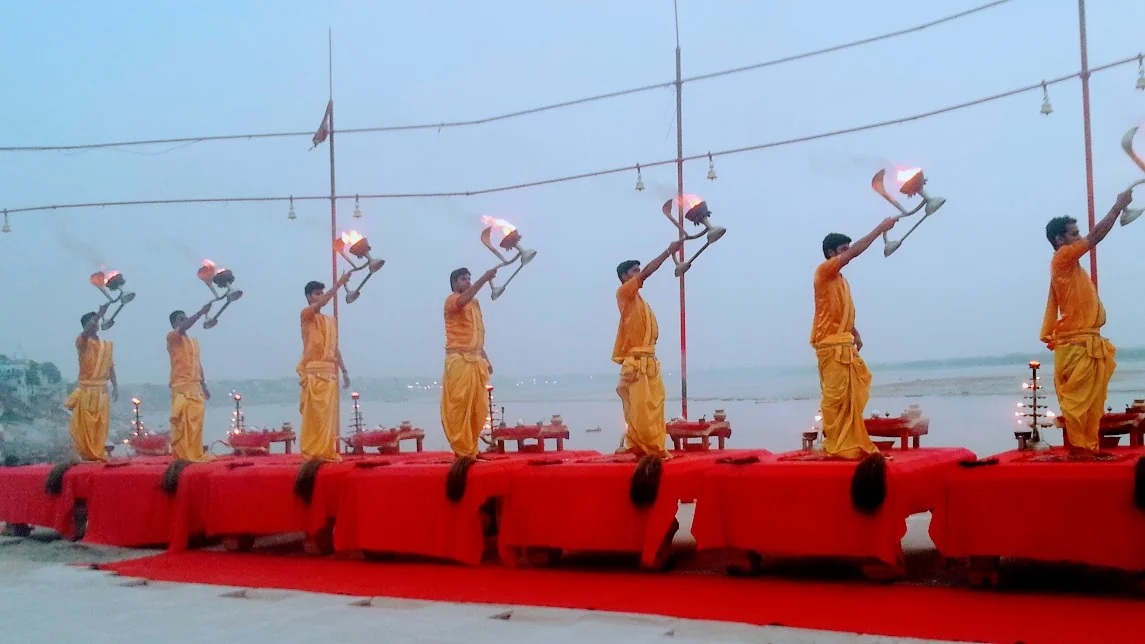
Before choosing an alarm time, decide which morning you want. Watching the first light on the Ganga, attending a dawn programme, making a temple visit and entering a museum when it opens are four different plans. They can complement one another, but they should not all compete for the same early hour. Varanasi rewards a morning with one clear beginning and a little room afterwards. This guide follows the places that make sense from dawn into late morning, with breakfast and a comfortable return treated as part of the experience.
Assi Ghat: arrive for the light or the programme
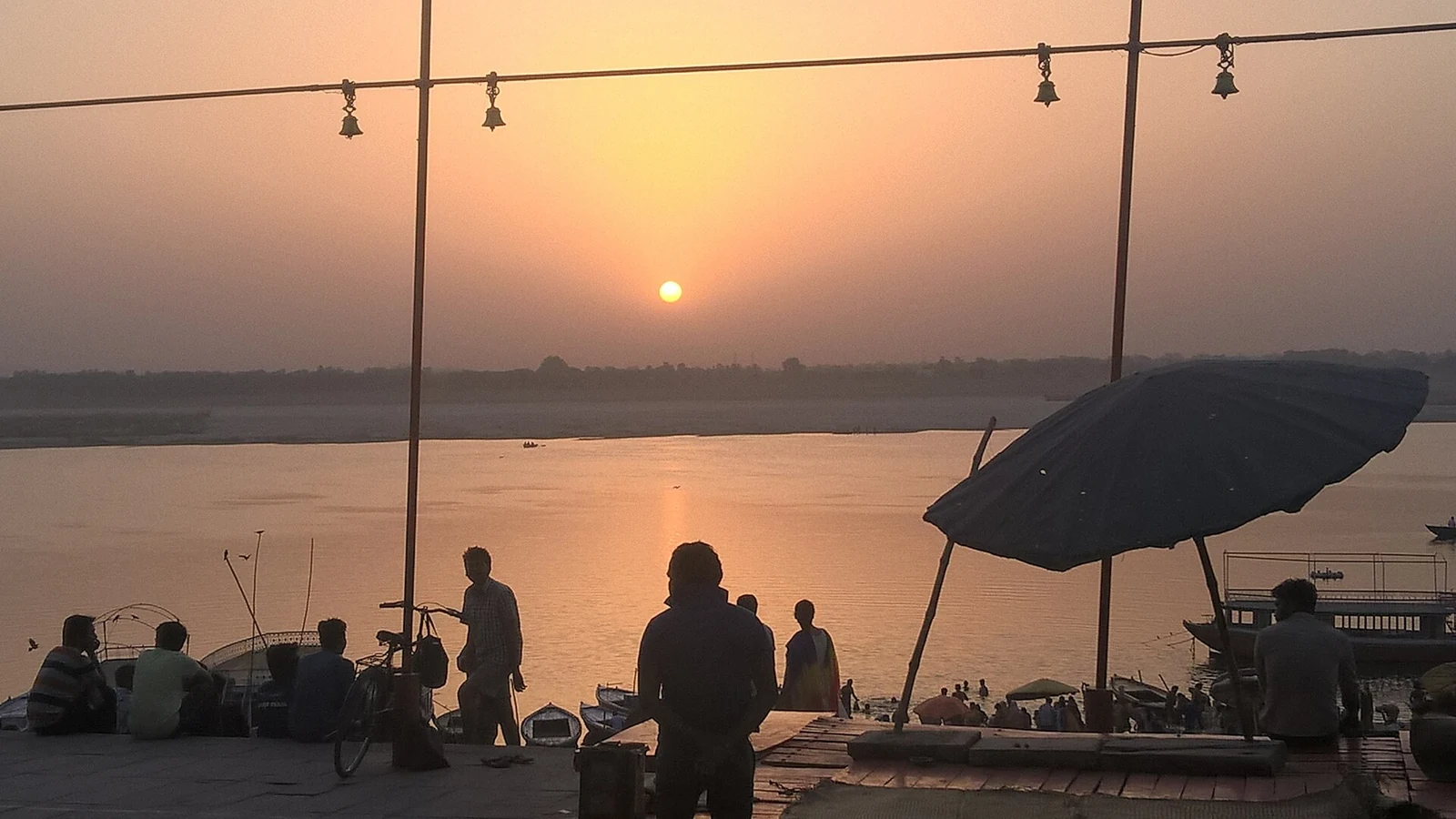
Assi gives a first morning an easy point of reference: the steps, the boats and the broadening colour of the river. If sunrise is your main interest, establish where you can stand comfortably before taking photographs. Cloud, haze and the season affect the view; the morning can still be worthwhile when the sun does not appear as a perfect orange disc.
If the dawn programme is your reason for coming, confirm its current start and components separately. The district administration describes early Aarti, ritual activity, yoga and classical music at Assi. Do not assume every part begins at sunrise or runs to an identical timetable through the year. Our Assi Ghat Aarti guide explains the ritual-focused visit.
Give yourself permission to choose one kind of attention. You might listen without photographing, or spend the first light looking at the changing water. Trying to watch the programme, find a boat and record every moment at once can make a simple morning oddly hurried. There will be time for another activity after you have actually experienced the first.
A short southern-ghat walk: notice the city waking up
When the path is open, a manageable section towards Tulsi Ghat extends an Assi morning naturally. Look at the riverfront at walking speed: steps being used, boats being prepared and small groups gathered for their own purposes. Leave space around people washing, worshipping or working. These are daily activities, not demonstrations arranged for visitors.
Choose the duration by your energy and the return, not by the length of the ghat chain. Early light can make a route look inviting while hiding damp patches or a change in level. Wear footwear that grips and use an upper route when the waterline is interrupted. High water and cleaning can alter what is possible even when the weather above you looks pleasant.
A short out-and-back walk is perfectly valid. Our Assi to Dashashwamedh walking guide helps if you want the longer connection, but an enjoyable morning does not require reaching its far end. Stop while you still have the appetite and patience for breakfast.
Dashashwamedh: see the central riverfront in a different mood
If your accommodation is central, Dashashwamedh may be a more sensible dawn choice than a journey south. It allows you to see the riverfront apart from its famous evening gathering. Watch from a public position without obstructing steps in use, and let the early visit introduce the relationship between the ghat and the lanes behind it.
Morning should not be confused with empty. Religious dates, group arrivals and local activity can make an early visit busy. Plan from the conditions you find rather than expecting a private version of the river. Our Dashashwamedh Ghat guide provides the broader context for the place.
If you are choosing between Assi and Dashashwamedh for a single dawn, proximity is a strong deciding factor. A shorter approach often means a more relaxed arrival and less pressure to leave quickly. Save the other riverfront for a different part of the trip; repeating the alarm solely to collect a second sunrise is worthwhile only if you actually enjoy early starts.
A morning boat ride: a separate decision from sunrise
From the river, the ghats read as a connected frontage rather than a sequence of stairways seen close up. That is the main reason to consider a boat: the change in perspective. You do not need to book one merely to validate a dawn visit. A clear shore view is a complete experience of its own.
Before boarding, agree the authorised start, intended route, duration, price and landing point. Ask about suitable life jackets and consider the actual ease of stepping between the ghat and boat. River conditions and restrictions may change service availability. A hazy morning or a late departure should not turn into pressure to accept an unclear offer because you have already come this far.
Think about what follows the landing. If breakfast, temple reporting or a longer transfer is fixed, allow for getting off and reaching the next place. Do not count a boat's advertised duration as the entire time the experience occupies. Let the river outing be the morning's main activity when that creates the most comfortable plan.
Kashi Vishwanath: choose a worship-led morning deliberately
For a pilgrim, a temple visit may matter more than the river at dawn. Make that choice explicitly. Aarti attendance, general darshan and an architectural look at the wider Dham are different intentions, with different preparation. A morning sightseeing list should not persuade you to squeeze worship between unrelated stops.
Follow the current official arrangement for your chosen visit and resolve luggage before setting off. If an electronic device must be stored, make sure your accommodation information and meeting plan are available without it. Leave time after worship to collect belongings and have a meal. The most successful temple morning may contain fewer sights than the sightseeing morning, while being more meaningful to the person who planned it.
Use the Kashi Vishwanath Aarti timings guide for ritual scheduling and the darshan guide for worship preparation. For a later look at architecture and the river relationship, the Corridor sightseeing article gives that separate outing a clear focus.
Breakfast, then BHU or Sarnath as places open
Breakfast is a useful hinge between a predawn outing and the rest of the day. Choose freshly prepared food that suits your appetite, sit down when you need to and avoid turning a tasting stop into another long queue. The street food guide covers breakfast dishes; this itinerary simply gives eating enough time to be enjoyable.
Afterwards, the BHU area offers a change of setting. The university's New Vishwanath Temple is a separate shrine from the Old City temple. Its grounds and surrounding campus context can suit a selective morning visit, following current visitor permissions. Do not treat academic buildings, hostels or every green space as publicly accessible sightseeing areas.
Bharat Kala Bhavan can add art and material culture if the museum is open. Check with BHU for the actual gallery hours and closure day; a tourism listing and a university seasonal notice may describe different windows. A dawn river visit does not mean museum admission will be available immediately afterwards, so place breakfast and travel between the two.
Sarnath is a different late-morning option rather than another compulsory stop after BHU. Its archaeological remains and museum deserve their own outing. The museum lists a Friday closure, and published official sources differ on the opening hour. Confirm before departure and use the Sarnath planning guide to choose a manageable combination of sights.
Match the morning to your starting point
| Where or how you begin | A practical morning shape | What to leave for another outing |
|---|---|---|
| Staying near Assi | River at dawn, short walk, breakfast | A second sunrise point across the central area |
| Staying near Godowlia | Dashashwamedh, central breakfast, one nearby visit | A rushed transfer south before eating |
| Coming for worship | Temple preparation, chosen ritual or darshan, meal | A competing dawn programme |
| Travelling with late risers | Breakfast, then an open museum or BHU visit | An alarm that makes everyone exhausted |
| Giving Sarnath priority | Confirmed museum window and a selective site visit | Both BHU and the entire central riverfront |
These are suggested sequences rather than timed packages. If your train or flight arrives in the morning, allow the arrival itself to happen first. Baggage, check-in arrangements and a shower may matter more than immediately reaching the river. Our Varanasi Junction guide helps travellers beginning from BSB.
The return is part of the plan too. After several early starts, a quieter morning can be the right choice. Sleep is not wasted sightseeing time when it allows you to enjoy the evening or a longer visit later. Choose the experiences that fit the day you actually have.
Prepare the night before and leave the morning simple
Set out clothing, footwear and the few belongings needed for the chosen activity. Confirm the approach and arrange any required transport before going to bed. The useful question is not simply whether a car is booked, but whether you know the walking connection from its legal stop to the place where you intend to watch or report.
Check the weather and local access advice. In cooler conditions, the river breeze can feel different from a sheltered hotel entrance; in warm weather, an early start does not remove the need for water and a break later. Keep photographic expectations flexible when fog or haze changes the light.
Then let the morning remain small enough to remember. A clear view from a ghat, one attentive ritual, a good breakfast and an interesting conversation can make a fuller experience than a dozen half-seen stops. Varanasi's early hours are at their best when you have enough time to notice them.
Photograph sources and licences
Hero photograph: Assi Ghat Varanasi morning Aarti.jpg. Titodutta / Wikimedia Commons; CC0. Source: https://commons.wikimedia.org/?curid=69796122. Licence: http://creativecommons.org/publicdomain/zero/1.0/deed.en. Photograph date: 2018-06-08. Resized and converted to WebP; no generative editing.
Article photograph: Assi Ghat on river Ganga.jpg. Akarsh Kandpal / Wikimedia Commons; CC BY-SA 4.0. Source: https://commons.wikimedia.org/?curid=59485197. Licence: https://creativecommons.org/licenses/by-sa/4.0. Photograph date: 2016-04-14 05:48:03. Resized and converted to WebP; no generative editing.
These documentary photographs are credited to their original photographers. They illustrate the identified places and do not establish current access, services or crowd conditions.
BEFORE YOU GO
Frequently asked questions
Which place should I choose for my first sunrise?
Assi and Dashashwamedh are useful starting points, but choose according to your accommodation and the experience you want. Assi suits a dawn-programme interest; a central stay may make Dashashwamedh easier. Check the current route and find a comfortable permitted position.
Is sunrise the same time as morning Aarti?
No. Sunrise is an astronomical event; the programme has its own arrangement and may begin earlier. Confirm the current ritual schedule for your date. If seeing the light is your main aim, plan that separately rather than assuming one clock time covers both experiences.
Can I visit a museum immediately after dawn?
Only when its actual opening time allows it. Use breakfast, rest and travel to bridge the gap. Confirm Bharat Kala Bhavan with BHU and Sarnath Museum with its responsible staff, including the weekly closure, before making either the fixed point of the morning.
Is a boat ride essential for a good morning?
No. You can enjoy the river from a public shore position. A boat adds a different perspective and a separate charge and agreement. Choose it because you want that experience, and only when the service and conditions are suitable.
What if my companions do not enjoy early starts?
Begin with breakfast and a later opening-time visit instead. BHU or a selective Sarnath outing can still make a worthwhile morning. A trip that suits the people travelling usually creates better memories than a dawn plan everyone is too tired to appreciate.
REFERENCE NOTES
Sources and practical updates
These primary sources support the factual background of this guide. For your travel dates, confirm the current arrangements with the responsible venue, property or service provider.
- Varanasi district administration: dawn programme at Assi and river ceremonies
- Kashi government portal: Assi Ghat
- Varanasi district administration: riverfront setting and ghat use
- Kashi Vishwanath Trust: current access, electronics and limited-locker notices
- Banaras Hindu University manual: Shri Vishwanath Temple within the university campus
- Kashi government portal: Bharat Kala Bhavan collections; confirm opening with BHU
- BHU Bharat Kala Bhavan: responsible university unit
- BHU seasonal museum-hours notice: not a permanent timetable
- Sarnath Museum published visitor page: Friday closure and child-admission reference; verify current arrangements
- Kashi government portal: Sarnath Museum, Lion Capital and separate archaeological admission; opening references differ