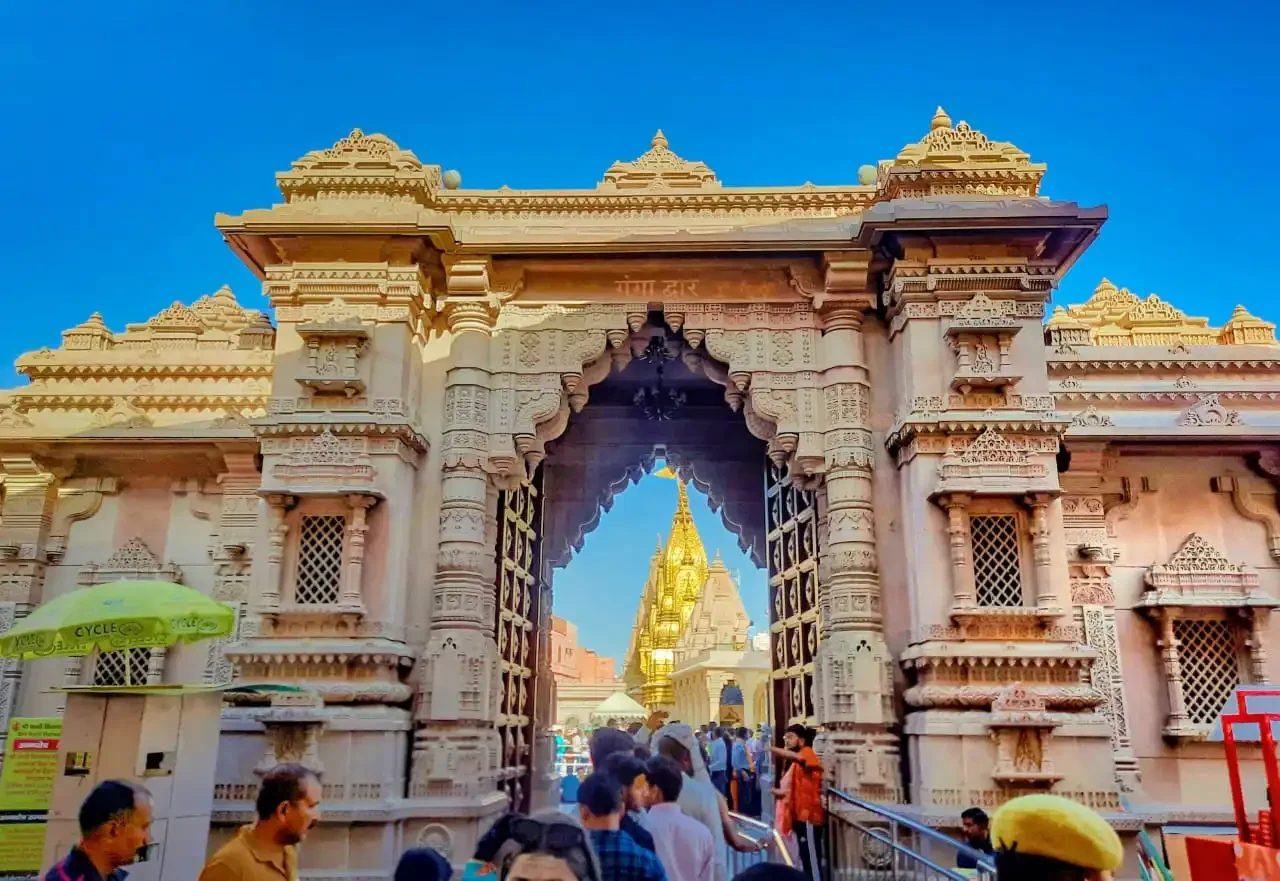
The first useful thing to notice about Kashi Vishwanath Corridor is the change in scale. Streets that hold life close together give way to a broader sacred precinct, with longer sightlines and a deliberate relationship to the Ganga. For a visitor interested in architecture, that transition is the story. For a pilgrim, it frames a continuing place of worship. This guide looks at the Dham as a place to understand and observe. Detailed gate instructions, booking procedures and ritual schedules remain in our separate temple guides, because sightseeing and worship deserve their own preparation.
Understand which place you are visiting
Kashi Vishwanath Corridor is the popular name for the redevelopment around Shri Kashi Vishwanath Temple in the Old City. It is part of the wider Dham precinct and its river connection. It is not the New Vishwanath Temple on the Banaras Hindu University campus, and it is not an unrelated monument with a completely separate identity from the working shrine.
Phase one was inaugurated on 13 December 2021. The government's project account describes a larger precinct, a pathway connecting the temple with the Ganga, new visitor-service buildings and the restoration of smaller temples encountered during redevelopment. These are useful historical facts about the project, rather than a promise that every building or route is available to sightseers today.
To keep the visit focused, decide what you are coming to understand: the temple's setting, the architecture of the new precinct or the relationship between river and shrine. If darshan is your principal purpose, begin with the temple-side Corridor and access guide. This sightseeing article concentrates on how to look at the place once your permitted visit is clear.
Read the change from narrow streets to open space
Architecture is experienced through movement as much as through a photograph. In the older street fabric, the eye works at close range: a shopfront, a turn, a doorway and the people passing. In the broader precinct, the eye can travel farther. Notice how that alters your pace and the way you understand the temple's surroundings.
An interesting visit need not become a catalogue of stone types or decorative labels. Look for the contrast between shaded edges and open ground, between smaller doorways and larger openings, and between spaces intended for passing through and places where a pause is allowed. These observations do not require access to a restricted interior or specialist vocabulary.
Keep the scale of the redevelopment separate from the age of the shrine. A new surrounding court does not make an ancient religious tradition new, and an old tradition does not make every nearby wall ancient. That distinction is especially helpful when travelling with children or explaining photographs afterwards. Our temple history article explores the historical account in more detail.
Look towards the Ganga without turning access into an assumption
The river relationship gives the redevelopment much of its visual meaning. From an authorised position, notice how openings, steps and the direction of movement orient visitors towards the water. The Ganga is more than a distant background here: it belongs to the religious and physical geography through which the temple is approached and understood.
Lalita Ghat is a useful riverfront reference when discussing this side of the Dham. However, a photograph of the river-facing entrance does not establish that you can enter, leave or walk through by the same route today. The Trust's current notice explicitly allows Ganga Dwar access to be restricted according to river conditions and safety requirements.
Do not plan an architectural outing that depends on a boat landing and a guaranteed onward passage. Establish the permitted land route as well. If access towards the water is unavailable, the visit can still have a clear purpose: understand the public spaces you are allowed to see, then view the river from an independently accessible ghat. The nearby ghats guide helps place those alternatives geographically.
Smaller shrines change the way you look at the precinct
Large views attract the camera first, but smaller devotional spaces can help explain how a sacred complex works. The government's inauguration account records the restoration of numerous temples during the redevelopment. Where a shrine is accessible, notice its position in relation to the principal route and the people who use it. Avoid assuming every small shrine has the same function or visiting practice.
Read an available identification panel rather than assigning a deity or date from appearance alone. If you ask a question, choose an appropriate moment and someone who is willing and able to answer. A worshipper concentrating on a ritual is not automatically your guide. Giving people room often reveals more about a place than trying to secure an immediate explanation.
There is no requirement to enter every accessible sacred space. Standing back, observing how worshippers approach and following posted instructions can be a respectful part of learning. A quiet architectural interest belongs alongside devotion only when it does not obstruct it. Keep that principle in mind when choosing where to pause or how long to remain.
Make photographs that explain the visit
Choose photographs according to the permission at the actual location. A camera allowed in one surrounding area does not establish permission inside the temple. The Trust's notice restricts electronic gadgets within the temple premises and sanctum, including phones, cameras and recording devices. If the sightseeing route takes you through a controlled area, resolve storage before proceeding.
Where photography is permitted, a few deliberate images tell the story better than a continuous recording. One can show the change of scale, another a permitted architectural detail, and a third the relationship to the river from an open public position. Keep people recognisable only with appropriate consent, and avoid recording anyone's private act of prayer as a decorative feature.
The documentary photographs on this page show the places identified in their captions; they do not certify present access or represent a commissioned inspection. When you make your own photographs, carry the same discipline into the description. Name what is visible and when it was taken rather than adding an unsupported claim about age, crowd conditions or permission.
Choose a visit shape that matches your interest
| Your interest | A useful sightseeing emphasis | Leave to a separate plan |
|---|---|---|
| Architecture | Spatial contrast, openings and permitted details | Specialist identification without a reliable source |
| River connection | How the authorised precinct relates to the Ganga | A guaranteed passage through Ganga Dwar |
| Religious setting | Smaller shrines and respectful observation | A booked ritual or a darshan queue |
| First visit with companions | A shared introduction and a clear meeting place | An ambitious circuit of every nearby attraction |
Allow an unhurried block rather than setting a stopwatch for the precinct. The length of a sightseeing visit depends on the permitted route, security arrangements and your companions' walking comfort. Queue time for worship is a separate variable. Any personal estimate should leave room for the journey out, the collection of belongings and a proper break.
Morning and late-day light can change the appearance of the stone and open spaces, but pleasant light does not guarantee lighter crowds. Choose a time that fits the official arrangement for your visit. On a hot day, consider how exposed the actual route is and where you can pause; on a major religious occasion, simplify the architectural ambition and prioritise the directions in force.
Put one nearby stop in context
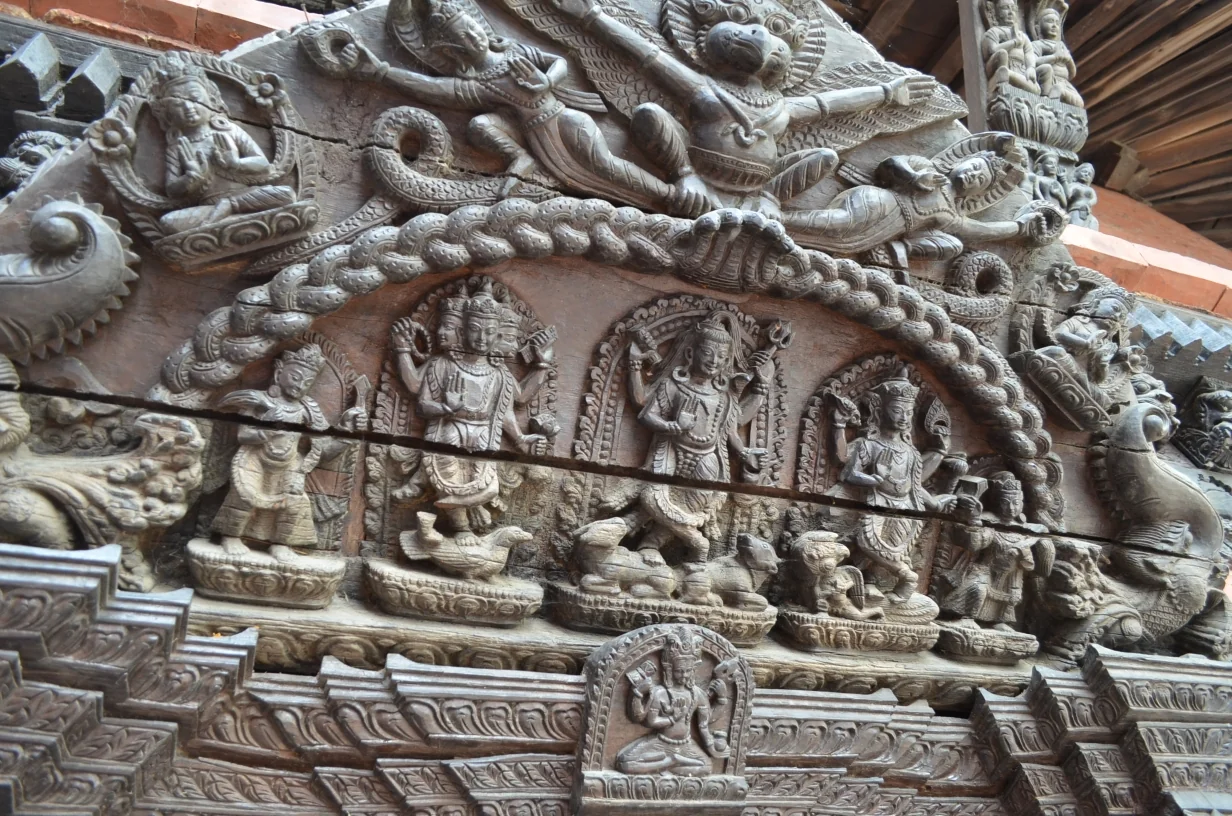
After the Dham, select a single place that adds a different perspective. A permitted visit towards Lalita Ghat can make the river connection easier to understand. A later stop at Dashashwamedh introduces another kind of public religious gathering. These are complementary experiences, but neither needs to be squeezed into the minutes between a queue and a transport booking.
If you are interested in carved detail, the nearby temples guide can help you research a separate shrine visit. Do not assume a photographed facade is freely accessible from every side or that a nearby religious building follows the same rules as the Dham. Each place has its own custodians and practices.
Manikarnika is close enough to appear on many central walking plans, yet proximity is not a reason to treat an active cremation area as an obligatory viewpoint. Choose that visit only with an understanding of its purpose and the privacy it requires. The Manikarnika guide explains the setting without turning mourning into an attraction to collect.
Leave with a clearer understanding, not a longer checklist
Before leaving, consider one question: what did the redevelopment change about your understanding of the temple and river? You might remember the sudden openness after the lanes, the difference between a grand axis and a small shrine, or the way a permitted route directs movement. These are more durable observations than an uncertain list of architectural superlatives.
Discuss the return meeting place before companions separate for different purposes. Someone entering a worship queue and someone finishing a short architectural visit may emerge at different times. A specific authorised meeting point and a simple onward plan prevent the wider precinct from becoming a confusing rendezvous.
Kashi Vishwanath Dham rewards both attention and proportion. Its recent architecture can be appreciated without claiming access everywhere, and its visual impact can be described without borrowing the language of a publicity brochure. Look carefully at what you are allowed to see, give worship its space, and let the river connection provide the thread that holds the visit together.
Photograph sources and licences
Hero photograph: Ganga Dwar, Gateway of Corridor of Kashi Vishwanath Temple, Varanasi 2.webp. Ashvin Kaitabhya, clicked by Abhishek Pandey / Wikimedia Commons; CC BY-SA 4.0. Source: https://commons.wikimedia.org/?curid=136050357. Licence: https://creativecommons.org/licenses/by-sa/4.0. Photograph date: 2023-08-16. Resized and converted to WebP; no generative editing.
Article photograph: Nepali Temple, Varanasi (8716407449).jpg. Matt Stabile / Wikimedia Commons; CC BY 2.0. Source: https://commons.wikimedia.org/?curid=74348576. Licence: https://creativecommons.org/licenses/by/2.0. Photograph date: 2010-08-23 23:39. Resized and converted to WebP; no generative editing.
These documentary photographs are credited to their original photographers. They illustrate the identified places and do not establish current access, services or crowd conditions.
BEFORE YOU GO
Frequently asked questions
Is the Corridor different from Kashi Vishwanath Temple?
The Corridor is the redevelopment and connection around the working temple, within the wider Dham. The shrine is the devotional centre. A walk through an authorised surrounding area and participation in darshan are different parts of a visit and may require different preparation.
Is this the Vishwanath Temple inside BHU?
No. The New Vishwanath Temple on the Banaras Hindu University campus is a separate destination. Use the complete name and location when arranging transport, especially if your itinerary includes both the Old City and the university area.
Can I enter through the river-facing gateway?
Only if current instructions permit your intended route. River conditions and security arrangements can restrict Ganga Dwar access. Confirm with the responsible staff and keep a land approach available rather than relying on an old photograph or an assumed boat connection.
Do I need an architectural guide?
You can observe the public spaces independently where permitted. A knowledgeable authorised guide may add useful context, but agree the scope and charge first. Do not confuse a person offering directions or a paid worship service with an architectural interpretation service.
How can I avoid repeating a temple-focused visit?
Give this outing a distinct question: how do the lanes, wider precinct and river relate to one another? Leave ritual schedules and detailed booking decisions to the temple guides. Concentrating on spatial experience creates a useful visit without repeating every aspect of darshan.
REFERENCE NOTES
Sources and practical updates
These primary sources support the factual background of this guide. For your travel dates, confirm the current arrangements with the responsible venue, property or service provider.
- Government of India, 12 December 2021: phase-one Dham inauguration and project scope
- Kashi government portal: Corridor project background
- Kashi Vishwanath Trust: current access, electronics and limited-locker notices
- Banaras Hindu University manual: Shri Vishwanath Temple within the university campus