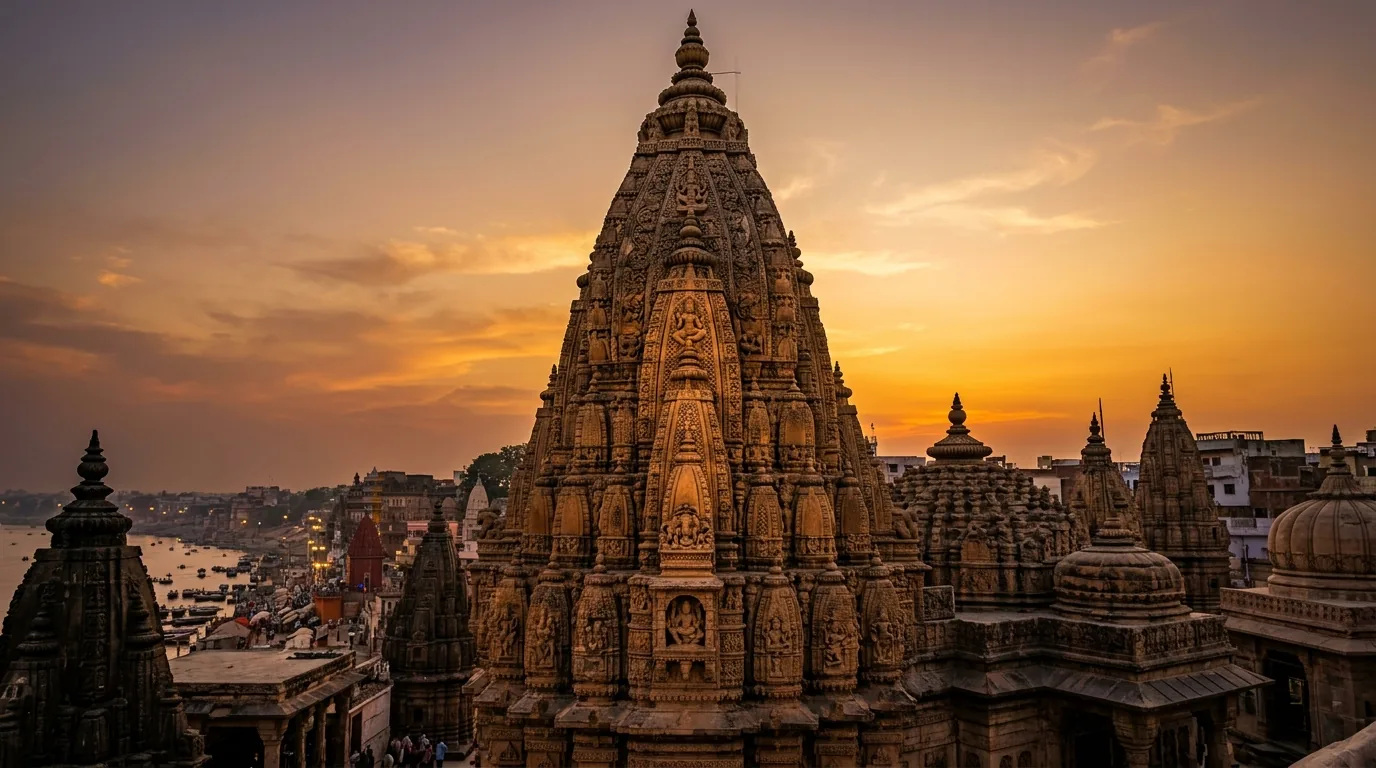
A morning at Assi can begin with chanting beside the Ganga and continue through a very different side of Varanasi: the temple neighbourhoods around Durga Kund, Tulsi Manas and Sankat Mochan. It is a rewarding combination when breakfast, rest and road travel are part of the plan.
The main mistake is treating every south Varanasi temple as if it stood directly above the ghat. Some places belong to a short neighbourhood walk; others need a longer walk or an auto journey. This guide separates those choices and helps you shape the hours after Subah-e-Banaras without turning a peaceful dawn into an exhausting race.
Start with the morning programme you actually want
Subah-e-Banaras at Assi is a programme with several elements, including aarti, Vedic recitation, a yajna, music and yoga. The organiser publishes reference windows of 4:50–7:00 AM in summer and 5:40–7:45 AM in winter. Confirm the applicable start locally; the published page does not establish exact calendar dates for switching seasons.
Decide whether you want the opening worship or the full morning. If you intend to stay for the music and yoga, do not arrange a temple pickup before those parts finish. Sunrise boat rides also compete for the same early hours, so choose one sequence before paying for transport.
After the programme, pause for breakfast and a toilet stop. Children, older relatives and anyone who has travelled overnight may need a longer break. You will enjoy the temples more with enough energy to stand, remove shoes and pay attention to the surroundings.
Our morning Ganga Aarti guide covers the programme itself. The temple itinerary below begins after whichever part you choose to attend.
Which temples belong in the Assi-side circuit?
The following allowances describe broad neighbourhood travel, not measured distances from a particular ghat step. Worship, queues and road traffic are additional. Ask your accommodation or a local driver to confirm the current approach before leaving.
| Place | Why visit | How to fit it after Assi |
|---|---|---|
| Lolark Kund and associated shrine | A sacred tank linked with solar worship near the Tulsi Ghat neighbourhood | A short neighbourhood extension; allow roughly 15–25 minutes to locate and reach it from Assi |
| Durga Kund Temple | Durga worship and the adjacent tank | Start the main inland circuit; allow roughly 20–35 minutes if walking from Assi |
| Tulsi Manas Mandir | Rama devotion and Ramcharitmanas verses | Combine with Durga Kund, leaving time for the road crossing and entrance |
| Sankat Mochan Hanuman Temple | A major Hanuman shrine | Continue by a longer walk or a short vehicle transfer, depending on heat and stamina |
| New Vishwanath Temple, BHU | A separate modern Vishwanath temple within the university | Optional campus extension requiring additional travel and visiting time |
Two or three places are usually enough for a satisfying morning. The table is a menu, not a requirement to complete all five destinations before lunch.
Lolark Kund: a nearby sacred place with steps
Lolark Kund belongs to the sacred landscape around Tulsi Ghat and Bhadaini. It is associated with Surya, the sun deity, and the Lolark Shashthi observance. Accounts of blessings connected with ritual bathing are matters of religious belief, not promises of a medical outcome.
This is a useful addition for visitors interested in sacred geography beyond the most famous temples. However, a kund is a tank with its own physical setting and ritual use. Visiting does not require entering the water or descending every stair.
Assess the steps from above. If they are wet, crowded or difficult for a companion, remain at a comfortable level and keep access clear. On the major bathing observance, the experience can be very different from an ordinary morning. Do not use an everyday walking estimate to plan a festival visit.
Combine Lolark with a short look at the Tulsi Ghat neighbourhood if that is your main interest. If your priority is Durga Kund and Sankat Mochan, it is reasonable to save Lolark for another walk. Adding it should enrich the morning rather than force you to rush breakfast or temple worship.
Durga Kund Temple: begin the inland route
Durga Kund Temple is dedicated to Goddess Durga and is known for its red appearance and neighbouring water tank. The district administration describes an eighteenth-century temple with Nagara stonework. Its sacred importance and architectural history are related, but they should not be reduced to an unsupported claim that every part of the present building is of one age.
From Assi, use the inland road approach and confirm the full name with a driver. “Durga temple” can be an ambiguous request in a city of many shrines. Say “Durga Kund Mandir” and agree whether the vehicle is only dropping you or continuing to the next stop.
Expect an active place of worship. Check the footwear point, wait your turn and ask before taking pictures inside. Keep loose food and bags secure around monkeys, and avoid feeding them. Children should stay close rather than approach an animal for a photograph.
The adjacent tank is part of the setting, but you do not need to walk its entire edge. After darshan, find a place away from the entrance to regroup before continuing. Navratri can bring substantially greater devotional activity, so leave the following stop flexible.
Tulsi Manas Mandir: leave time to read
Tulsi Manas is close enough to Durga Kund to make a natural pair. It is a modern temple dedicated to Rama, with verses from the Ramcharitmanas on its walls. The visitor experience is as much about the text and its cultural presence as about moving straight to the sanctum and back.
Tulsidas is central to the religious and literary memory of this part of Varanasi. Local accounts connect the area with his life and composition. The present temple, however, is a later memorial and devotional building; it should not be described as the original structure in which the sixteenth-century poet worked.
Give yourself time to notice the inscriptions. If you do not read Hindi, a guide can explain a short passage rather than provide an uninterrupted lecture through the entire visit. Families can choose one episode from Rama's story to discuss afterwards, making the stop more memorable for younger travellers.
Before leaving Durga Kund, check whether Tulsi Manas is currently admitting visitors. Opening arrangements and midday breaks should be confirmed directly. A nearby location does not justify a promise of continuous opening, and waiting outside a closed entrance is an avoidable use of the morning.
Sankat Mochan and the optional BHU extension
Sankat Mochan is a major Hanuman temple traditionally associated with Tulsidas. The name refers to relief from troubles within devotional belief. This is a different temple from Sankatha Devi near the northern Old City, so be precise when arranging transport.
It lies further along the southern temple circuit. Choose a vehicle if the road walk, heat or a companion's mobility makes continuing on foot tiring. Agree the drop-off and collection point rather than telling a driver to “wait somewhere nearby.” Check the current rules for electronics and other belongings at the temple itself.
Tuesdays, Saturdays and Hanuman-related observances can make this a more demanding stop. Treat that as a reason to leave time, not as a guarantee of a particular queue length. Keep food secured, follow staff guidance and avoid attracting monkeys with visible packets.
The New Vishwanath Temple within Banaras Hindu University is a separate optional outing. It is not the Old City's Kashi Vishwanath Jyotirlinga temple. If adding it, use the full name “BHU New Vishwanath Temple,” confirm campus entry and temple visiting arrangements, and budget for travel through the campus as well as darshan.
Do not add BHU merely because it looks close on a city map. University grounds, internal roads and the location of your return vehicle all affect the visit. It often works better after a rest or on another morning.
Two realistic morning plans and the journey back
For a relaxed family morning, attend the Assi programme, have breakfast, visit Durga Kund and Tulsi Manas, then return. Allow roughly two to three additional hours after breakfast as a personal planning budget, with more time if worship or queues run longer. Keep Sankat Mochan optional.
For a temple-focused morning, attend the part of the dawn programme that matters to you, eat, and visit Durga Kund, Tulsi Manas and Sankat Mochan. Reserve the rest of the morning rather than attaching a tightly timed Old City booking afterwards. A separate afternoon rest makes an evening Ganga Aarti visit more comfortable.
Use the walking version only if your group is happy with roadside walking, crossings and heat exposure. There is no continuous riverside promenade connecting all these inland temples. An auto between areas can preserve energy for the actual visits; our transport guide explains how to discuss a route and fare.
Carry drinking water for the journey, a small amount of cash, any necessary identification and a way to contact your accommodation. Ask before assuming a particular temple has public toilets or storage. Complete essential stops at a known establishment when possible, and check current availability rather than depending on a map icon.
Before the final temple, decide whether you are returning to Assi, heading to your hotel or continuing elsewhere. A clear endpoint prevents a driver from interpreting “temple tour” as an open-ended package. For a different day in the city, the near-Vishwanath circuit covers the central Old City shrines without mixing them into this southern route.
BEFORE YOU GO
Frequently asked questions
Which temples are best to visit after Assi morning aarti?
Durga Kund and Tulsi Manas form a practical first pair after breakfast. Add Sankat Mochan if your group has time and energy. Lolark Kund suits a shorter neighbourhood exploration, while BHU's New Vishwanath Temple needs its own additional travel allowance.
Are all these temples within a short walk of Assi Ghat?
No. They belong to the wider south Varanasi circuit. Lolark is a neighbourhood extension, while Durga Kund, Sankat Mochan and BHU involve progressively more travel. Choose walking or a vehicle according to the actual route, traffic, weather and your companions' comfort.
Can I finish the full Subah-e-Banaras programme first?
Yes. Plan the temple departure around the programme you wish to attend, then allow breakfast and a toilet stop. The organiser's seasonal reference windows extend to 7:00 AM in summer and 7:45 AM in winter. Confirm the current programme and temple admission arrangements.
Is Tulsi Manas the original temple where Tulsidas wrote?
The present Tulsi Manas Mandir is a modern devotional and memorial building. The area carries traditions connecting it with Tulsidas and the Ramcharitmanas. Distinguish that literary and sacred association from the construction date of the building visitors see today.
Is BHU Vishwanath the same as Kashi Vishwanath?
No. The New Vishwanath Temple is within Banaras Hindu University in south Varanasi. Shri Kashi Vishwanath Temple is the historic Jyotirlinga shrine in the Old City. Give the full name and locality to your driver to avoid going to the wrong destination.
REFERENCE NOTES
Sources and practical updates
These primary sources support the factual background of this guide. For your travel dates, confirm the current arrangements with the responsible venue, property or service provider.
- Subah-e-Banaras organisers: programme elements and seasonal reference windows
- Varanasi district administration: temple identities and neighbourhood context
- Kashi government portal: Durga Kund temple identity
- Ministry of Tourism, Incredible India: Tulsi Manas Mandir
- Kashi government portal: Sankat Mochan and Tulsidas association
- Kashi Ashram: Dwadash Aditya Yatra and Lolark Kund sacred geography