Varanasi becomes a different city when you explore it with a child. A boat knot may be more interesting than a grand facade, a carved animal can hold more attention than a long historical speech, and the best part of a museum may be one object discussed properly. Plan for that curiosity. Children do not need a simplified version of an adult checklist; they need a few places where they can look, ask and pause. This guide suggests child-centred ways to enjoy the city's heritage, with parents choosing the route and pace that fit their own children.
Choose the outing by your child's way of exploring
A toddler, an early reader and a teenager may respond to the same place very differently. Begin with what your child enjoys doing: noticing animals and shapes, drawing, listening to stories, asking how something works or taking photographs where allowed. Use that interest to choose the outing rather than promising that a famous attraction will automatically be entertaining.
Keep the first visit short enough to leave room for discovery. If a child becomes absorbed in one display, you can stay; if the environment feels overwhelming, you can leave. Describe this flexibility before arrival. A museum or ghat visit works better when it is presented as a shared exploration rather than a test the child must complete.
Age suggestions in this guide are editorial starting points, not developmental rules. Parents know the child's stamina, sensory preferences and supervision needs. The family sightseeing guide covers the wider group; this article concentrates on activities that give children their own reason to be interested.
Sarnath Museum: start with an object they can recognise
Sarnath offers a strong introduction to the connection between an object and a national symbol. Its museum is known for the Lion Capital associated with Ashoka, which relates to the State Emblem of India. Before visiting, show an older child the emblem on an ordinary official document or another appropriate everyday example. At the museum, ask what they recognise rather than delivering the whole explanation first.
Keep the task small. Look closely at one animal, one carved detail or one expression, following the display barriers and photography instructions. Ask how an object communicates something without moving or speaking. A child who enjoys drawing can make a sketch afterwards, in a place where sitting and drawing are permitted, rather than blocking a gallery route.
Check the museum's current opening window and weekly closure before travelling. Its planning page lists Friday as closed and describes free museum admission for children below fifteen; confirm the applicable ticket category at the counter. Museum admission and entry to the archaeological site are separate questions. Do not assume a child's museum concession automatically applies to every attraction nearby.
For the adult background, use the Sarnath monuments and museum guide. A short conversation about one recognisable object can be a better first museum memory than an attempt to explain every gallery.
Sarnath's archaeological area: make scale and shape the questions
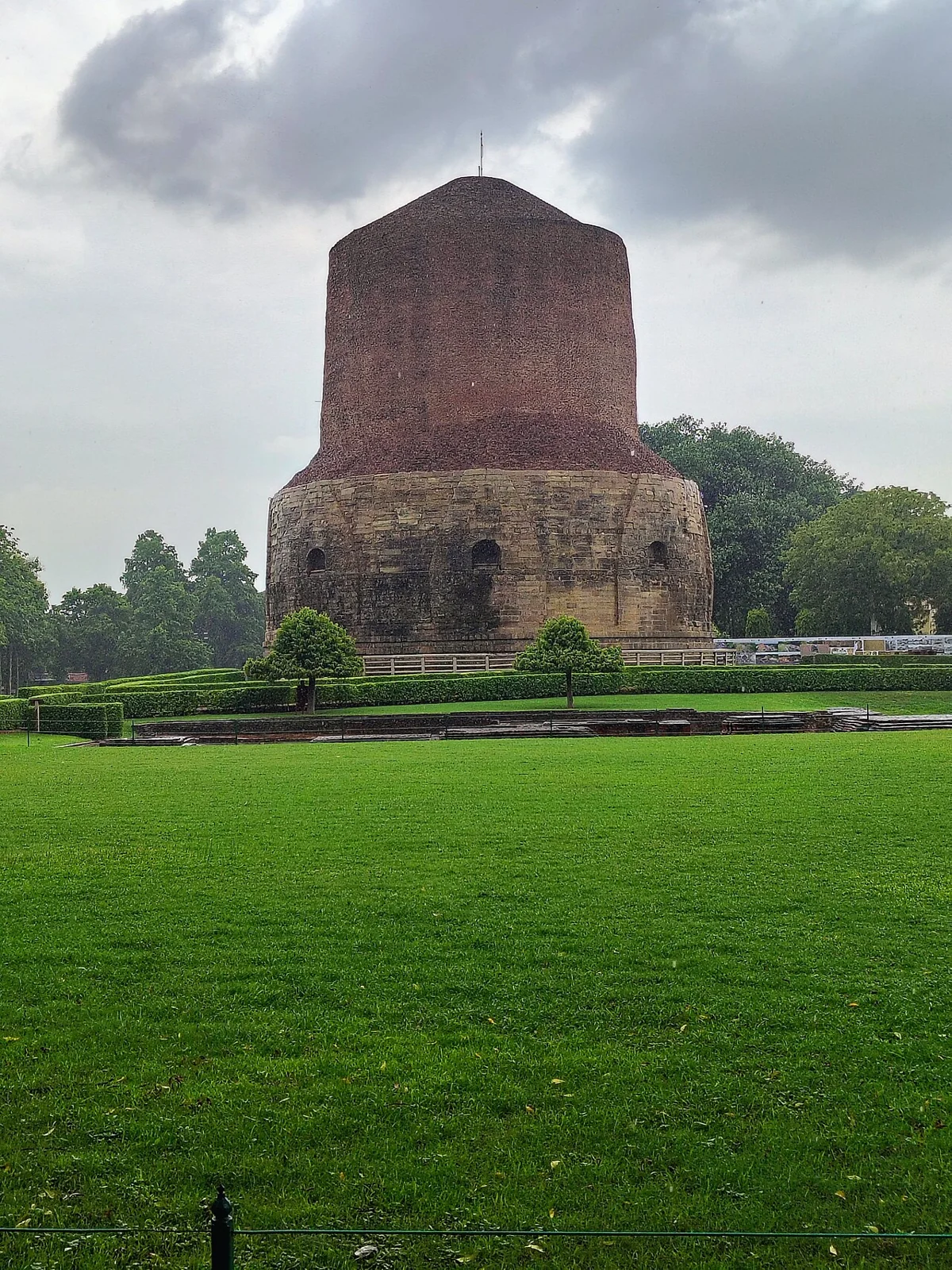
The archaeological setting gives children a different way to think about the past. From an authorised path, compare something that still stands with something that survives closer to ground level. Ask how the shapes differ and why a visitor might need a plan or an information panel to understand the remains. Let the child suggest an answer before reading the explanation together.
At Dhamek Stupa, size itself can become the starting point. Look from permitted viewpoints and discuss how the building changes as you move around it. Do not turn the exercise into climbing, running on remains or touching carved surfaces. The point is to make looking active while keeping the monument protected.
Choose the museum or the outdoor area as the priority if attention is running low. Trying to see both thoroughly, plus several temples, can transform curiosity into tiredness. A parent can carry the historical explanation; the child need only take away a clear observation and a question worth returning to. Arrange a meal and collection point before beginning so the end of the outing is straightforward.
BHU and Bharat Kala Bhavan: choose a small art adventure
The BHU area can suit a child who enjoys pictures, objects or changes of setting. Bharat Kala Bhavan's collection includes paintings, textiles and archaeological material, giving adults several possible themes to research. Ask which galleries are actually open, then choose one idea: how cloth can tell a story, how a painter shows movement, or how two objects solve the same practical problem.
Avoid setting a scavenger hunt that encourages rushing between displays or touching them. A slower comparison works better: find two colours used differently, notice the border around a picture, or describe an object without naming it and let a companion guess. Follow the museum's rules about bags, drawing materials and photographs.
The nearby New Vishwanath Temple is a separate place of worship on the campus. If you include it, explain the change in behaviour before entering: the temple visit is a quiet religious encounter rather than an extension of the museum game. Keep to permitted visitor areas throughout BHU; university grounds also contain places where people study, work and live.
Confirm museum hours directly with BHU. Published tourism information and seasonal university notices do not always give the same window. Have a genuinely different backup, such as a meal and return, rather than promising a museum and hoping the doors will be open.
Man Mahal: ask how a shadow can tell the time
For a school-age child interested in how things work, the Man Mahal observatory near the central ghats can provide a useful question: how did people study time and the sky without a phone? The official Kashi account describes masonry astronomical instruments, including a sundial. Let an information panel or a knowledgeable authorised guide explain the instrument rather than improvising a scientific demonstration.
You can prepare the idea at home by noticing how a shadow changes during the day. At the observatory, compare that simple observation with the scale of the instrument. Stay behind barriers and do not climb onto a structure to improve the explanation. A child does not need to calculate a reading for the visit to be worthwhile.
Man Mahal also has a virtual experiential museum associated with the city's culture. Check which sections, displays and sessions are operating when you plan the visit; the presence of digital exhibits is not a guarantee that every installation is available. The observatory includes an outdoor component, so do not describe the entire outing as an indoor solution to hot or wet weather.
Assi Ghat: give the river a child-sized focus
A short Assi visit can introduce the Ganga without asking a young child to understand the entire city. Choose a comfortable public position away from the water's edge. Count colours on moored boats, notice the difference between a rope and a chain, or listen for three different sounds. Keep the activity observational and avoid interrupting anyone working or worshipping.
Daylight makes it easier to understand the footing and the way back. A predawn alarm is useful only if the child is likely to enjoy it. Parents can choose a later river visit and still have a meaningful outing. Do not promise a quiet environment at any fixed hour; current events, programmes and local use shape the experience.
An optional boat requires a separate adult decision about the actual boarding conditions, permitted service, appropriate life jackets and supervision. A child leaning towards the edge for a photograph is not the right price for a better view. It is entirely reasonable to remain ashore, enjoy the river and spend the saved time on breakfast or a rest.
If evening Aarti is part of your plans, use the dedicated Aarti with kids guide. This sightseeing page does not assume that a dense gathering is the right final activity after a long cultural day.
Match places with a manageable activity
| Child's interest | Place to consider | One small activity |
|---|---|---|
| Recognising symbols | Sarnath Museum | Connect the Lion Capital with a familiar emblem |
| Big shapes and old buildings | Sarnath archaeological area | Compare a standing structure with low remains |
| Pictures, patterns and clothing | Bharat Kala Bhavan | Discuss one image or textile detail |
| How time and shadows work | Man Mahal observatory | Ask how an instrument uses the sun |
| Boats, colours and sounds | Assi Ghat | Notice three details from a secure public position |
For younger children, a short river outing followed by a familiar meal may be the whole programme. An interested older child might prefer one museum theme and a short exterior visit. Teenagers can help choose a historical question or make a small photo story where photography is allowed. These are flexible suggestions, not age-based admission recommendations.
Keep meals, toilets and rest in the plan from the beginning. Ask the venue about facilities before committing to a long visit; do not promise a changing area, stroller-friendly surface or available seat without confirmation. A carrier or stroller is useful only when it suits the child and the actual route, including the journey from the vehicle.
End while there is still something good to discuss. On the way back, ask which object or view the child would show someone at home. Their answer may be a detail you hardly noticed. That is a successful Varanasi outing: the city has become a place they have begun to understand for themselves.
Photograph sources and licences
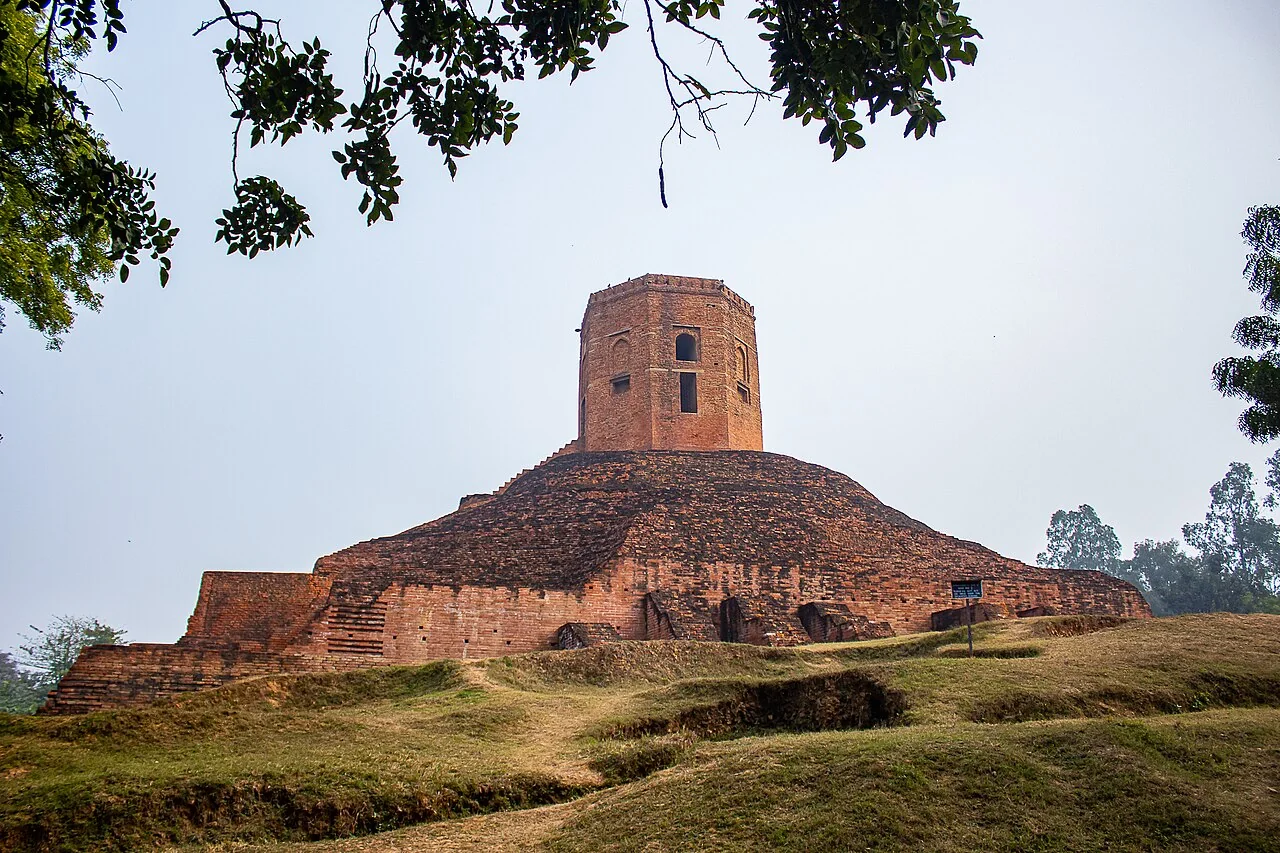
Hero photograph: Chaukhandi Stupa, Saranath.jpg. MaximusPrasad / Wikimedia Commons; CC0. Source: https://commons.wikimedia.org/?curid=152542316. Licence: http://creativecommons.org/publicdomain/zero/1.0/deed.en. Photograph date: 2024-01-20 14:19:13. Resized and converted to WebP; no generative editing.
Article photograph: Dhamek Stupa, 2025.jpg. Hardy Explorer / Wikimedia Commons; CC0. Source: https://commons.wikimedia.org/?curid=170144740. Licence: http://creativecommons.org/publicdomain/zero/1.0/deed.en. Photograph date: 2025-07-15 15:56:04. Resized and converted to WebP; no generative editing.
These documentary photographs are credited to their original photographers. They illustrate the identified places and do not establish current access, services or crowd conditions.
BEFORE YOU GO
Frequently asked questions
Which place is a good first choice with school-age children?
Sarnath Museum is worth considering for children interested in animals, symbols or history, while Man Mahal can suit questions about the sun and time. Choose by interest, confirm current access and keep the first visit selective. No attraction is equally engaging for every child.
Are very young children better suited to the ghats or museums?
Either can work as a short, well-supervised outing, depending on the child and conditions. A daylight river view offers simple details to notice; a museum offers controlled displays but may require quiet behaviour. Plan an easy exit and a proper break rather than a long visit.
Do children enter all Sarnath attractions free?
Do not assume that. The museum's published planning page describes a below-fifteen concession for the museum. Confirm the current rule and ask separately about the archaeological site and any other venue. Carry whatever age evidence the responsible attraction currently requires.
Should we add a boat ride for the children?
Only if the authorised service, boarding arrangement, suitable life jackets and supervision meet your family's needs. A shore-based visit can be just as interesting. Children can enjoy noticing boats without boarding one, and declining the activity does not make the trip incomplete.
What should we leave out of a children's itinerary?
Avoid stacking several long explanations, early alarms and crowded gatherings into one day. Do not turn cremation areas into a curiosity stop. Choose a small number of meaningful places, explain the behaviour expected in each and leave enough energy for questions and conversation afterwards.
REFERENCE NOTES
Sources and practical updates
These primary sources support the factual background of this guide. For your travel dates, confirm the current arrangements with the responsible venue, property or service provider.
- Kashi government portal: Sarnath Museum, Lion Capital and separate archaeological admission; opening references differ
- Sarnath Museum published visitor page: Friday closure and child-admission reference; verify current arrangements
- Kashi government portal: Bharat Kala Bhavan collections; confirm opening with BHU
- BHU Bharat Kala Bhavan: responsible university unit
- BHU seasonal museum-hours notice: not a permanent timetable
- Banaras Hindu University manual: Shri Vishwanath Temple within the university campus
- Kashi government portal: Man Mahal astronomical instruments and daytime visit
- Kashi government portal: Man Mahal virtual experiential museum
- Kashi government portal: Assi Ghat