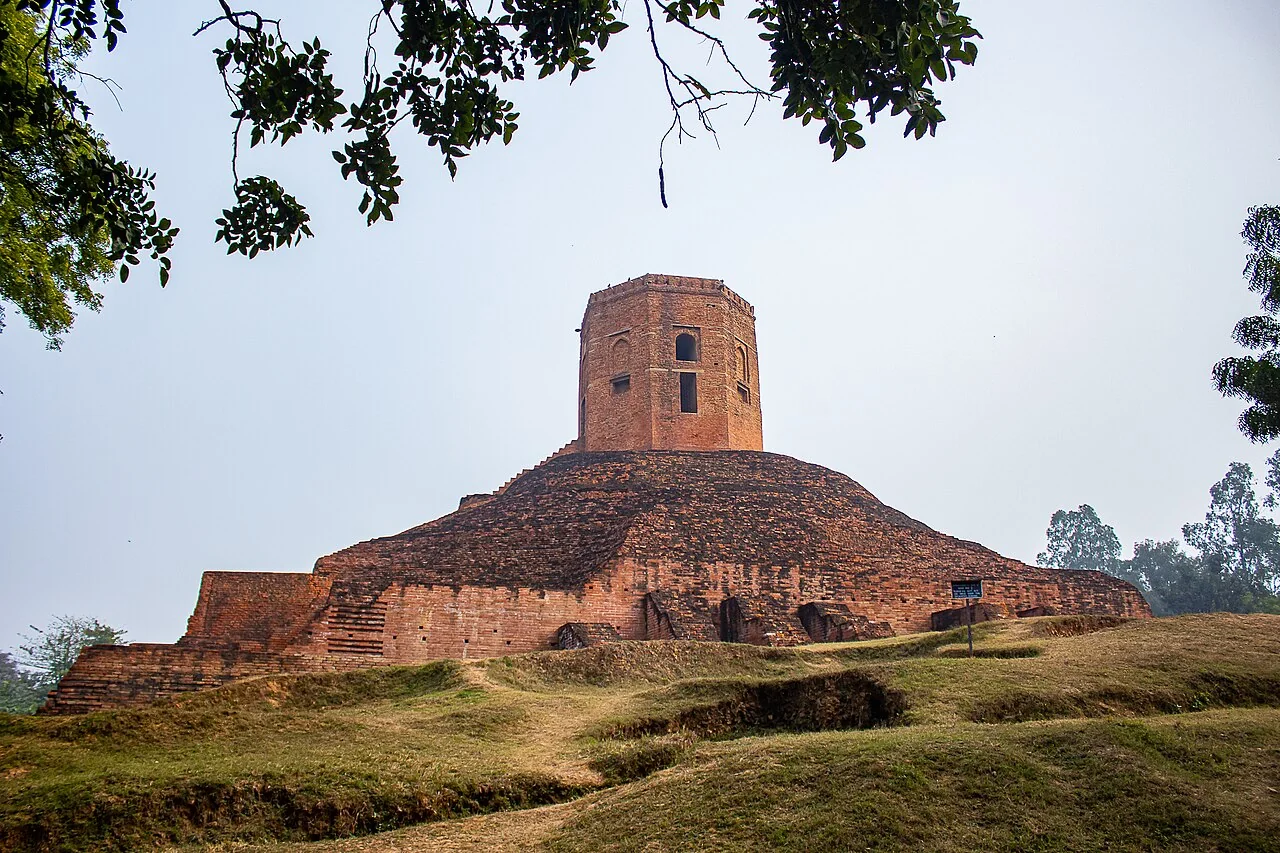
“How far is Sarnath from Varanasi?” has more than one useful answer. The district administration describes Sarnath as roughly ten kilometres northeast of the city, but a visitor starting near Assi, a railway station or the airport is not making the same journey. The road time also includes a different kind of delay from the walk out of a riverfront guesthouse.
Plan the transfer from your actual address to your first Sarnath entrance. Then agree how the vehicle, waiting and return will work. This guide focuses on those transport decisions; the Sarnath travel guide covers your time on site, while the attraction guide explains the monuments.
Start with a reachable pickup point
An accommodation pin beside the Ganga may not be a place where a cab can stop. Ask your host for the currently reachable road pickup and how long the walk takes with your group. Carrying luggage or helping an older relative can make that final approach the most demanding part of the transfer.
For the return, save both the hotel's name and the road meeting or drop-off point. A driver can reach the correct neighbourhood without being able to reach the same doorway. Discuss that distinction before the day begins.
The table gives broad editorial road-time budgets in ordinary conditions, not live navigation estimates. They exclude the walk from a ghat-side stay and can increase substantially with congestion, diversions or event traffic.
| Starting area | Initial road-time planning budget | Main consideration |
|---|---|---|
| Varanasi Junction/Cantt area | About 30–60 minutes | Station exit and a precisely agreed pickup |
| Godowlia/central Old City road access | About 40–75 minutes | Add the walk to an authorised vehicle point |
| Assi or Lanka side | About 50–90 minutes | A longer cross-city approach from the south |
| BHU-side accommodation | About 60–90 minutes | The exact campus-side address and internal movement matter |
| Varanasi airport | About 45–90 minutes after pickup | Flight arrival, baggage and any central-city detour are additional |
Use a current map and the driver's local assessment to refine these ranges. They are departure-planning allowances, not measured route times or promises that the upper limit cannot be exceeded.
Choose the vehicle for the whole outing
A reserved cab is straightforward when you want a defined pickup, several Sarnath stops and a return after a few hours. Ask whether the fare covers a fixed duration, distance or named itinerary. Confirm waiting, parking and any additional time or kilometre charge before accepting the price.
An auto can suit a smaller group comfortable with the exposure, seating and road conditions. Compare the complete journey rather than assuming the cheaper outward quote includes a return. Luggage, a child seat requirement or mobility assistance may make another vehicle more appropriate.
An app-based cab can help identify a current price and pickup, but a request is not a confirmed vehicle until a driver accepts and the meeting is clear. Check the return plan too. Do not assume the same availability or fare will apply after several hours of sightseeing.
Shared transport may be possible through local connections, but routes, changes and waiting need a current check. If you do not know the boarding point or destination, ask before entering. A first-time family with limited time may find a clearly agreed direct transfer easier than reconstructing several local stages during the journey.
From the Old City, Assi and BHU
From the central ghats, the first stage is usually reaching a road pickup outside the restricted pedestrian core. Do this before the vehicle's reporting time rather than expecting the driver to wait indefinitely while you find the lane exit. Ask your host which point is appropriate that morning.
Road approaches towards Sarnath often connect through the broader Pandeypur and Ashapur side of the city, but the precise route can change with traffic and your origin. Let the driver use the currently permitted roads. A historical tourism map is useful for orientation, not a turn-by-turn instruction overriding a diversion.
From Assi or Lanka, allow for travelling from the southern side of Varanasi. A morning ceremony, breakfast and a pickup immediately afterwards can work, provided everyone understands when the programme ends and where to meet. Avoid a plan that expects the vehicle beside the active ghat platform.
From BHU-side accommodation, identify the exact address. “Near BHU” can cover a substantial area, and visiting the New Vishwanath Temple first adds a separate commitment. If Sarnath is the priority, do not add a temple stop merely because the vehicle passes through the same broad district.
From railway stations and the airport
Use the exact railway station name on your ticket. Varanasi Junction, Banaras and Varanasi City are distinct stations. A driver waiting at the wrong one cannot fix the mistake with a short walk across a forecourt.
Agree where you will meet after leaving the station and how the driver will identify the group. Arrival time is not pickup time: allow for getting off the train, reaching the exit, using a toilet and collecting everyone. If the train is delayed, communicate before assuming a booked waiting allowance will continue unchanged.
An airport-to-Sarnath transfer may suit a traveller whose arrival time and luggage arrangements permit a comfortable visit. Add flight arrival procedures and baggage collection before the road allowance. A direct route need not include the ghats, but the driver should know your first stop and where the journey will end afterwards.
For an overnight arrival or a group carrying large suitcases, checking in and resting first is often more practical. Do not assume every Sarnath entrance has suitable luggage storage. Museum and monument baggage rules are separate from what a driver is willing to keep in a vehicle, and valuables need your own considered arrangement.
Specify the Sarnath stops before agreeing the fare
“Sarnath” may mean the museum, the main archaeological enclosure, Chaukhandi or a particular temple. Give the driver the actual stop list. If the museum is important, check its published Friday closure before arranging a museum-centred journey.
A clear request might be: collection from the named road point, the main archaeological enclosure, museum on an open day, Mulagandhakuti Vihara and return to the agreed Varanasi drop-off. Ask whether Chaukhandi can be included and whether that changes the duration or fare.
Distinguish vehicle service from guiding. A driver who takes you between sites is not automatically providing a historical tour, entry tickets or a guide inside the enclosure. Likewise, a sightseeing package may contain optional shopping stops that you did not intend. Confirm the itinerary and decline unwanted additions before they consume the visit.
Keep the museum and active-temple hours in mind. A longer road journey can change the best order of stops. The driver may offer a convenient road sequence, while your priority should still determine which entrance you need to reach before admission closes.
Fare questions, waiting and avoiding misunderstandings
No fixed fare is quoted here because the vehicle, origin, duration and included services materially change the cost. Obtain a current quote for your actual plan and compare like with like. A one-way auto fare and a cab waiting through a four-hour visit are different products.
Ask whether the quote is per vehicle or per passenger, one-way or return, and how many people and bags it covers. Clarify parking, tolls where applicable, extra waiting, additional distance and the final drop-off. Retain the confirmation so that the agreed scope is visible if a misunderstanding arises later.
If the driver is waiting, establish where they can remain and how much notice they need before collection. Do not leave every pickup to an improvised phone call from a different exit. Keep a backup contact method if a phone battery or local signal becomes a problem.
For a one-way transfer, identify a return meeting place and book or enquire before the final stop ends. The availability of a row of vehicles earlier in the day does not guarantee that the same options will remain. Ask for the price and destination before boarding another vehicle, especially when tired companions are ready to accept the first offer.
Keep the return separate from the next fixed appointment
For a relaxed half-day, allow the outward transfer, three to four hours on site and a separate return allowance. Add a meal or rest according to the group's needs. The journey is not complete when you reach the edge of Varanasi; the final approach to a riverfront hotel may still take time.
If evening Ganga Aarti is planned, aim to return early enough to rest and prepare, then start the aarti approach independently. Do not ask the vehicle to recover a late museum visit through faster driving. Shorten a remaining stop or simplify the evening instead.
Train and flight departures need their own check-in or reporting margins. A Sarnath excursion should not use those margins as spare sightseeing time. If the connection is tight, move Sarnath to another day or choose a shorter visit with a clear endpoint.
Our combined itinerary shows how to keep these commitments apart. A well-planned transfer is not necessarily the fastest-looking route on a phone. It is the one with a reachable pickup, a suitable vehicle, a clear service agreement and enough time to return without making the rest of the day depend on perfect traffic.
Photograph sources and licences
Hero photograph: MaximusPrasad / Wikimedia Commons; CC0. Source: https://commons.wikimedia.org/?curid=152542316. Licence: http://creativecommons.org/publicdomain/zero/1.0/deed.en. Resized and converted to WebP; no generative editing.
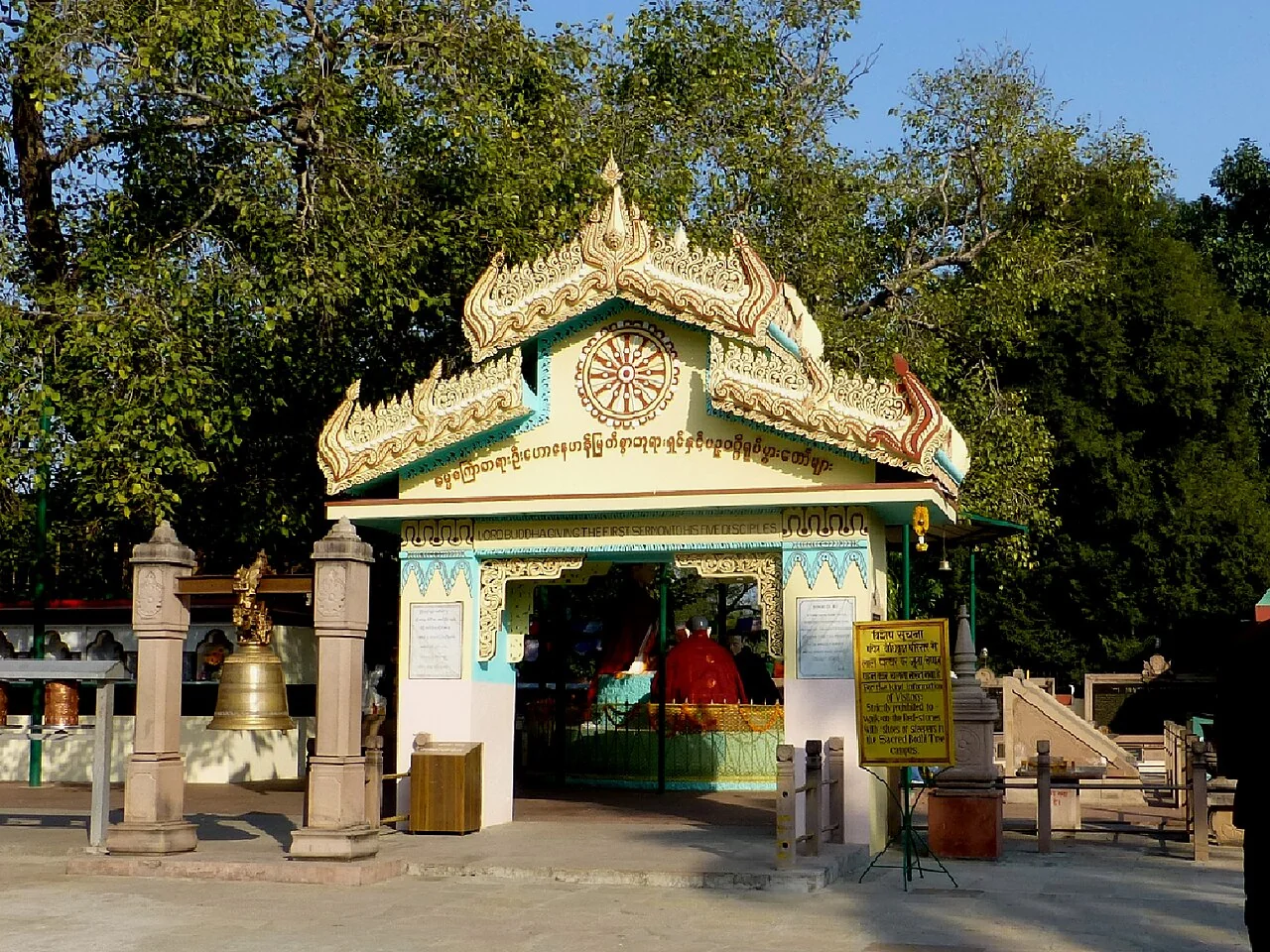
Article photograph: Hiroki Ogawa / Wikimedia Commons; CC BY 3.0. Source: https://commons.wikimedia.org/?curid=59537528. Licence: https://creativecommons.org/licenses/by/3.0. Resized and converted to WebP; no generative editing.
BEFORE YOU GO
Frequently asked questions
How far is Sarnath from Varanasi?
The district administration gives a broad reference of about ten kilometres northeast of the city. Your actual road journey depends on the starting address and entrance. Assi, the Old City, railway stations and the airport should not all be assigned the same distance or travel time.
How long should I allow from Assi Ghat?
Use roughly 50–90 minutes as an initial editorial road-time allowance, then refine it with current navigation and local advice. Add any walk to the vehicle point separately. Congestion, events, diversions and the exact southern starting address can extend the journey beyond that range.
Is a cab or an auto better for Sarnath?
Choose according to group size, luggage, comfort, weather and the need for a waiting return service. Compare the complete inclusions rather than only the outward price. A named pickup, clear stop list and agreed waiting arrangement matter with either vehicle.
Can I go straight to Sarnath from the airport?
Yes, if arrival time, energy and luggage arrangements make the visit practical. Allow for arrival procedures before the drive and specify the final destination afterwards. Do not assume museum storage is suitable for suitcases or that a late flight leaves enough visiting time.
Is there a fixed official taxi price for this itinerary?
This guide does not establish a universal current fare. Request a quote for your starting point, vehicle, passenger count, stops and duration. Ask about return, parking and extra waiting explicitly. Check the provider's applicable terms rather than treating an old online fare as binding.
REFERENCE NOTES
Sources and practical updates
These primary sources support the factual background of this guide. For your travel dates, confirm the current arrangements with the responsible venue, property or service provider.
- Varanasi district administration: Sarnath location and Buddhist sacred association
- ASI Sarnath Circle: site brochure, map and monument context
- ASI Sarnath Circle: published admission references, visitor conduct and listed facilities
- Sarnath Museum visitor page: published hours and Friday closure; reconfirm current notices