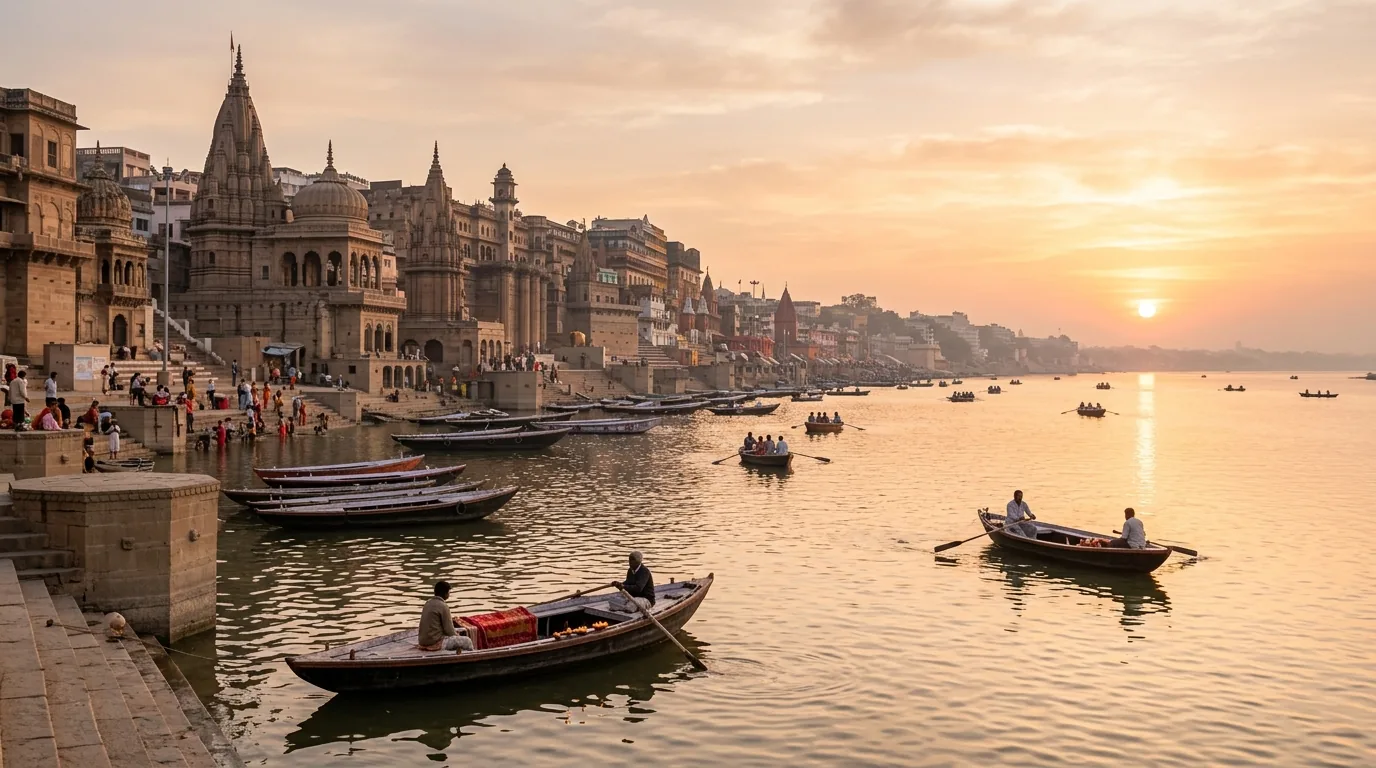
Harishchandra Ghat requires a different decision from an ordinary riverfront viewpoint. Cremation, mourning and the movement of bereaved families are part of its purpose. A visitor should understand that before arriving, rather than encounter the place as a dramatic stop on a photography walk. The most useful preparation is knowing why it is significant, how to keep an unobtrusive distance and when a different riverfront route would be the more considerate choice.
Sacred association and present purpose
The ghat's name is connected with the religious story of King Harishchandra, whose truthfulness and sacrifice are central to that tradition. Describe the association as sacred narrative rather than an independently dated event. The government Kashi portal identifies the place with cremation and with facilities associated with that continuing purpose.
Do not assume a redevelopment description establishes which facility, entrance or visitor path is operational today. Project accounts may describe plans or intentions as well as completed work. For a visitor, the current instruction at the actual approach takes precedence over an old photograph or a general description of improvements.
Plan the approach without obstructing it
Locate Harishchandra Ghat specifically when discussing a southern riverfront walk. Ask about the current public route and whether a lane or upper-level alternative is more appropriate. A processional approach has a practical function; standing there to debate directions can obstruct people for whom this is an urgent and personal journey.
Keep a through-walk flexible. Water, silt, maintenance and local directions can change the riverside connection. If moving past would intrude on a ceremony or require stepping through a working area, take another route. Completing a continuous ghat walk is not more important than respecting the place you are passing.
Timing is an ethical choice as well as a practical one
An active cremation ghat is not a scheduled performance with a visitor start time. Do not choose an arrival hour to seek a spectacle or ask someone to predict a funeral for your itinerary. If you have a legitimate purpose for coming, obtain relevant current guidance from the responsible people.
For general cultural learning, consider whether explanation away from the active area would be sufficient. A knowledgeable, properly identified guide may help with background, but agree the scope and charge beforehand. Payment does not buy permission to intrude, photograph or enter a space being used by a family.
Photography, distance and conversation
Do not photograph cremations, remains or mourners. Put the camera away before moving through the sensitive area and follow instructions about where visitors may stand. A distant-looking position can still be intrusive if a lens is pointed towards a family's ceremony. Respect should govern the decision before someone has to ask you to stop.
Avoid questioning bereaved people or those engaged in essential work for an explanation of what is happening. Religious meaning can be researched and discussed elsewhere. Keep voices low, make room and leave if your presence is unwelcome. There is no requirement to remain simply because the ghat appeared on a travel list.
Choose the next riverfront stop thoughtfully
For a more ordinary riverside pause, research an open public area towards Assi or another suitable southern ghat. Check the actual route rather than stepping blindly along the waterline. The Assi Ghat guide explains a different setting, with a different mix of activity and visitor expectations.
If your aim is to understand cremation traditions in Kashi, the Manikarnika guide provides further context while keeping privacy central. It should not become a two-cremation-ghat sightseeing challenge. One careful explanation, followed by a respectful decision about your own visit, is more valuable than accumulating observations of other people's grief.
BEFORE YOU GO
Frequently asked questions
Is Harishchandra Ghat an ordinary sightseeing viewpoint?
Its active cremation function should shape the decision to visit and the way you behave. Do not approach it as a staged experience. General riverfront sightseeing can take place elsewhere when your presence would interfere with mourning or essential work.
Can a paid guide authorise funeral photography?
No payment should be treated as permission to photograph cremations, remains or grieving people. A guide can provide background within an agreed scope, but respectful distance and the privacy of families remain essential. Keep the camera away in the active area.
Is the riverside walking route always open?
No uninterrupted route should be assumed. Water levels, maintenance, working areas and current directions can affect passage. Ask locally, use an appropriate upper route when necessary and choose a different walk if passing would obstruct a ceremony.
REFERENCE NOTES
Sources and practical updates
These primary sources support the factual background of this guide. For your travel dates, confirm the current arrangements with the responsible venue, property or service provider.
- Kashi government portal: Harishchandra sacred association and cremation function
- Varanasi district administration: riverfront setting