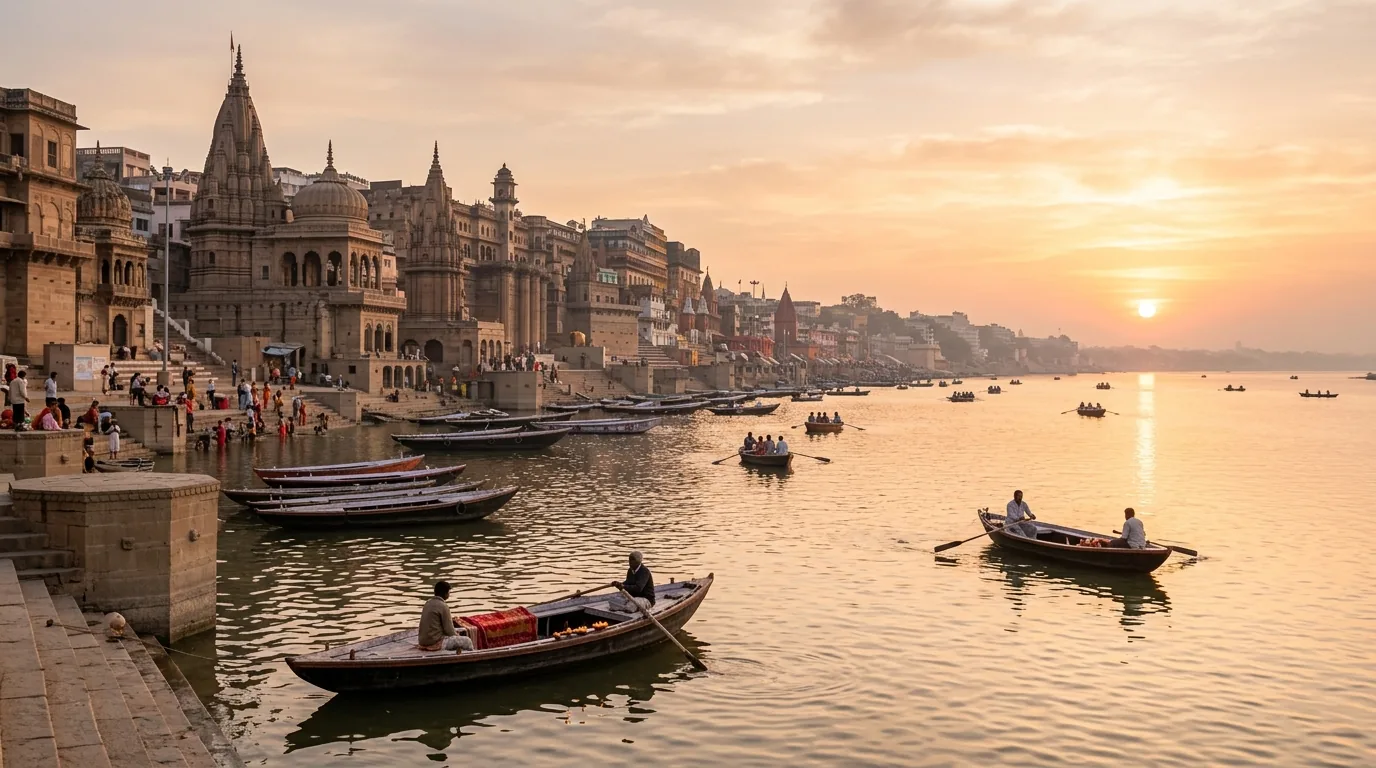
Darbhanga Ghat is a useful place to slow down and read the relationship between a riverfront building and the steps below it. The imposing palace frontage creates much of the visual interest, but the public ghat and the hotel above are different kinds of space. Understanding that distinction makes the visit easier to enjoy. You can appreciate the riverfront architecture without assuming that a palace doorway, dining terrace or service route is available as part of a public walk.
Read the setting beside Munshi Ghat
The Kashi government portal places Darbhanga within the historical development of the neighbouring Munshi riverfront and identifies the palace's later Darbhanga association. These neighbouring names can appear together in directions. Use the full destination when meeting a companion or arranging a landing, rather than assuming everyone will identify the same staircase.
Look at the change of scale between the broad facade and the ordinary activity at its base. Openings, balconies, levels and stone surfaces can be understood from a permitted public position. You do not need access to a private interior or an elaborate architectural label for every detail to find the setting interesting.
Arrive from the lanes or a permitted river route
A central ghat walk may include Darbhanga when the riverside connection is open and suitable for your footing. Ask about the current route from the upper streets, particularly after high water or cleaning. An uninterrupted path shown on a map may not describe the way visitors are actually directed that day.
If arriving by a separately booked boat, agree the authorised landing and the next walking stage before boarding. A ghat near a hotel is not automatically the hotel's arrival service. Keep boat transport, hotel arrangements and ordinary public access as distinct agreements, with charges and collection points clear.
Public view and private hospitality
BrijRama Palace operates as a heritage hotel at this riverfront setting. Its operator's dining and arrival information should be used for an actual restaurant or accommodation enquiry. A traveller wanting to eat inside should arrange the current booking and access requirements, rather than treating the building as an unticketed public museum.
Our temple-area restaurants guide discusses its Darbhanga restaurant as a deliberate meal choice. A confirmed reservation can be a worthwhile part of a day, but it is a different experience from looking at the facade from the ghat. Do not expect staff or guests to accommodate a sightseeing detour through private areas.
Choose light and a comfortable place to pause
The appearance of the riverfront changes as light moves across stone and water. Choose the time according to your route and comfort rather than assuming a particular hour guarantees an empty staircase or a clear ceremony view. Religious activity, boats and other visitors may shape the space around you.
Photograph the architecture only from places where you may stand without obstructing movement. Ask before including identifiable people at close range. Avoid climbing onto walls, using a working landing as a tripod platform or pointing a camera into private rooms. A careful public view provides ample detail for an interesting photograph.
Connect it with one central activity
Dashashwamedh is a relevant central riverfront reference, but its evening Aarti deserves a separate viewing decision. Darbhanga should not be advertised as a guaranteed unobstructed substitute for a chosen ceremony position. If Aarti is the fixed activity, leave enough time to reach the actual place where you intend to watch.
Use the Dashashwamedh Ghat guide and Aarti viewing comparison to plan that connection. Alternatively, make Darbhanga and a short lane walk the whole outing. Understanding one part of the riverfront properly can be more rewarding than hurrying towards another postcard view.
BEFORE YOU GO
Frequently asked questions
Can anyone enter the palace from the public ghat?
Public access to the riverfront does not establish admission to the hotel or its private facilities. Ask the operator about current dining, accommodation or other permitted arrangements. Do not follow a service entrance simply because it appears beside an open staircase.
Are Darbhanga and Munshi Ghat the same meeting point?
They are neighbouring riverfront references with a historical relationship, but a practical meeting still needs a specific place. Agree a recognisable public point and the approach with your companion or service provider. A broad neighbourhood name may leave you on different stairways.
Is this a guaranteed place to watch Aarti?
No viewpoint should be promised without checking its actual visibility and access. Choose Aarti viewing through its own plan, including crowd conditions and the exit. Enjoy Darbhanga for its architecture and river relationship rather than relying on an assumed ceremony view.
REFERENCE NOTES
Sources and practical updates
These primary sources support the factual background of this guide. For your travel dates, confirm the current arrangements with the responsible venue, property or service provider.
- Kashi government portal: Darbhanga and neighbouring riverfront context
- Kashi government portal: neighbouring Munshi Ghat