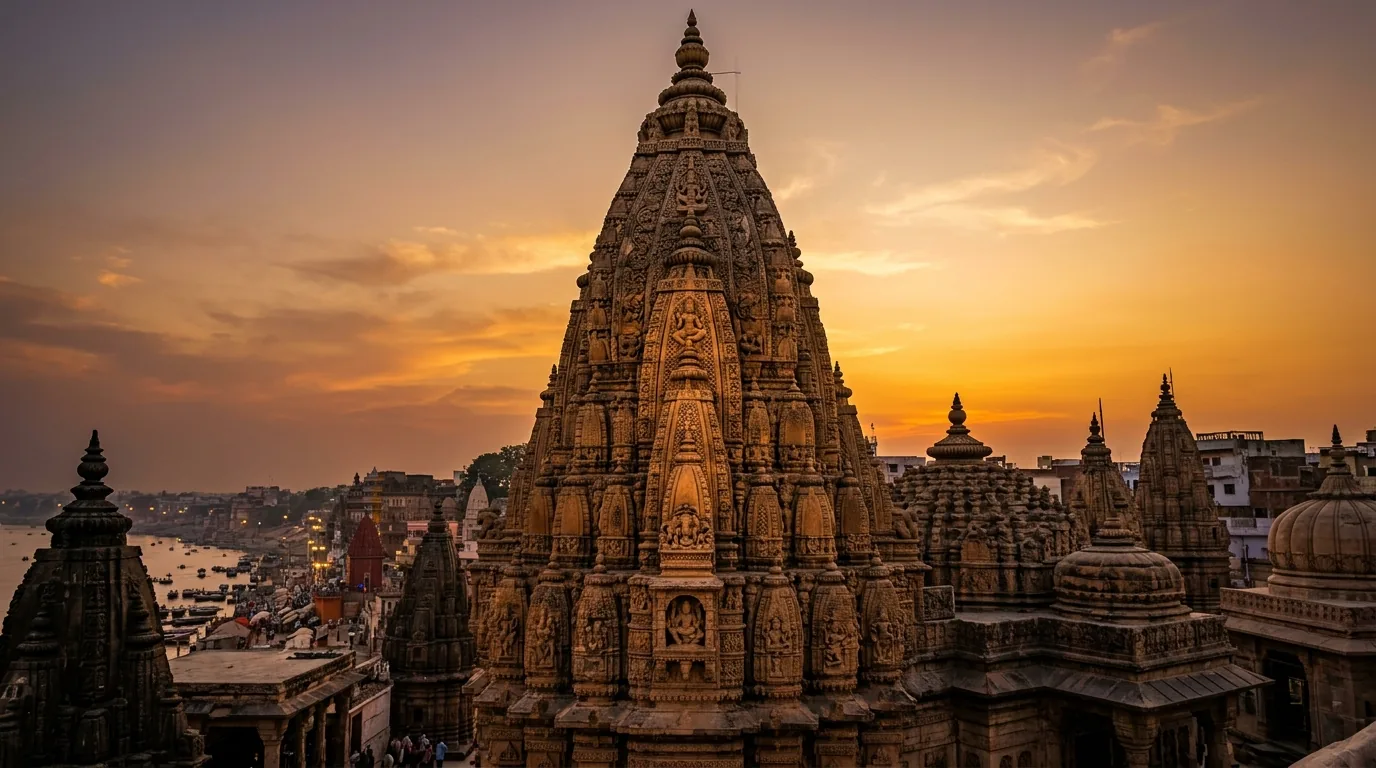
Kaal Bhairav has a place in many pilgrims' understanding of Kashi that is different from a sightseeing stop chosen for architecture. The deity is revered as the city's guardian, often described through the title Kotwal. Visitors may arrive with an established family practice or encounter the tradition for the first time. In either case, a good beginning is to identify the correct shrine, understand the actual entrance arrangement and leave enough time for worship without attaching an ambitious list of other stops.
Religious significance and careful explanation
The guardian role belongs to the devotional understanding of Kaal Bhairav, a form associated with Shiva. Describe that belief as belief rather than a factual guarantee of protection or a rule that every traveller must follow. Different families and religious traditions may organise their visits differently, and a general travel guide should not prescribe one universal pilgrimage sequence.
The temple's identity also needs care. Kaal Bhairav and Batuk Bhairav are not names to substitute casually when arranging a visit. Government tourism descriptions can contain inconsistent wording, so use the actual Visheshwarganj-area destination and confirm the address with your accommodation or the responsible temple contact before leaving.
Plan a northern Old City approach
Kaal Bhairav belongs in a deliberate northern Old City outing. It should not be treated as an adjoining room of the Kashi Vishwanath precinct. Ask where a vehicle may legally stop and what remains on foot, especially when travelling with relatives who need a manageable walking distance or help in a queue.
Save a recognisable meeting point for afterwards. Busy lanes can make a vague instruction such as waiting outside the temple difficult to interpret. If companions separate to buy offerings or visit another shop, make sure everyone knows where the group will reassemble and who carries the onward journey details.
Timing and worship arrangements
Confirm the current entry windows and the arrangements for your intended worship. A normal tourism timetable does not establish access during a festival or the waiting you will experience on a particular day. If the visit is important to a pilgrimage, protect its time rather than planning it between a fixed museum opening and an evening reporting deadline.
Ask about permitted belongings and designated footwear storage. Do not assume a ritual offering, a thread, a guide or another purchase is a condition of general entry merely because someone offers it on the approach. Where a service has a charge, clarify what you are agreeing to before accepting it.
Give devotion room
Keep movement towards the worship point orderly and follow staff directions. If you are unsure what to do, ask quietly at an appropriate place instead of copying a ritual you do not understand. Companions who are observing can remain respectful without being pressured into the same religious practice.
Check the actual photography rule, including at the entrance and around the queue. A crowded devotional environment is not the place to stop for a prolonged portrait. Keep your attention on the people moving around you, and avoid recording a person's private act of prayer as incidental scenery.
Continue with purpose rather than proximity
Mrityunjay Mahadev in Daranagar is another distinct Shiva-related destination to research, not an automatic extension. Alternatively, return towards the central lanes for a meal and the Kashi Vishwanath area on a separately prepared visit. Choose according to the people travelling and the current transport arrangement.
The Mrityunjay Mahadev guide explains its different focus. Our temples directory and Kashi Vishwanath guide help keep the places separate. A thoughtful pilgrimage allows each shrine to mean something, instead of relying on the number visited as the measure of a successful day.
BEFORE YOU GO
Frequently asked questions
Why is Kaal Bhairav called the guardian of Kashi?
The title expresses the deity's role in the city's religious tradition. It is a devotional understanding associated with Kaal Bhairav and Shiva. A travel description should explain that tradition without presenting a spiritual outcome as an independently verifiable promise.
Is this Batuk Bhairav Temple?
Do not treat the two names as interchangeable. Confirm the complete Kaal Bhairav destination and its northern Old City locality when arranging transport. If a listing or verbal instruction seems inconsistent, resolve the address before travelling.
Must every visitor follow the same temple sequence?
No single sightseeing sequence represents every family's religious practice. Follow your own informed tradition where relevant, and confirm the current arrangements for each shrine separately. Visitors observing rather than participating should still respect the place and those worshipping.
REFERENCE NOTES
Sources and practical updates
These primary sources support the factual background of this guide. For your travel dates, confirm the current arrangements with the responsible venue, property or service provider.
- Varanasi district administration: temple identity and locality; historical listing, not a current operating timetable
- Kashi government portal: Kaal Bhairav tradition; identity cross-checked against district listing